Aug 2026· Zenodo (CERN European Organization for Nuclear Research)
Abstract
Software developers often use static analysis tools to identify code warnings related to code quality in general. However, despite the availability of automated warnings, developers still need to manually interpret and apply the suggested fixes. Recent advances in Large Language Models (LLMs) have created new opportunities to support automated refactoring suggestions directly within development environments. This paper presents JADE (Java Static Analysis Repair), a Visual Studio Code plugin that combines static analysis knowledge with LLM-based refactoring suggestions. JADE adopts a Retrieval-Augmented Generation (RAG) strategy based on SonarQube rules, retrieving semantically relevant static analysis heuristics to enrich structured prompts submitted to local LLMs. The plugin supports AI-assisted code diagnostics and refactoring generation integrated into the VSCode workflow. In addition, JADE incorporates a developer feedback mechanism that allows users to evaluate the usefulness and relevance of the generated recommendations. An exploratory study involving 50 Java code snippets suggests that JADE complements traditional static analysis by identifying additional semantic refactoring opportunities while preserving the strengths of rule-based analysis for detecting explicit code quality issues.

A production platform built on large language models makes two kinds of decision, and most of its trouble comes from writing both into one clause. An optimization decision improves an objective: lower latency, lower cost, higher quality, fewer tests run. A boundary decision fixes a constraint that may not be relaxed for any gain: a residency rule, a least-privilege scope, a human-review threshold. When the two share a clause, improving one silently erodes the other, which is why efficiency and accountability are so often reported as a trade. This specification is built on one invariant: a boundary is a clause the optimizer may not cross, and everything else is optimization. The contribution is a cross-layer architectural method for separating non-negotiable constraints from adaptive optimization and binding both to reconstructable evidence, applied identically across model routing, agent orchestration and AI-native delivery. The seventeen patterns are instances of that method rather than the contribution itself. Each pattern is specified in the classical pattern form and carries three architectural declarations: the boundary it fixes, the optimizer it frees, and the evidence proving the boundary held. Every boundary is assigned to one of five classes covering data, authority, decision, resource and process constraints. Section 3 states the derivation method by which candidates were admitted or rejected, and publishes the rejections alongside the admissions so that the criterion can be examined rather than trusted. Three mechanisms make the language operate as a language rather than a list. A pattern relationship graph names which pattern supplies the artifact, evidence or authority another depends on, including the single cycle by which a workflow improves from its own structural record and the economic chain running the full height of the stack. A normative event identity, with rules for causal parentage, retries, provider boundaries and retention, turns the requirement that evidence be joinable into something an implementation can satisfy or fail. And per-pattern applicability conditions replace categorical requirements, so that a pattern governing a mechanism an institution does not operate is out of scope rather than a gap. Conformance is self-declared and published as a profile carrying the environment, the applicable set, per-pattern status, an evidence date and documented gaps. It is not a certification scheme, and no conformity assessment body operates against it. The contribution is architectural rather than empirical. Every pattern carries an evidence level, and no pattern reaches the highest level, because no implementation unconnected to the author has been evaluated. Nothing has been measured. The specification separates what would falsify the invariant from what would falsify an individual pattern and from what would falsify the composition and adoption sequence, poses six research questions, and records the absence of a real implementation profile as a known deficiency of version 1.0. An appendix reconciles the pattern identifiers with the names used across the author's papers and companion book series, including the acronyms PEVG and PARA, so that the two bodies of work can be cited as one. Version 1.1 names two constructs the specification already contained. The central proposition is named the Boundary Invariant, and the three architectural declarations required of every pattern are together named the BOE Declaration. Neither carries a trademark, both are offered for use with attribution under this document's licence, and neither changes any requirement: the proposition, its wording and its priority date are those of version 1.0. Section 11 gains the two-family naming convention and a precedence rule fixing which document governs where this specification and the Defensible AI Framework Registry describe the same relationship.
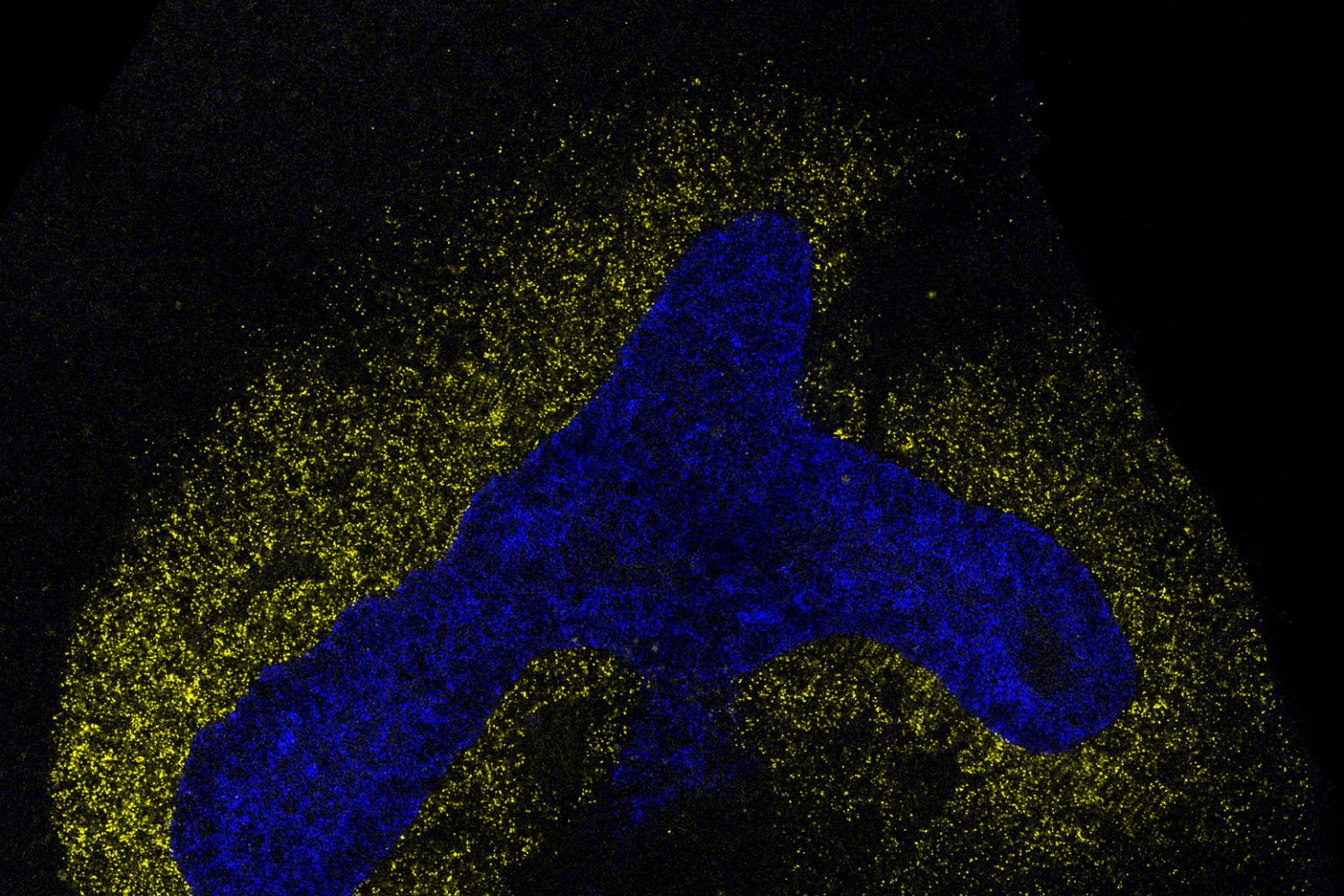
What if pathology foundation models could do more with less? GigaPath-Flash and GigaTIME-Flash cut computational demands while maintaining strong performance, opening the door to larger studies and broader exploration. The post GigaPath-Flash and GigaTIME-Flash: Toward population-scale discovery with efficient pathology foundation models appeared first on Microsoft Research.
MIT News · Artificial Intelligence· news.mit.eduAug 31, 2026
With millions of users across the world, Julia has been used to conduct cutting-edge research and to design new drugs, jet engines, heat pumps, and more.