Many user environments are not yet familiar with the advancements in natural language processing that come from structuring both formatted semantic information and unstructured knowledge-based information in a multimodal way. This method aids in creating grammatically correct sentences arranged within the context of the intuition of Chomsky's formal language. In recent years, deep learning (DL) has significantly impacted natural language processing, causing a paradigm shift from "syntax checkers" to programs that check the syntax of natural language. This shift has opened the door to a large pool of knowledge and information systems available for data extraction without service resilience. The API renders make the research attention-worthy, particularly in information extraction (IE) tasks. In this research, all models should be further investigated to reinforce their vulnerability by testing their ability to conduct theoretical, hypothesis, and pragmatic reviews of the logical structural model. This will help improve the model's generalization ability, aiding proficient operational performance.
The results are packaged in the Greenfield Startup Model (GSM), which explains the priority of startups to release the product as quickly as possible, and the need to shorten time-to-market, by speeding up the development through low-precision engineering activities.
Carmine Giardino, Nicolò Paternoster, M. Unterkalmsteiner et al.· IEEE Transactions on Softwar...· 178 citations· ⚡14
Software startup companies develop innovative, software-intensive products within limited timeframes and with few resources, searching for sustainable and scalable business models.
M. Unterkalmsteiner, P. Abrahamsson, Xiaofeng Wang et al.· e-Informatica Software Engin...· 157 citations· ⚡17
This study conducts a case survey study based on the secondary data of the major pivots happened in 49 software startups, and demonstrates that customer need pivot is the most common among all pivot types.
Sohaib Shahid Bajwa, Xiaofeng Wang, Anh Nguyen-Duc et al.· Empirical Software Engineeri...· 127 citations· ⚡15
The comparison of adopter and non-adopter sample reveals three potential adoption inhibitor, security, data privacy, and portability, which underlines the importance of the technical and security perspectives for research investigating the adoption of technology.
Nattakarn Phaphoom, Xiaofeng Wang, S. Samuel et al.· Journal of Systems and Softw...· 111 citations· ⚡8
The ongoing work building a Raspberry Pi cluster consisting of 300 nodes is presented, with potential use cases being an inexpensive and green test bed for cloud computing research and a robust and mobile data center for operating in adverse environments.
P. Abrahamsson, S. Helmer, Nattakarn Phaphoom et al.· IEEE International Conferenc...· 110 citations· ⚡7
The results indicate that software developers are a slightly happy population, but the need for limiting the unhappiness of developers remains, and 219 factors representing causes of unhappiness while developing software are identified.
D. Graziotin, Fabian Fagerholm, Xiaofeng Wang et al.· International Conference on...· 84 citations· ⚡6
Related blog posts
MIT News · Artificial Intelligence· news.mit.eduOct 18, 2026
A new computational approach reveals how cells communicate to assemble into tissues. This could accelerate stem cell engineering, improve disease models, and inform therapies.
Microsoft Research Blog· microsoft.comOct 15, 2026
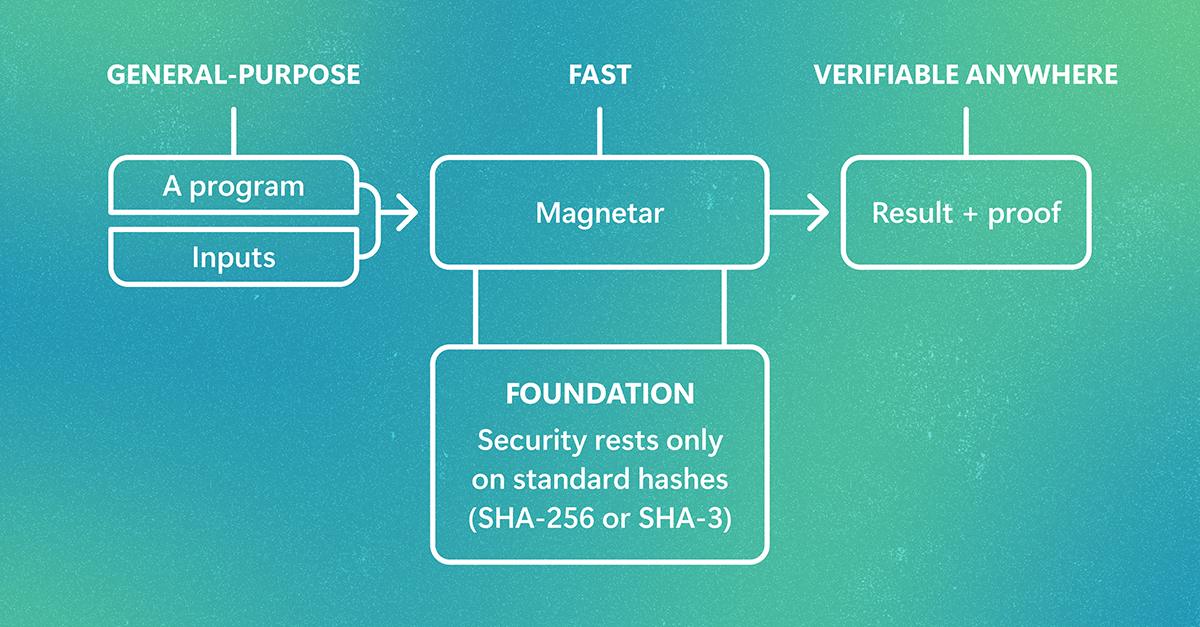
Zero-knowledge proofs can verify computing results without rerunning workloads or exposing sensitive data. Magnetar helps bring them into the mainstream with support for standard programming languages, major speed gains, and quantum-resistant security. The post Proof-based general-purpose computing with Magnetar appeared first on Microsoft Research.
We use cookies to run the site and, with your consent, for analytics and to show ads.
See our Cookie Policy.