Aug 2026· The international archives of the photogrammetry, remote sensing and spatial information sciences/International archives of the photogrammetry, remote sensing and spatial information sciences
Abstract
Abstract. Landscapes are living systems whose long-term trajectories carry profound cultural, spiritual, and resource significance for Indigenous communities worldwide. Yet the tools capable of simulating long-term landscape change, such as numerical landscape evolution models, remain largely inaccessible outside specialist research communities, constraining their potential contribution to community-led stewardship and land management decision-making. This paper introduces LandEvolve, a landscape evolution modelling framework developed entirely within a free and open-source software ecosystem, designed to extend process-based geomorphic simulation into community-accessible settings. Built upon the Landlab platform, it integrates a Python-based graphical user interface developed using the Qt framework and supporting libraries, enabling users to configure and execute simulations such as fluvial incision, hillslope diffusion, and sediment transport without requiring programming expertise or specialist technical knowledge. The tool and its source code will be made publicly available to enable reuse, modification, and community-driven development. As a primary case study, LandEvolve is co-developed with M¯aori Indigenous communities of Aotearoa New Zealand through an iterative participatory process in which Indigenous knowledge directly informs scenario design and model configuration. This engagement is grounded in geoethical principles and data sovereignty frameworks, ensuring that culturally sensitive information remains under community governance and that communities retain meaningful agency throughout the modelling process. Interactive two-dimensional and three-dimensional visualisation capabilities further support accessible, dialogue-based exploration of landscape futures, illustrating how open-source geospatial tools can be repositioned as instruments of intergenerational stewardship that place long-term landscape futures in the hands of the communities who depend on, and hold responsibility for, them.

A rational design for next-generation thermo-responsive nanocarriers is proposed, in which polymer chemistry, nanoparticle structure, experimental characterization, and mechanistic modelling are integrated from the earliest stages of material development.
M. Schifone, Giuseppe Nunziata, Filippo Rossi· Advances in Colloid and Inte...· 2 citations
This paper describes the formulation of a numerical model for simulating environmentally driven one-dimensional (1D) ground movements of expansive clay. The formulation is based on a finite-element model that simulates the redistribution of matric suction through a diffusion-type equation, explicitly accounting for volume changes due to wetting and drying of the clay. We synthesize and modify highly nonlinear constitutive relationships for (1) hysteretic soil water retention; (2) reversible soil shrinkage and expansion of clay; and (3) hydraulic conductivity, explicitly incorporating desiccation cracks through a multidomain framework and assuming a critical surface crack depth. These models are well-calibrated to published laboratory tests on a reference expansive clay, Denver bentonite. We demonstrate capabilities of the proposed formulation to simulate the response of a homogeneous expansive clay to periods of drying and wetting, considering the initial matric suction, saturated hydraulic conductivity of the intact clay, and critical crack depth as three primary sources of uncertainty. We compare ensemble model simulations with measured ground movements from an instrumented expansive clay test site in Texas over a 3-year period using detailed records of potential evapotranspiration and precipitation. By assigning weights to the ensemble simulations based on their performance, we constrain the ranges of the three key uncertain parameters. The results showed very reasonable first-order agreement with the measured data and highlight the potential of the proposed formulation. We anticipate that more reliable predictions can be achieved through direct measurements of actual in situ evaporation rates and local soil properties.
Mahdi Seyyedan, Jiali Ma, Ivo Rosa Montenegro et al.· Journal of Geotechnical and...· 1 citation
This paper examines whether differences in the speed with which traded assets respond to a common market shock can predict subsequent relative returns. The framework combines a lagged rolling factor model with Absorption Gap (AG), which measures an asset’s response error, and Shock Coherence (SC), which characterizes the contemporaneous market state. The public specification is evaluated using executable next-open timing, explicit transaction costs, dependence-aware inference, randomized-signal benchmarks, chronological diagnostics, and machine-learning extensions. The study uses 24 ETFs from 4 January 2010 through 28 August 2026, with eight factor proxies excluded from the 16-asset traded cross-section. The corrected public baseline produces a combined Rank IC of -0.00592, an approximately flat zero-cost gross result, and materially negative performance after transaction costs. A within-date randomized-signal benchmark yields an empirical two-sided p-value of 0.299, while standalone Absorption Gap, coherence-conditioned tests, chronological subsamples, and machine-learning models provide no robust evidence of economically viable public alpha. The contribution is therefore methodological as much as empirical: the paper connects an economic hypothesis about heterogeneous information absorption to an executable trading test, documents why the disclosed implementation fails, separates diagnostic and exploratory analysis from confirmatory evidence, and establishes a reproducible public baseline while keeping the proprietary alpha layer outside the evidence package.
Khaybullina Alina· Zenodo (CERN European Organi...· 0 citations
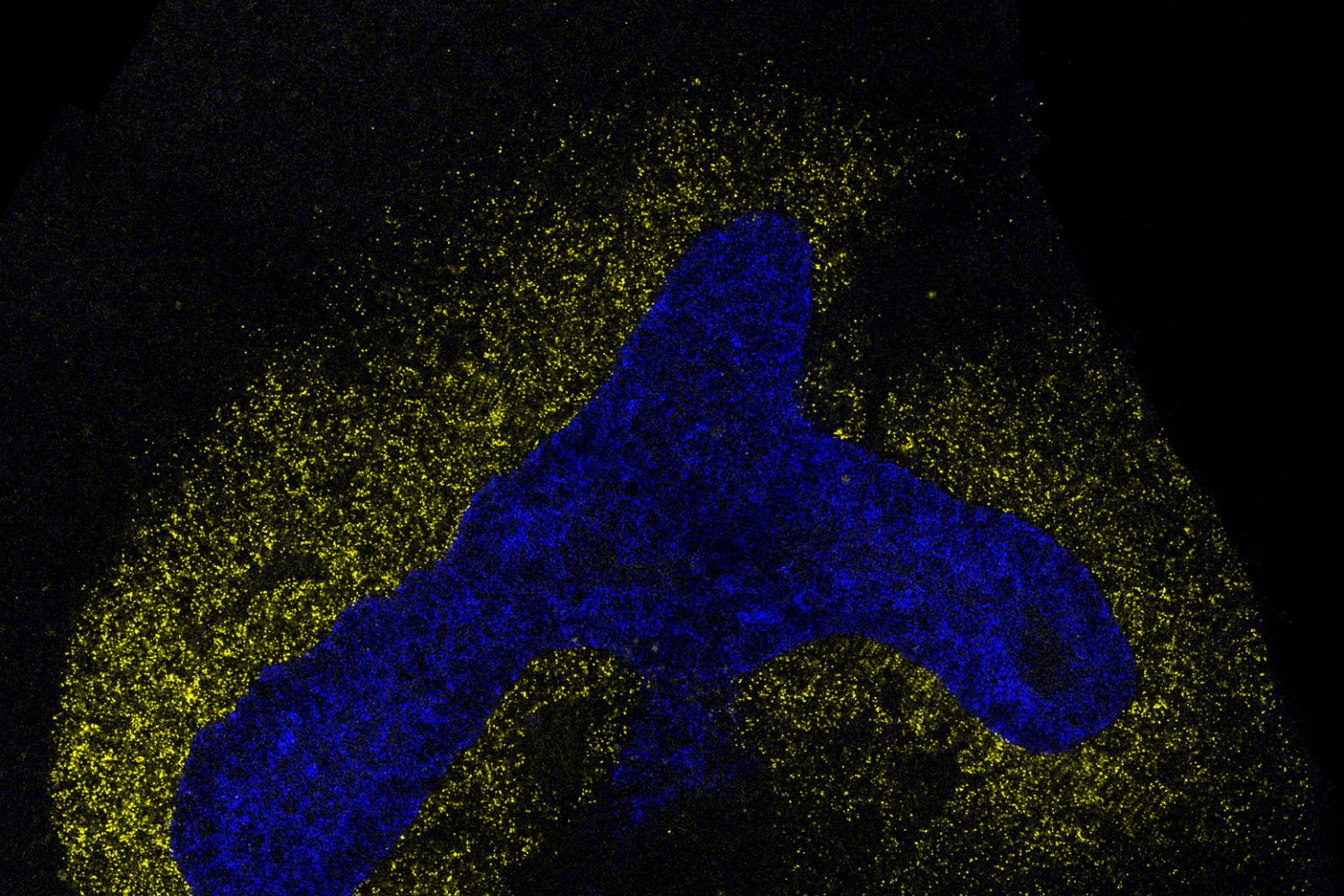
What if pathology foundation models could do more with less? GigaPath-Flash and GigaTIME-Flash cut computational demands while maintaining strong performance, opening the door to larger studies and broader exploration. The post GigaPath-Flash and GigaTIME-Flash: Toward population-scale discovery with efficient pathology foundation models appeared first on Microsoft Research.