Aug 2026· Transactions on Emerging Telecommunications Technologies· Vol 37· 0 citations· 60 references
TL;DR
An AI‐assisted resource scheduling and cooperative learning model in a space–air–ground combined network (SAGIN) to possess ultra‐reliable low‐latency Internet of Medical Things applications and a multi agent—deep deterministic policy gradient (MA‐DDPG) agent that allocates resources in a distributed manner and a hierarchical federated learning (HFL) system with delay‐sensitive aggregation to train models privately.
Abstract
This paper explores an AI‐assisted resource scheduling and cooperative learning model in a space–air–ground combined network (SAGIN) to possess ultra‐reliable low‐latency Internet of Medical Things (IoMT) applications. The generated healthcare data by the IoMT devices are processed by three levels in the considered scenario including the LEO satellites, the UAV swarms, and the ground MEC servers and adhere to strict latency, reliability, and privacy requirements. We aim at designing a multi‐tier resource allocation policy and federated learning policy that coordinates end‐to‐end latency and energy consumption and at the same time is highly accurate in terms of the model given privacy constraints. In this direction, we come up with a multi agent—deep deterministic policy gradient (MA‐DDPG) agent that allocates resources in a distributed manner and a hierarchical federated learning (HFL) system with delay‐sensitive aggregation to train models privately. Extensive simulation findings indicate that the presented framework can achieve 4.2 ms latency, 99.92% reliability, and 96.2% federated (global) model accuracy and 67% minimization of communication overhead, all of which are superior to baseline and the state‐of‐the‐art approaches in a variety of measures.
A Quantum Federated Reinforcement Learning (QFRL)‐based traffic offloading framework for RSMA‐enabled SAGINs is proposed, allowing distributed small cells to jointly optimize traffic offloading ratios, bandwidth allocation, RSMA power distribution, and UAV trajectory planning while satisfying stringent delay and reliab...
Ishan Budhiraja, Abhay Bansal, B. Unhelkar et al.· Transactions on Emerging Tel...· 0 citations
An AI driven energy-efficient network slicing framework for UAV assisted 6G IoT communication that improves the throughput, reduces the latency, improves the energy efficiency, and reduces the packet loss compared with the greedy baseline is proposed.
Murad Abdullah Abdo Ahmed Albahri· مجلة جامعة صنعاء للعلوم التط...· 0 citations
Forest monitoring in remote regions faces severe connectivity and energy constraints. This study presents an energy‐efficient satellite IoT system for acoustic threat detection, serving as a foundational Space‐Ground segment within the Space‐Air‐Ground Integrated Network (SAGIN) architecture. To overcome bandwidth bo...
Whai-En Chen, Shih-Che Lin, Gwanggil Jeon et al.· Transactions on Emerging Tel...· 0 citations
: Space-Air-Ground Integrated Networks (SAGIN) provide a multi-layered, wide-coverage computing infrastructure for distributed urban sensing systems. However, their heterogeneity and dynamics pose unprecedented challenges for task offloading and resource allocation. Existing methods struggle to simultaneously address t...
Fei-Yan Bu, Zheng Wang, Yong Pan et al.· Computers, Materials & C...· 0 citations
Unmanned Aerial Vehicles (UAVs) have emerged as a flexible, cost-effective solution for connecting Internet of Things (IoT) devices where traditional infrastructure falls short. However, managing their limited energy alongside the diverse demands of densely deployed devices makes resource allocation a genuinely hard pr...
Alissa Nauman, Sung Won Kim· Italian National Conference...· 0 citations
Related blog posts
MIT News · Artificial Intelligence· news.mit.eduOct 2, 2026
Martin Trust Center Managing Director Bill Aulet introduces Dear Dreamer, a free platform for middle and high school students who want to learn about entrepreneurship.
Microsoft Research Blog· microsoft.comSep 30, 2026
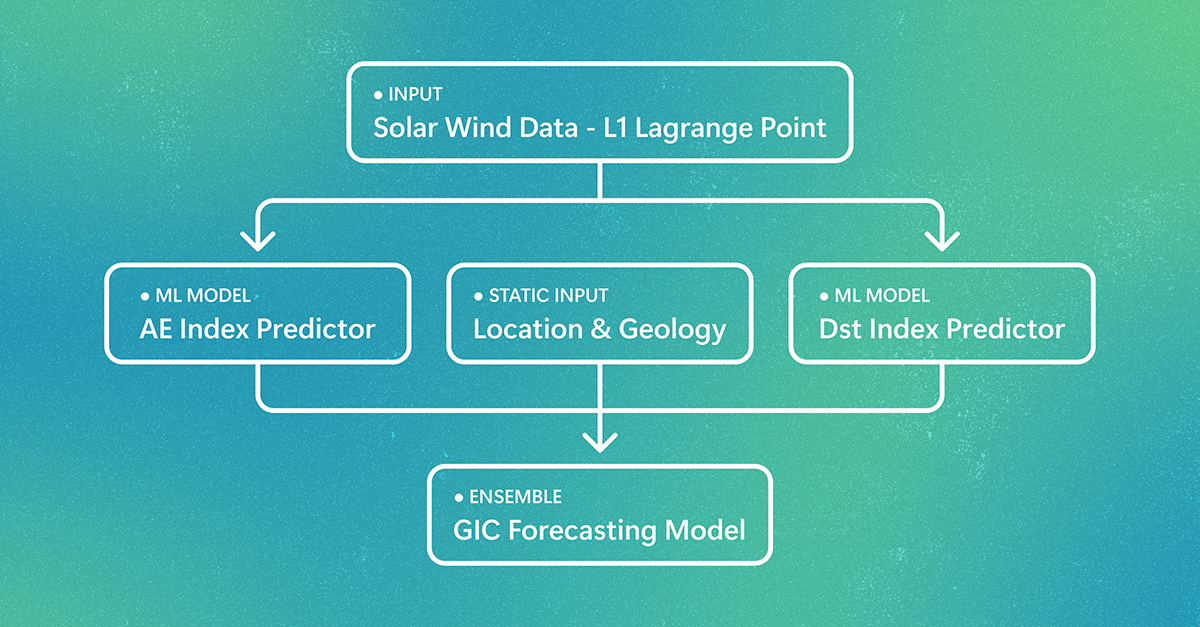
Extreme space-weather events can damage power systems on Earth and degrade GPS accuracy and satellite operations. A new machine learning system can predict where damage is likely to occur 30-60 minutes before a storm arrives. The post Forecasting space weather risks on power grids appeared first on Microsoft Research.
We use cookies to run the site and, with your consent, for analytics and to show ads.
See our Cookie Policy.