This review offers a unified synthesis of collaboration architectures and topologies, neural-communication co-design that treats the channel as a differentiable pipeline component, embodied action-perception loops via multi-agent reinforcement learning, and resilience mechanisms for synchronization, uncertainty quantification, and label-efficient learning.
Abstract
Multi-agent unmanned systems are moving from isolated, ego-centric sensing toward collaborative intelligence, in which distributed agents exchange compact features to overcome a local observation trap that no single agent can escape: occlusions, finite sensor range, and environmental degradation. The field has matured across architectural, communication, embodied, resilience, and trust dimensions, yet existing surveys examine these dimensions in isolation and rarely expose their dependencies. This review offers a unified synthesis through two complementary lenses. The first is a five-dimensional taxonomy spanning collaboration stage, communication paradigm, fusion architecture, learning strategy, and application domain. The second is three cognitive synergy conditions, Semantic Disambiguation, Pragmatic Information Exchange, and Proactive Informational Foraging, that turn cognitive synergy into operational criteria. Across these lenses we survey collaboration architectures and topologies, neural-communication co-design that treats the channel as a differentiable pipeline component, embodied action-perception loops via multi-agent reinforcement learning, and resilience mechanisms for synchronization, uncertainty quantification, and label-efficient learning. We then map these advances onto four operational domains, V2X, unmanned aerial, industrial logistics, and smart cities, and onto the safety-privacy-utility triad. To counter benchmark saturation and evaluation fragmentation, we propose GCI-Bench, a five-pillar scoring protocol with a maturity model that makes the trade-offs of collaborative methods comparable across studies. A critical reflection on reproducibility, the sim-to-real gulf, and conditions under which collaboration degrades performance identifies open challenges and charts directions toward general collaborative intelligence under real-world uncertainty.

Collective intelligence can emerge when individuals coordinate through a shared environment, allowing local actions to accumulate into durable social organization. Language-model agents offer a new substrate for this process, yet most multi-agent systems rely on direct conversation, predefined roles, or centralized wor...
Subhadeep Pal, F. Y. Wang, Markus J. Buehler· 5 citations
The rapid advancement of large language models and single-agent harnesses has reshaped the landscape of autonomous systems, raising a critical question of when multi-agent collaboration offers genuine value. As individual agent capabilities continue to scale, multi-agent collaboration faces diminishing returns while in...
Yizhen Yuan, Yi-Bo Wu, Yi-Han Zhang et al.· 0 citations
Although autonomous, large language model-driven systems show immense potential for orchestrating complex scientific experiments, their efficacy is constrained by two fundamental bottlenecks: context dilution, where strategic reasoning degrades as experimental history accumulates, and inter-campaign amnesia, which forc...
S. Domenico, B. Guilcapi, A. Milano et al.· Machine Learning: Science an...· 0 citations
With the progressive evolution of physical entities at the network edge into embodied intelligent agents, the paradigm of network intelligence is shifting from isolated processing to Agentic AI collaboration. As a cornerstone for transcending the physical sensing limits of individual agents and enabling swarm intellige...
Tian-Ge Fu, Pu-Yi Yao, Shen-Yuan Ren et al.· IEEE Transactions on Cogniti...· 0 citations
Agentic artificial intelligence (AI) is transforming Integrated Sensing and Communication (ISAC) from a function-oriented physical-layer technology into a goal-driven, closed-loop intelligent system, a paradigm we term AISAC. Existing work on learning-based sensing, resource allocation, reconfigurable intelligent surfa...
Kai Li, Cong-Gai Li, S. A. Siddiqui et al.· 0 citations
As low-altitude applications expand across emergency response, intelligent transportation, and autonomous operations, they demand communication networks that can deliver flexible, resilient, and rapidly deployable connectivity. Heterogeneous UAV networks are a promising solution, as they can dynamically provide sensing...
Zhao-Yang Li, Xin Jin, Zi-Jiu Yang et al.· 0 citations
Related blog posts
MIT News · Artificial Intelligence· news.mit.eduJul 30, 2026
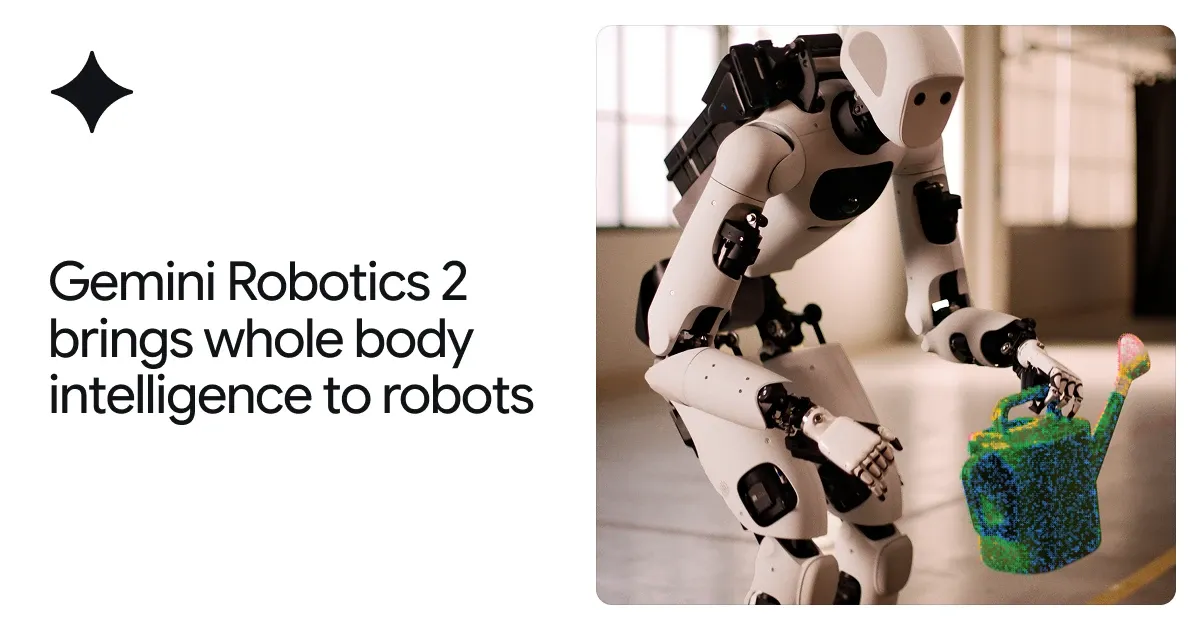
From feet to fingertips — we are teaching robots intelligent whole-body control, fine dexterity, and teamwork to complete a broad range of complex tasks.
Known for his clear and elegant writing style, Bertsekas shaped fields from control and optimization to large-scale computation and artificial intelligence.
We use cookies to run the site and, with your consent, for analytics and to show ads.
See our Cookie Policy.