Skip to content

Evaluating Beyond the Screen: Collective Assessment of AI-Generated Business Plans with Resource-Constrained Entrepreneurs

Aug 2026 · 0 citations · 20 references
Computer Science

TL;DR

BizChat was extended, an AI-powered business-planning tool, with an evaluation module that links each generated claim to the entrepreneur's original input, and interface scaffolds like claim-to-input links primed attendees with concrete, personal evaluations.

Abstract

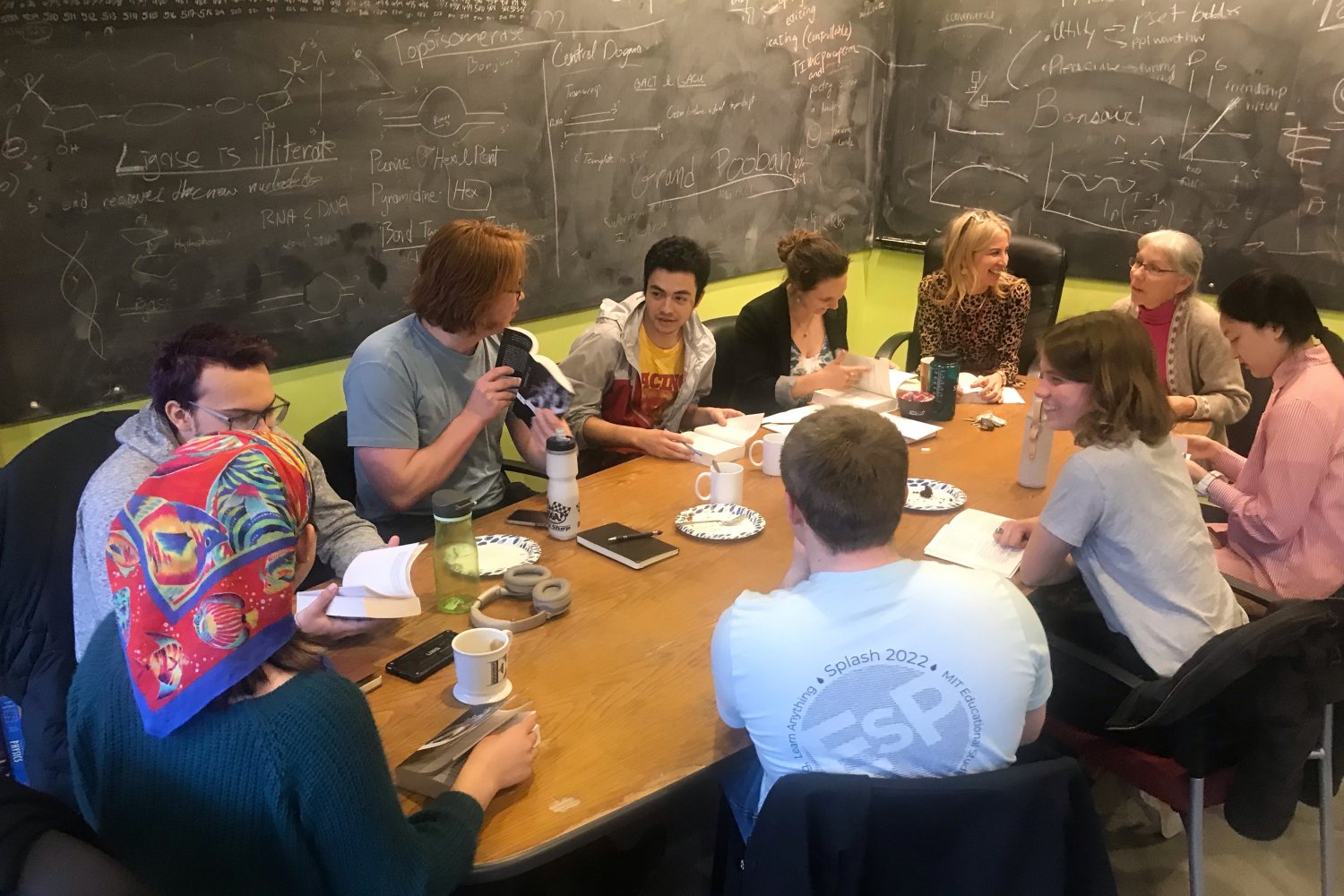
Entrepreneurs increasingly use end-user generative AI technologies such as ChatGPT for high-stakes documents like loan applications and business plans, where AI-generated errors---a wrong price, a fabricated product---can affect loan or funding outcomes. Current approaches to supporting evaluation of AI-generated text assume a single user assessing output alone, on screen. This can be especially demanding for resource-constrained entrepreneurs, whose digital and AI skills vary widely. In this early-stage work, we explore how evaluation might instead be organized in a group setting and completed as a collective activity. We extended BizChat, an AI-powered business-planning tool, with an evaluation module that links each generated claim to the entrepreneur's original input. We partner with community organizations in Maryland---embedding BizChat within various entrepreneurship programs---where workshop attendees (N=14) evaluated their plans through think-pair-share discussion. Early findings suggest interface scaffolds like claim-to-input links primed attendees with concrete, personal evaluations, which the group setting then extended beyond the screen: attendees requested printed copies, used rubrics to compare across plans, and drew on peers'knowledge to verify what they could not easily judge alone.

View source

Similar papers

#computer vision Review Sep 2017

Agile Software Development Methods: Review and Analysis

This publication proposes a definition and a classification of agile software development approaches and analyses ten software development methods that can be characterized as being "agile" against the defined criterion.

P. Abrahamsson, O. Salo, Jussi Ronkainen et al. · 727 citations · ⚡54
#computer vision Jun 2008

The impact of agile practices on communication in software development

The study shows that agile practices improve both informal and formal communication, but indicates that, in larger development situations involving multiple external stakeholders, a mismatch of adequate communication mechanisms can sometimes even hinder the communication.

M. Pikkarainen, Jukka Haikara, O. Salo et al. · 401 citations · ⚡48
#machine learning Review Open access Oct 2014

Software development in startup companies: A systematic mapping study

The results indicate that software engineering work practices are chosen opportunistically, adapted and configured to provide value under the constrains imposed by the startup context.

Nicolò Paternoster, Carmine Giardino, M. Unterkalmsteiner et al. · 394 citations · ⚡54

Related blog posts

MIT News · Artificial Intelligence Oct 23, 2026

Q&A: How AI came to model the “messy” human mind

Assistant Professor Benjamin Lindquist studies how engineers deliberately injected randomness into early AI, giving rise to deep-learning models that sometimes hallucinate.

MIT News · Artificial Intelligence Oct 7, 2026

Discovering the value of humanistic inquiry

Students in MIT’s Concourse program delve deeply into the human condition, debate challenging questions, and learn to develop judgment about issues that can’t be quantified.

We use cookies to run the site and, with your consent, for analytics and to show ads. See our Cookie Policy.