Skip to content

Diffusion models as plug-and-play priors

Jun 2022 · Neural Information Processing Systems · Vol abs/2206.09012 · 316 citations · ⚡ 15 influential · 56 references
Computer Science

TL;DR

The possibility of inferring high-dimensional data inference in a model that consists of a prior and an auxiliary differentiable constraint given some additional information is considered, thereby allowing a range of potential applications in adapting models to new domains and tasks.

Abstract

We consider the problem of inferring high-dimensional data $\mathbf{x}$ in a model that consists of a prior $p(\mathbf{x})$ and an auxiliary differentiable constraint $c(\mathbf{x},\mathbf{y})$ on $x$ given some additional information $\mathbf{y}$. In this paper, the prior is an independently trained denoising diffusion generative model. The auxiliary constraint is expected to have a differentiable form, but can come from diverse sources. The possibility of such inference turns diffusion models into plug-and-play modules, thereby allowing a range of potential applications in adapting models to new domains and tasks, such as conditional generation or image segmentation. The structure of diffusion models allows us to perform approximate inference by iterating differentiation through the fixed denoising network enriched with different amounts of noise at each step. Considering many noised versions of $\mathbf{x}$ in evaluation of its fitness is a novel search mechanism that may lead to new algorithms for solving combinatorial optimization problems.

View source

Similar papers

#machine learning Preprint Sep 2026

Improved Distributional Diffusion Models

A stochastic few-step generator whose FID does not degrade as the sampling budget grows from 4 to 50 NFE, and the same recipe transfers to text-to-image generation.

Tommaso Martorella, Alexandre Galashov, F. Krause et al. · 1 citation
Preprint Aug 2026

Provably adaptive sampling with uniform and remasking discrete diffusion models

This work considers a first-order sampler based on the leave-one-out denoiser for uniform and remasking processes whose coordinate updates can be performed in parallel, and derives an exact information-theoretic representation of the discretization error in terms of the mutual information between different coordinates...

Daniil Dmitriev, Zhi-Han Huang, Yuting Wei · 1 citation
#machine learning Preprint Sep 2026

Schedule optimization for tau-leaping in masked discrete diffusion

Masked discrete diffusion models are commonly accelerated using the so-called tau-leaping discretization method, which reveals several coordinates in parallel at each sampling step. The sampler replaces the joint conditional law of each revealed block by a product distribution, incurring a factorization error $\varepsi...

C. Secchi, Giacomo Zanella · 0 citations
Preprint Aug 2026

Algorithmic threshold for high-dimensional projection pursuit I: general theory

The main innovation is to develop stochastic control theory within the branching OGP framework, significantly expanding the settings in which it locates an exact algorithmic threshold.

Brice Huang, Mark Sellke, Ni-Ke Sun · 3 citations · ⚡1
Preprint Aug 2026

Sobolev Regularized Score Difference Estimation in Diffusion Models

This work proposes a statistically consistent and scalable estimator for score differences based on Sobolev regularization and demonstrates its effectiveness on real-world tasks, including transfer learning for ECG signal generation, where it substantially outperforms non-regularized score difference estimators in down...

Chenghan Xie, Jose H. Blanchet, Renyuan Xu · 1 citation

Related blog posts

Microsoft Research Blog Aug 11, 2026

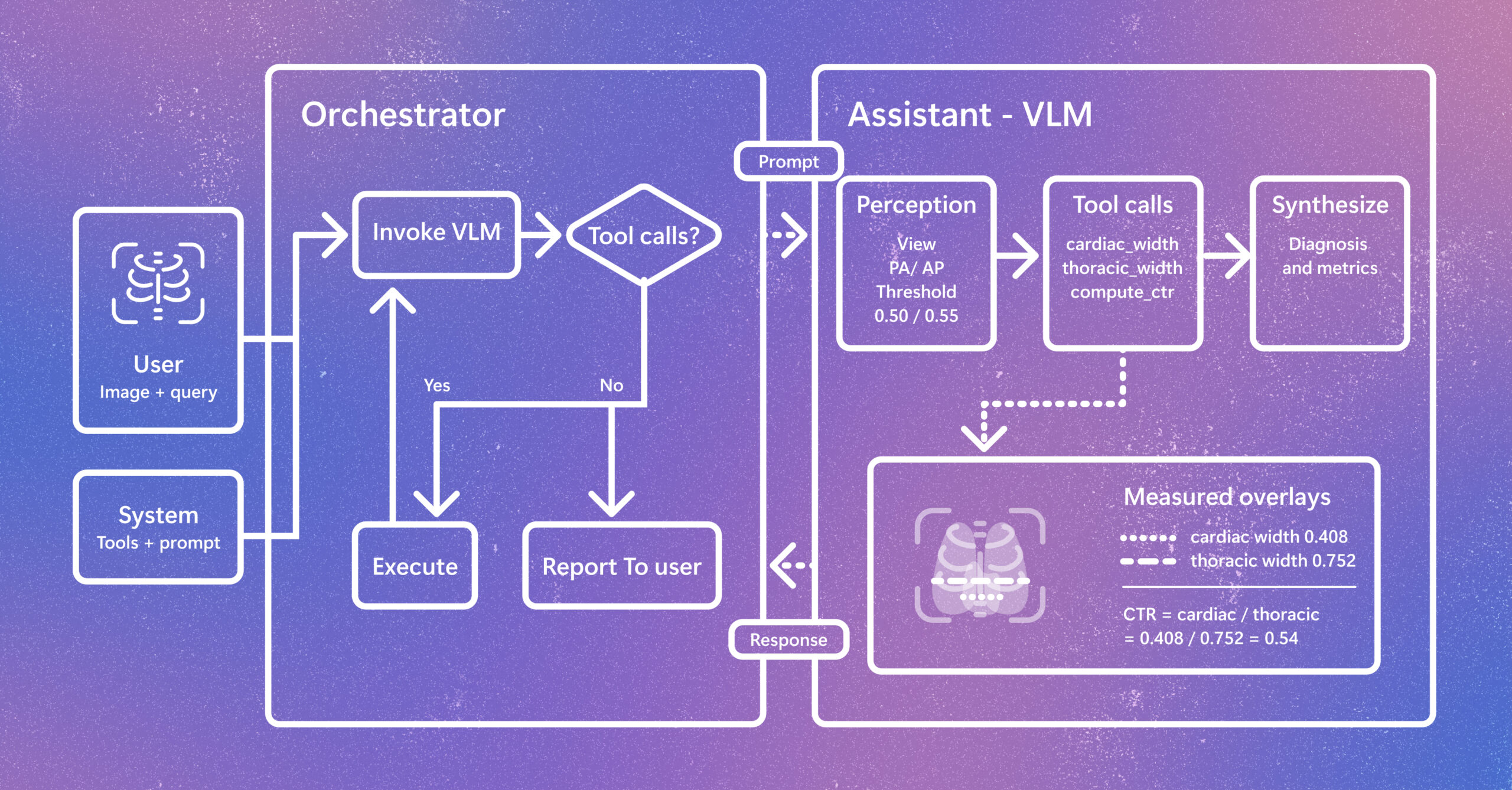
Introducing CARE-X: Towards Clinically Useful Radiology VLMs with Auxiliary Supervision, Reward-Aligned Learning, and Tool-Augmented Measurement

Radiology AI is evolving beyond report generation. CARE-X explores a unified approach that combines flexible reasoning, calibrated predictions, and measurement-based tools for chest X-ray interpretation. The post Introducing CARE-X: Towards Clinically Useful Radiology VLMs with Auxiliary Supervision, Reward-Aligned Learning, and Tool-Augmented Measurement appeared first on Microsoft Research.

We use cookies to run the site and, with your consent, for analytics and to show ads. See our Cookie Policy.