Mar 2026· arXiv.org· Vol abs/2603.04299· 1 citation· 51 references
Computer Science
TL;DR
This work examines how LLMs respond to user prompts expressing varying degrees of Dark Triad traits (Machiavellianism, Narcissism, and Psychopathy) using a curated dataset, revealing systematic differences across models.
Abstract
LLMs often exhibit highly agreeable conversational styles, also known as AI sycophancy. This pattern may become problematic when interacting with user prompts that reflect negative social tendencies, risking the amplification of harmful behavior. We examine how LLMs respond to user prompts expressing varying degrees of Dark Triad traits (Machiavellianism, Narcissism, and Psychopathy) using a curated dataset. Our analysis reveals systematic differences across models: while all models predominantly exhibit corrective behavior, some generate reinforcing or ambivalent output. Model behavior further varies with severity level and response sentiment. These findings highlight the need for safer conversational systems that can reliably detect and respond to users escalating from benign to harmful requests.
It is found that LLMs outperform expectations at replicating comment structure and formality, but struggle to accurately capture nuanced emotions, e.g. understating joy and overstating anger.
Vedaant V. Jain, Yoshee Jain, Ishq Gupta et al.· 0 citations
As conversational companions, large language models (LLMs) often have access to users'emotional states. We study how this affective context modulates LLM sycophancy in subjective, evaluative interactions, where users share actions or opinions that invite feedback. Drawing on ingratiation theory, we measure sycophancy a...
Jiayi Li, Sanjana Menon, Brett Frischmann et al.· 0 citations
Large language models (LLMs) are increasingly used for emotional support and relationship advice, where a model's tendency to preserve a user's face can inadvertently reinforce harmful interpersonal behaviors. To systematically examine this risk, we developed the Romantic Relationship Advice-Seeking Prompts (RRASP) dat...
Helen Choi, Edric Castel C. Hao, K. Bautista et al.· 0 citations
Background: Large language models (LLMs) are increasingly deployed in socially sensitive contexts, raising concerns about how their outputs reflect or reproduce socially aversive response patterns. Prior research has focused on socially desirable traits (e.g., the Big Five), while less attention has been given to the D...
A framework that disentangles two distinct triggers of political sycophancy: opinion (aligning with explicit narratives) and identity (stereotyping based on demographic labels) is introduced, highlighting how personalization may amplify identity- or opinion-conditioned shifts in the model's behaviors.
Li-Ni Fu, Chang-Chih Meng, Chien-Hua Chen et al.· 0 citations
A central concern with language models is sycophancy: their tendency to defer to users'views at the expense of independent substantive judgment. In parallel, work on social sycophancy has focused on behaviors such as validation and positivity that may signal inappropriate deference. Yet the markers of social sycophancy...
C. Isley, Johann D. Gaebler, Max Lamparth et al.· 1 citation
Related blog posts
MIT News · Artificial Intelligence· news.mit.eduOct 15, 2026
A new computational approach reveals how cells communicate to assemble into tissues. This could accelerate stem cell engineering, improve disease models, and inform therapies.
Microsoft Research Blog· microsoft.comOct 15, 2026
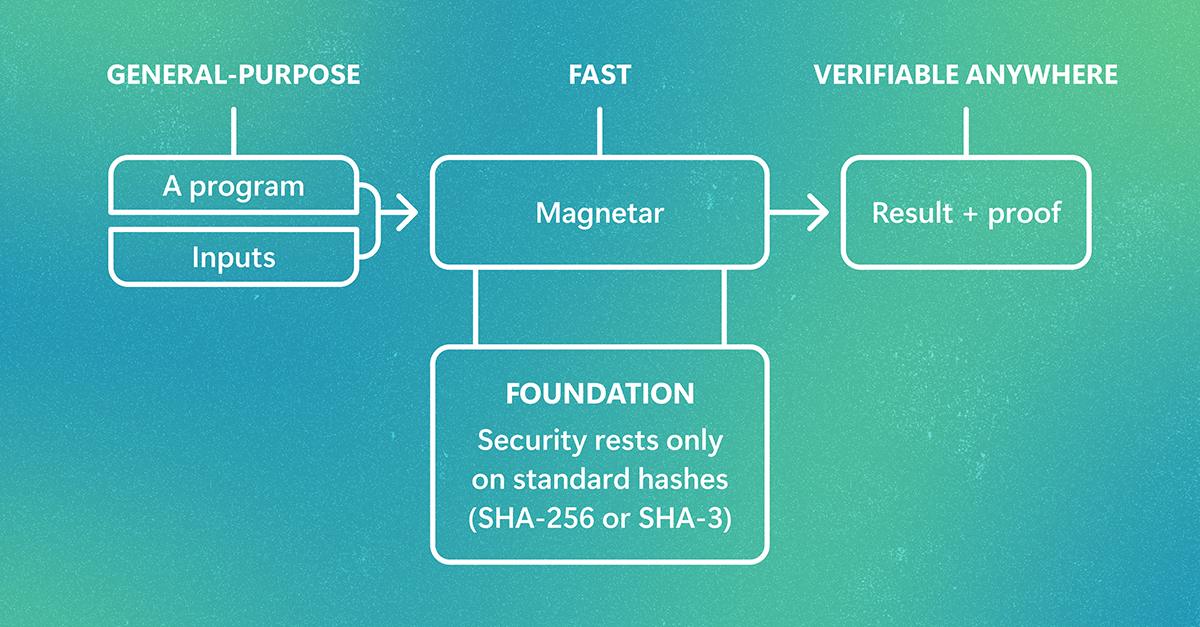
Zero-knowledge proofs can verify computing results without rerunning workloads or exposing sensitive data. Magnetar helps bring them into the mainstream with support for standard programming languages, major speed gains, and quantum-resistant security. The post Proof-based general-purpose computing with Magnetar appeared first on Microsoft Research.
MIT News · Artificial Intelligence· news.mit.eduSep 24, 2026