May 2026· Annual Meeting of the Association for Computational Linguistics· pp. 47676-47701· 0 citations· 54 references
Computer Science
TL;DR
This work examines whether large language models exhibit similar behaviors when assigned high or low status personas, and shows that LLMs show key socio-cognitive effects of power, albeit with nuances and variability, linking simulated interactions to both desirable and unsafe behaviors.
Abstract
Power differences shape human communication through well documented socio cognitive effects, including language coordination, pronoun usage, authority bias, and harmful compliance. We examine whether large language models (LLMs) exhibit similar behaviors when assigned high or low status personas. Using personas from diverse professions, we simulate multi turn, power asymmetric dialogues (e.g., principal teacher, justice lawyer) and measure (i) language coordination, (ii) pronoun usage, (iii) persuasion success, and (iv) compliance with unsafe requests. Our results show that LLMs show key socio-cognitive effects of power, albeit with nuances and variability, linking simulated interactions to both desirable and unsafe behaviors.
A dual-level evaluation framework to assess LLM-based agents at both the individual and collective levels is proposed, finding that while agents capture broad partisan orientations, they underestimate within-group variability and reproduce stereotypical ideological biases.
M. Al Ali, Filip Mihai Muntean, Lucia Donatelli et al.· International Conference on...· 1 citation
Experimental results show that LLMs exhibit social bias even in coherent, response-conditioned multi-turn interactions, revealing late-emerging bias, non-monotonic bias patterns, and bias re-emergence, which motivate evaluations that extend beyond fixed-turn, pre-scripted protocols.
Rem Hida, Masahiro Kaneko, Daisuke Oba et al.· 0 citations
Understanding the dynamics of stance change on social media is crucial for addressing polarization and information integrity, yet observational studies face challenges including limited experimental control, restricted data access, and algorithmic confounds. We leverage Generative Agent-Based Modeling (GABM)—a novel si...
Valerio La Gatta, Gian Marco Orlando, Marco Perillo et al.· Proceedings of the 37th ACM...· 0 citations
Conversational agents increasingly interact with children, yet evidence on how their design shapes children's susceptibility to persuasion comes almost entirely from the lab. We report a $2\times2$ randomized field experiment embedded in a public German Santa Claus telephone hotline. Children's calls were randomly rout...
Thilo Tamme, David Steck, Anton Hantel Technical University of Munich et al.· 0 citations
DecisionQE is introduced, a questionnaire-based framework for measuring each model's persuasive and compliant tendencies across multiple decision scenarios, and the Werewolf game is used as an interactive testbed to study their effects on social influence and group outcomes under asymmetric information.
Wen-Wen He, Wen-Ke Huang, Wei Yang Bryan Lim et al.· 0 citations
Related blog posts
MIT News · Artificial Intelligence· news.mit.eduOct 15, 2026
A new computational approach reveals how cells communicate to assemble into tissues. This could accelerate stem cell engineering, improve disease models, and inform therapies.
Microsoft Research Blog· microsoft.comOct 15, 2026
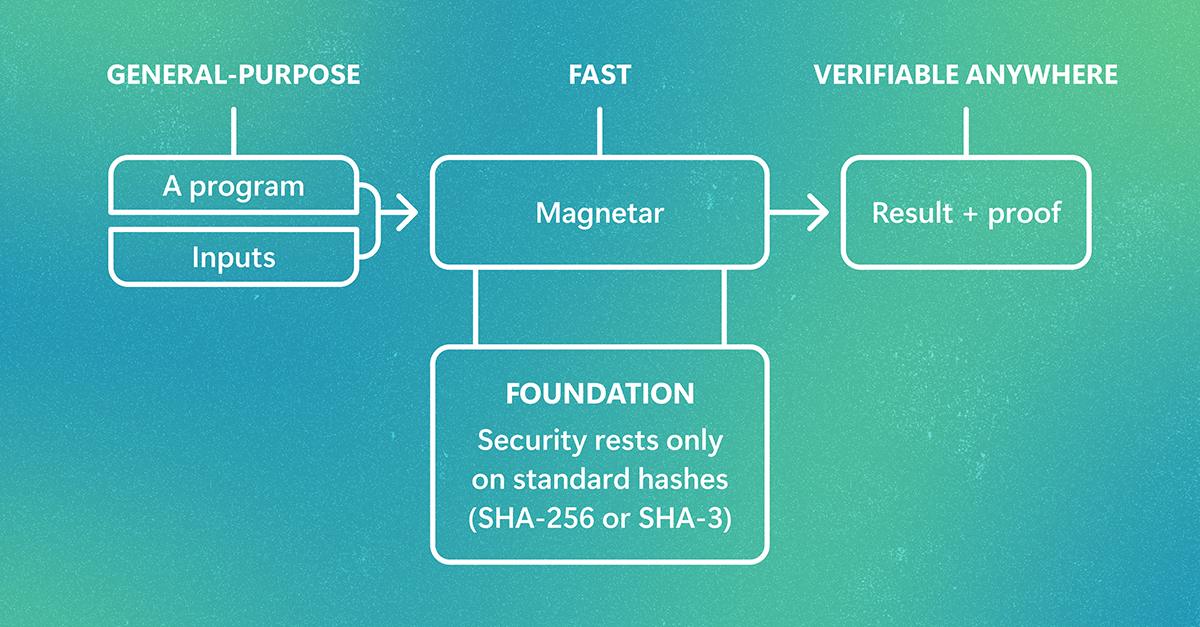
Zero-knowledge proofs can verify computing results without rerunning workloads or exposing sensitive data. Magnetar helps bring them into the mainstream with support for standard programming languages, major speed gains, and quantum-resistant security. The post Proof-based general-purpose computing with Magnetar appeared first on Microsoft Research.
MIT News · Artificial Intelligence· news.mit.eduSep 24, 2026