The NV-Reason-CT model, a generative vision--language model for chest and abdominal CT combining native 3D visual encoding with radiologist-guided reasoning, and the model and training code are released to support reproducible research on explainable AI for volumetric medical imaging.
Abstract
We present NV-Reason-CT, a generative vision--language model for chest and abdominal CT combining native 3D visual encoding with radiologist-guided reasoning. The model couples a native 3D vision transformer with a language model, passing all visual tokens and their explicit 3D coordinates into language decoding without further spatial token merging. This retains volumetric spatial information within the vision encoder and through the language model's positional encoding during joint processing with text. We train on a curated corpus of approximately 550,000 multimodal instruction examples from 70,111 unique CT image inputs, combining standardized reports, abnormality-focused and anatomy-specific questions, multi-turn interactions, and radiologist-authored reasoning from recorded and transcribed expert CT interpretations. Expert annotations provide direct supervision and guide additional report-grounded synthetic reasoning. End-to-end supervised fine-tuning (SFT) is followed by Group Relative Policy Optimization (GRPO), with verifiable rewards over chest and abdominal abnormality sets. The model supports abnormality classification, report generation, and interactive reasoning with reviewable observations, differential diagnoses, and uncertainty. Evaluation spans public CT benchmarks and a held-out NIH cohort. On CT-RATE, NV-Reason-CT achieves a macro-F1 of 0.614 and macro-AUROC of 0.871 without a task-specific classification head; generated reports achieve a report-derived macro-F1 of 0.592. In a preliminary study with expert radiologists, AI-assisted review received favorable confidence ratings and was associated with a 50% reduction in average reported interpretation and reporting time. We release the model and training code to support reproducible research on explainable AI for volumetric medical imaging.
An Anatomy-Routed Contrastive Learning for 3D Chest CT (ARC-CT), a region-aware framework that addresses limitations using only reports extracted from reports by an LLM, with no manual annotations or bounding boxes, outperforms both comparable efficient baselines and larger transformer models.
H. Isik, Mehmet Alp Ozaydin, S. Kurugol et al.· 1 citation
In a controlled study that fixes the backbone, data split, target reports, and adaptation while varying only the injected grounding, perception-derived facts outperform retrieved prior reports, retrieval becomes redundant once facts are present, and end-to-end predicted facts remain effective without any ground-truth a...
Jian-Yu Sun, Zhen-Xuan Zhang, Guang Yang et al.· 0 citations
Multimodal large language models (MLLMs) and vision–language models (VLMs) have rapidly entered medicine, demonstrating promising performance in clinical reasoning, radiology report generation, and visual question answering (VQA). However, many current multimodal architectures and pretrained visual backbones remain fun...
Roni Ramon-Gonen, Haya Engelstein· Computation· 0 citations
At matched LLM token budgets, anatomy-guided region of interest cropping is the most consistent strategy, improving clinical macro F1 in 19 of 20 settings, and increasing input resolution further is strongly projector-dependent: the PerceiverResampler, paired with higher-resolution Curia features, yields the strongest...
Jonathan Suprijadi, Raphael Stock, Moritz Langenberg et al.· 1 citation
Abstract Vision-language models (VLMs) are increasingly applied to medical imaging, yet public benchmarks may reward memorization over perception: their images and questions can enter pretraining corpora, and many items remain answerable from question text alone. We present an automated, agent-driven pipeline that buil...
Bo Liu, Han Gu, Xiang-Rui Li et al.· Research Square· 0 citations
Accurate interpretation of volumetric CT requires efficient navigation of 3D image volumes and attention to diagnostically relevant regions. While eye-tracking has been widely studied in 2D medical imaging, its use for expertise assessment in CT settings remains limited. We propose a gaze-informed transformer framework...
L. Khaertdinova, A. Anikina, Claudia Mello-Thoms et al.· 0 citations
Computer scientist, entrepreneur, and philanthropist will collaborate with the MIT Schwarzman College of Computing to advance AI and scientific discovery.
Microsoft Research Blog· microsoft.comAug 11, 2026
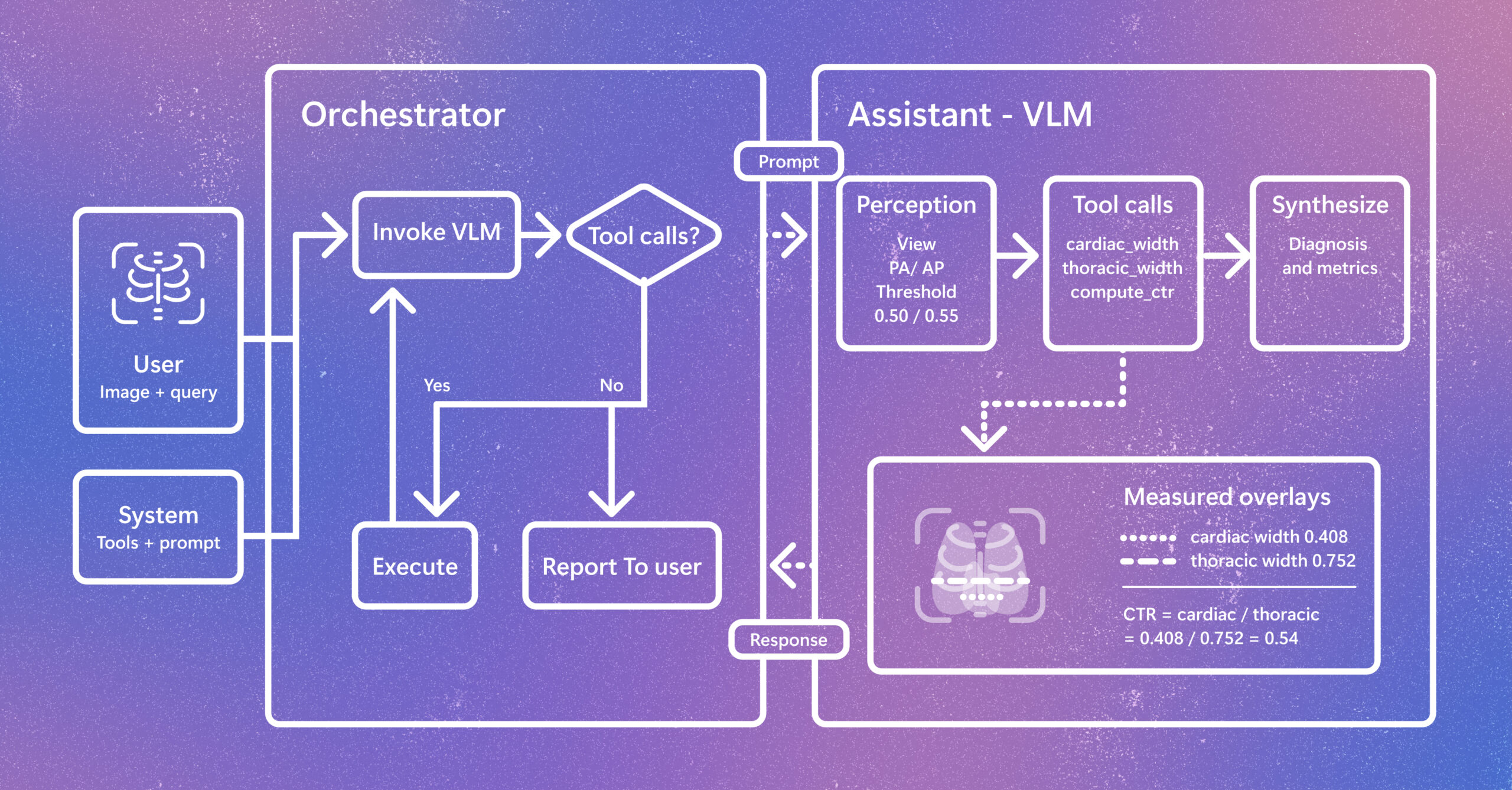
Radiology AI is evolving beyond report generation. CARE-X explores a unified approach that combines flexible reasoning, calibrated predictions, and measurement-based tools for chest X-ray interpretation. The post Introducing CARE-X: Towards Clinically Useful Radiology VLMs with Auxiliary Supervision, Reward-Aligned Learning, and Tool-Augmented Measurement appeared first on Microsoft Research.
Microsoft Research Blog· microsoft.comJul 30, 2026
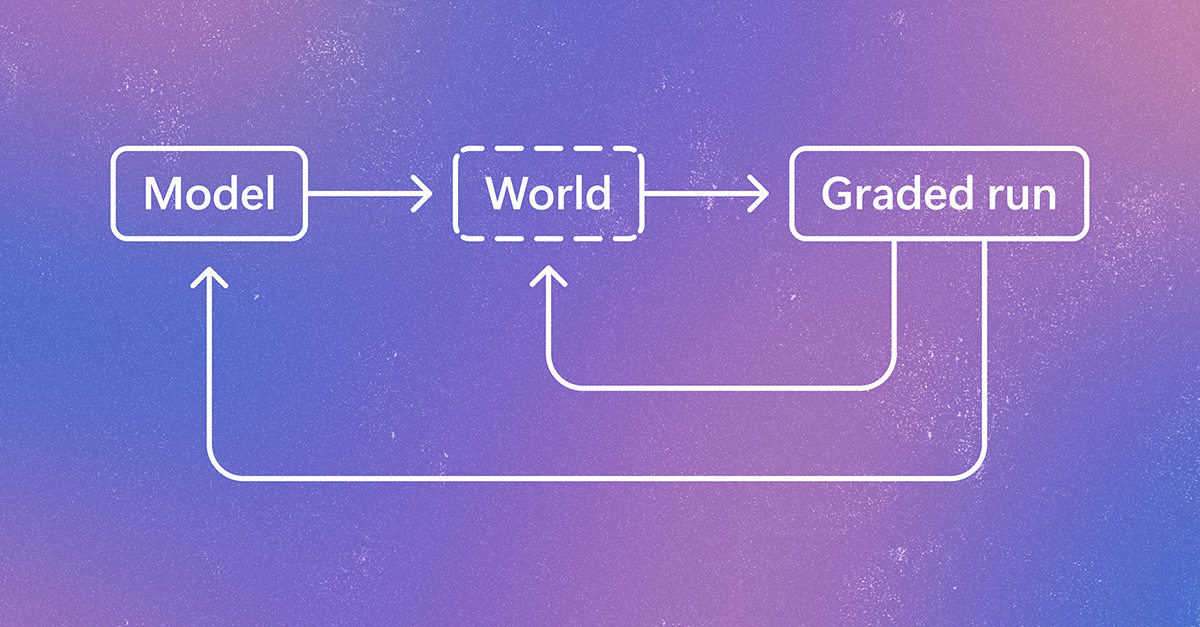
Computer-use AI agents struggle with multi-step workflows like email and customer support. Echoverse trains agents in realistic environments rather than simply providing more training tasks, helping them improve as the tasks, tests, and environments evolve. The post Echoverse: Deep, evolving environments for computer-use agents appeared first on Microsoft Research.
We use cookies to run the site and, with your consent, for analytics and to show ads.
See our Cookie Policy.