Large language model (LLM) agents may perform well on isolated tasks yet drift into inconsistency over extended interaction. We evaluate temporal consistency in a controlled 20-step multi-agent setting inspired by delayed-gratification studies. At each step, an agent chooses between continuing to delay a reward or claiming it immediately (terminating the episode). Across a full-factorial manipulation of social visibility (private vs public), persona stressors, and deliberation policy, we run 84,540 trajectories spanning 8 model families. Treating the first reward-claim as a time-to-event outcome, we estimate Kaplan-Meier survival curves and fit discrete-time hazard regression to quantify how experimental factors shift failure risk over time. Then, to analyze rationales and language patterns associated with failure, we build a seven-category taxonomy from 13,780 deliberation traces from agents who choose to terminate the episode, using an LLM-assisted labeling paired with human audit ($\kappa=0.83$). Rationale profiles change systematically with time and context: early failures are more impulse-driven, later failures more fatigue- and cost-benefit-framed, while public settings increase norm-oriented justifications. We also find a deliberation-inconsistency association: among failures, longer deliberation correlates with higher rates of intra-rationale contradiction (simultaneous pro-delay and pro-claim statements), challenging the assumption that more reasoning text implies greater consistency. Together, the survival and rationale analyses reveal distinct temporal reliability regimes and model-specific"failure fingerprints", offering an evaluation lens for diagnosing inconsistency in multi-turn agent behavior.

This publication proposes a definition and a classification of agile software development approaches and analyses ten software development methods that can be characterized as being "agile" against the defined criterion.
P. Abrahamsson, O. Salo, Jussi Ronkainen et al.· arXiv.org· 727 citations· ⚡54
The results indicate that software engineering work practices are chosen opportunistically, adapted and configured to provide value under the constrains imposed by the startup context.
Nicolò Paternoster, Carmine Giardino, M. Unterkalmsteiner et al.· Information and Software Tec...· 394 citations· ⚡54
The possibility of inferring high-dimensional data inference in a model that consists of a prior and an auxiliary differentiable constraint given some additional information is considered, thereby allowing a range of potential applications in adapting models to new domains and tasks.
Alexandros Graikos, Esmeralda S. Whitammer, N. Jojic et al.· Neural Information Processin...· 316 citations· ⚡15
It is proved that any global minimizer of the trajectory balance objective can define a policy that samples exactly from the target distribution, and empirically demonstrate the benefits of the trajectories balance objective for GFlowNet convergence, diversity of generated samples, and robustness to long action sequenc...
Esmeralda S. Whitammer, Moksh Jain, Emmanuel Bengio et al.· Neural Information Processin...· 302 citations· ⚡60
Consequences of happiness and unhappiness that are beneficial and detrimental for developers' mental well-being, the software development process, and the produced artifacts are found.
D. Graziotin, Fabian Fagerholm, Xiaofeng Wang et al.· Journal of Systems and Softw...· 236 citations· ⚡13
The Mobile-D approach is briefly outlined here and the experiences gained from four case studies are discussed, which helped develop an agile development approach for mobile application development.
P. Abrahamsson, Antti Hanhineva, H. Hulkko et al.· Conference on Object-Oriente...· 225 citations· ⚡18
Related blog posts
MIT News · Artificial Intelligence· news.mit.eduSep 29, 2026
Professor Sherry Turkle’s new book, “Artificial Intimacy,” offers a withering critique of chatbots and the antisocial dynamics she believes they encourage.
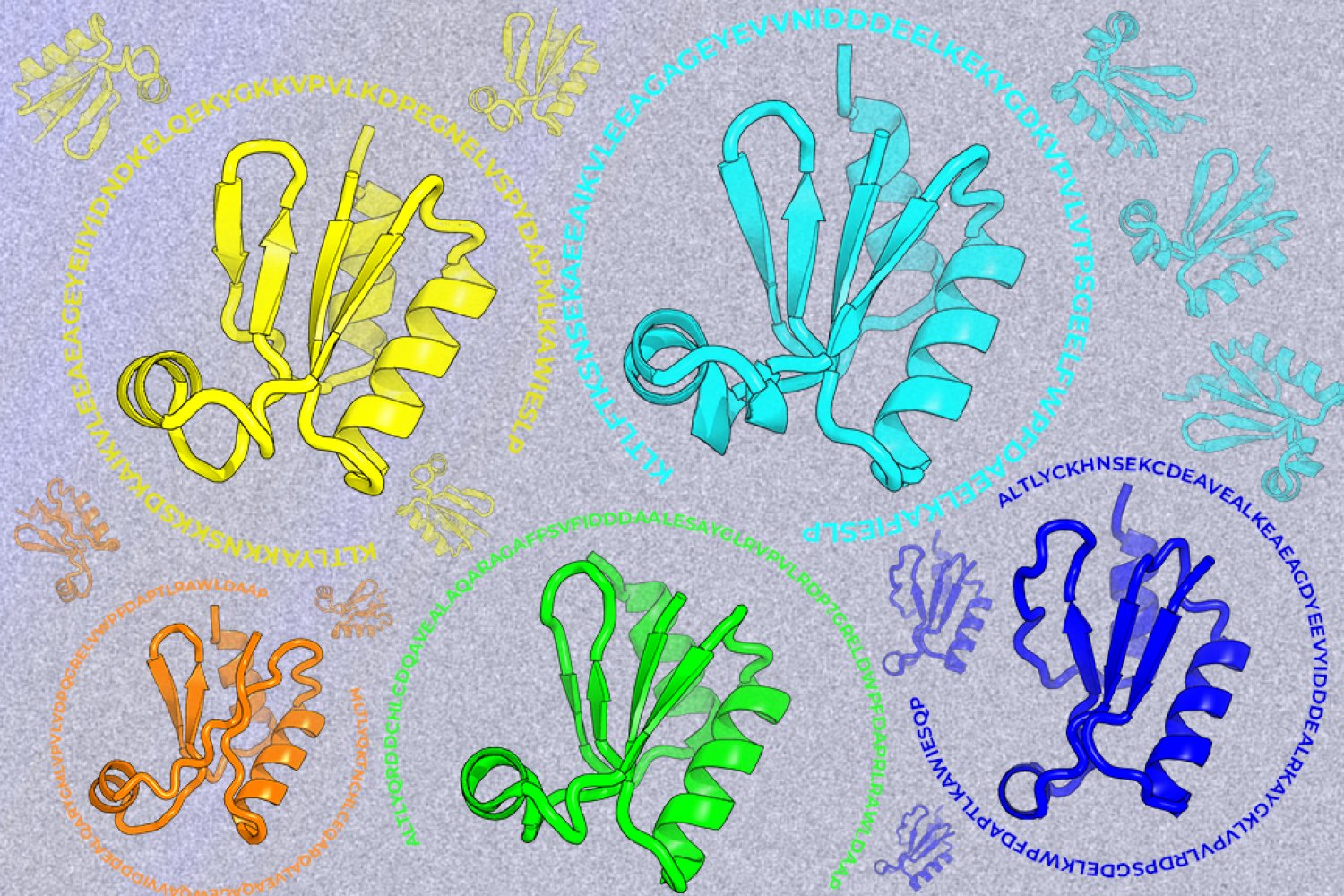
A new machine-learning framework aims to improve the success rate of computational protein design while moving away from results that reproduce sequences found in nature.
We use cookies to run the site and, with your consent, for analytics and to show ads.
See our Cookie Policy.