Skip to content

TAM-Chain: Multi-Scale Thyroid Cytology Classification via Absorbing Markov Chains and Shannon Entropy Uncertainty Quantification for False-Negative Suppression and Domain-Shift Adaptation

Sep 2026 · 0 citations · 12 references
Computer Science

TL;DR

The TAM-Chain framework proves to be a highly effective, safe, and adaptable solution for digital pathology workflows, successfully harmonizing automated diagnostic efficiency with stringent biological safety.


Abstract

Background&Problem: Thyroid Fine-Needle Aspiration Biopsy (FNAB) cytology based on the Bethesda System plays a pivotal role in early thyroid cancer detection; however, deep learning approaches face substantial challenges regarding high false-negative rates and overconfidence under clinical domain shift. Methods: In this study, we propose TAM-Chain, a multi-scale (10x, 20x, 40x) thyroid cytology classification framework leveraging Absorbing Markov Chain theory combined with Shannon Entropy-based Uncertainty Quantification. The framework dynamically models multi-magnification feature extraction as an absorbing stochastic process, enabling optimal stopping criteria and a human-in-the-loop referral mechanism to strictly suppress critical diagnostic errors. Results: Extensive evaluation on an internal test set (N = 235) demonstrates a Macro F1 score of 0.9741 with an absolute False-Negative Rate (FNR) of 0.00%. On an independent external validation set (N = 1015) presenting severe domain shift, TAM-Chain maintains superior stability and classification performance (Macro F1 = 0.7026) by adaptively adjusting the expected stopping step and triggering specialist referrals, significantly outperforming single-magnification baselines. Conclusion: The TAM-Chain framework proves to be a highly effective, safe, and adaptable solution for digital pathology workflows, successfully harmonizing automated diagnostic efficiency with stringent biological safety.

View source

Similar papers

Open access Aug 2026

Toward AI-Assisted Precision Diagnostics in Breast Cancer: Source-Group-Preserving Evaluation of Class-Imbalance Strategies for Ordered ER-IHC Segmentation

The findings support preliminary source-group-preserving methodological evidence rather than patient-level, whole-slide, or clinical validity, and support preliminary source-group-preserving methodological evidence rather than patient-level, whole-slide, or clinical validity.

Md Saiful Arefin, Mohammad Saiful Islam, Md Serajun Nabi et al. · 0 citations
Open access Oct 2026

BRAFV600E-Informed TI-RADS Reclassification of Biopsy Eligibility in Thyroid Nodules: A Retrospective Oracle Decision–Simulation Study

Background/Objectives: We evaluated a hypothetical oracle strategy that assumes BRAFV600E status is known before fine-needle aspiration (FNA), although testing usually requires FNA-derived material. Methods: This retrospective simulation included 4944 nodules from 4560 patients with linked ultrasound and molecular reco...

Jiao-Jiao Ma, Xue-Hua Xi, Yang Li et al. · 0 citations
Open access Aug 2026

Nomogram integrating BRAF V600E, serum biomarkers, and ultrasound features for malignancy risk stratification in C-TIRADS category 3 and 4 thyroid nodules

Background For patients with C-TIRADS 3 or 4 nodules who have undergone fine-needle aspiration cytology (FNAC), subsequent management decisions remain challenging, especially when cytological results are discordant with imaging findings or indeterminate. We built a nomogram incorporating BRAF V600E, serum biomarkers, a...

Yu Gao, Wen-Ran Zhang, Jing-Min Li et al. · 0 citations
Aug 2026

Classification of Invasiveness and Prediction of Ki-67 Expression Level in Pulmonary Ground-Glass Nodules Based on CT Images Using Artificial Intelligence

This work aimed to accurately determine the invasiveness level of pulmonary ground-glass nodules (GGNs) preoperatively and to adjust personalized treatment plans accordingly. This paper presents a multi-task artificial intelligence framework to simultaneously perform three-class invasiveness classification of GGNs and...

Hongda Pan, Si-Yuan Tang, Naiyu Wang et al. · 0 citations
Open access Sep 2026

A unified imaging-to-pharmacology AI framework for pulmonary nodule detection, malignancy classification, and mutation-stratified drug validation from low-dose CT scans

Background: Low-dose computed tomography (CT) screening for lung cancer can impose a substantial and clinically under-recognised psychosocial burden, with published studies reporting clinically significant anxiety among 30%–45% of screen-positive individuals, driven by a 96.4% benign false-positive rate and prolonged d...

Reddy Shiva Shankar, N. Deshai, Chigurupati Ravi Swaroop et al. · 0 citations
Preprint Oct 2026

Thyroid Nodule Segmentation in Ultrasound Images with Conformal Uncertainty Estimation

This work addresses thyroid ultrasound nodule segmentation as the first stage of a pipeline that also includes malignancy classification and metastatic risk prediction, and adopts DeepLabV3+, whose Atrous Spatial Pyramid Pooling captures multi-scale context.

Francesco Teodori, P. Brutti, Umberto Ferraro Petrillo · 0 citations

Related blog posts

MIT News · Artificial Intelligence Oct 28, 2026

Making machines that can listen

Professor Paris Smaragdis develops computers with superhuman hearing for applications like speech recognition, music understanding, and environmental monitoring.

Microsoft Research Blog Aug 11, 2026

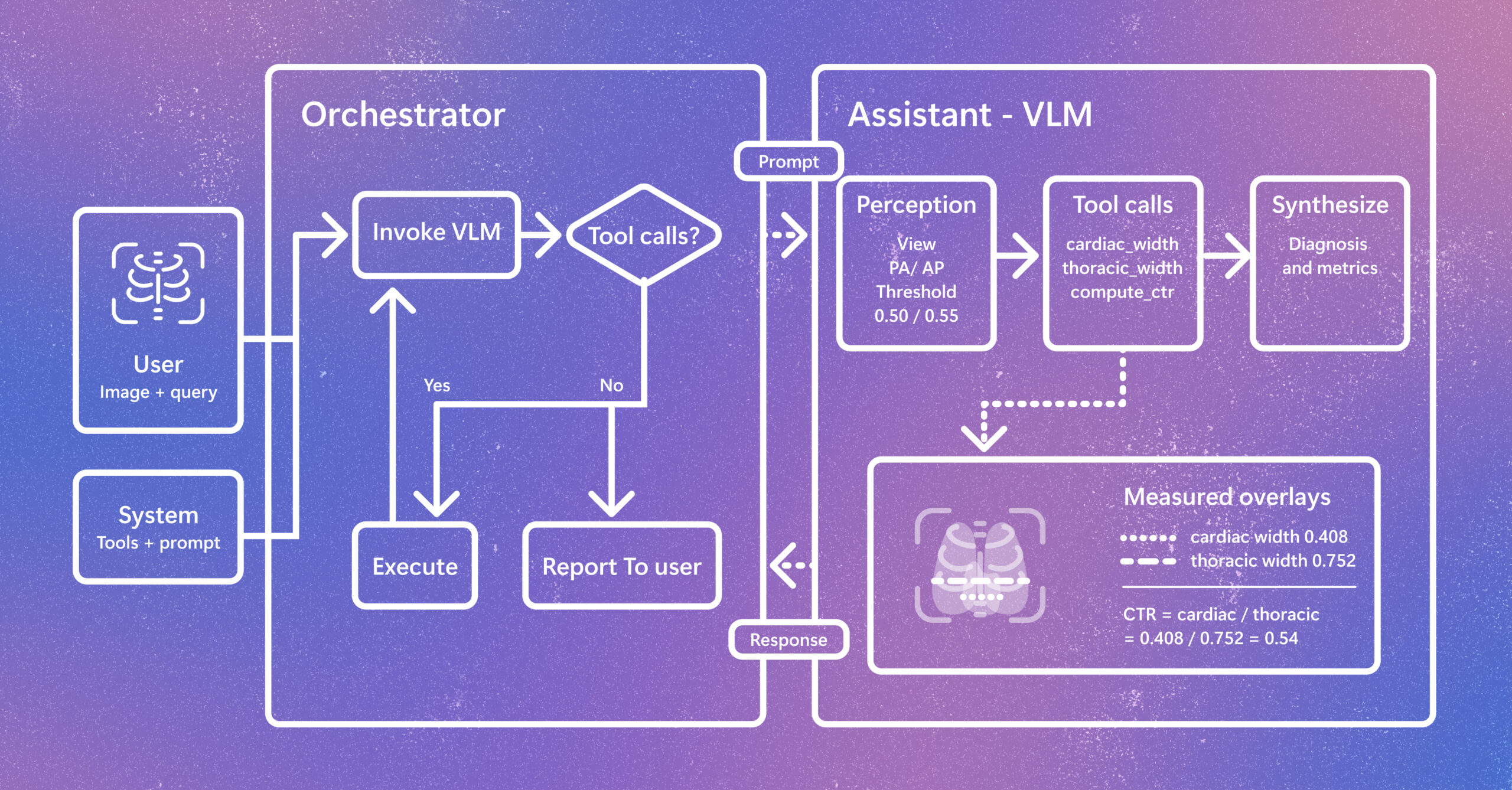
Introducing CARE-X: Towards Clinically Useful Radiology VLMs with Auxiliary Supervision, Reward-Aligned Learning, and Tool-Augmented Measurement

Radiology AI is evolving beyond report generation. CARE-X explores a unified approach that combines flexible reasoning, calibrated predictions, and measurement-based tools for chest X-ray interpretation. The post Introducing CARE-X: Towards Clinically Useful Radiology VLMs with Auxiliary Supervision, Reward-Aligned Learning, and Tool-Augmented Measurement appeared first on Microsoft Research.

We use cookies to run the site and, with your consent, for analytics and to show ads. See our Cookie Policy.