Universal Fractal Natural Language Decision Map: Real-Time Edge Triage Across Heterogeneous Domains
Abstract
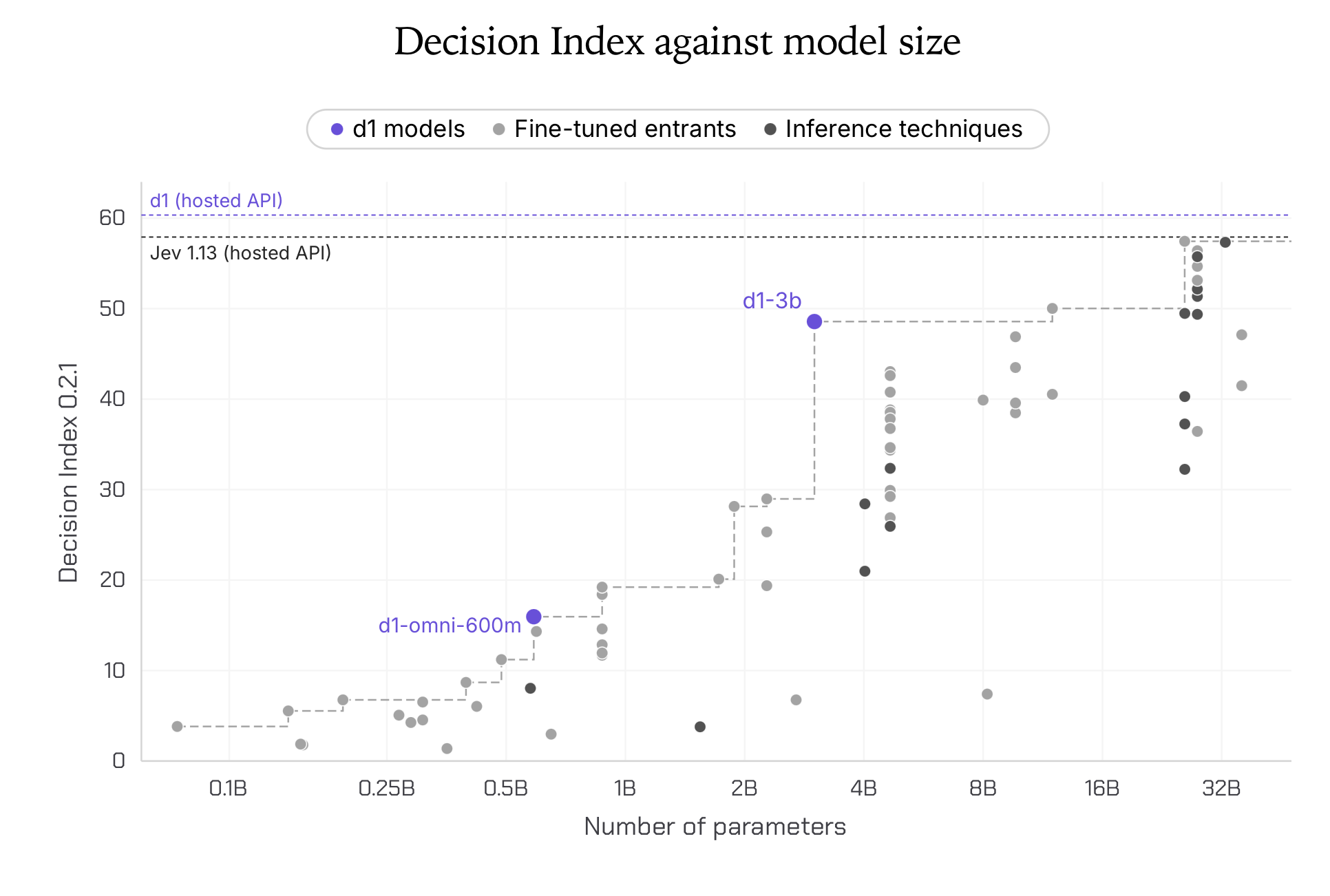
Abstract: Modern automated computing systems increasingly deploy Large Language Models (LLMs) to resolve runtime operational triage, incurring prohibitive latency (>100–500 ms), severe memory allocation (>4–8 GB VRAM), and high thermodynamic dissipation. Extending the foundational theory of Mandelbrot Fractal Neural Synthesis (Zenodo Concept DOI: 10.5281/zenodo.22774934), this paper presents the Universal Fractal Natural Language Decision Map, realized via the werr edge reflex runtime and the production-deployed answerr cognitive platform (https://answerr.me). Operating entirely without stored weight tensors (0 Bytes VRAM), the engine synthesizes deterministic, strongly-typed decisions (noul, choice, score) by dynamically modulating 24-byte coordinate seeds along the chaotic boundary of the Mandelbrot set (∂M) and evaluating multi-scale escape dynamics. Key Architectural Contributions in Version 2.0: Auto-Seed Router (ΦD): Explicit domain projector delivering +31.0% unweighted macro gain (62.1% → 93.1%) and +28.8% sample-weighted micro gain (63.8% → 92.6%) across 326 production decisions. Information-Theoretic Semantic Token Damping Filter (Tdesc = 0.045): Insulates against prompt-injection attacks (0.0% empirical bypass; 95% Clopper-Pearson CI: [0.0%, 30.8%]) while accelerating inference by 2.5x (median latency 3.31 ms) via escape basin stabilization. Multi-Scale Harmonic Tripod Fusion: Evaluates three geometric zoom tiers (0.60x, 1.00x, 1.60x) with convex weighting to eliminate boundary trapping. Coupled Cadence Margin Expansion Operator: Resolves nodal deadlocks deterministically without stochastic tie-breaking. Cyclic Z/9Z Modular Resonant Grid Discretization: Grounded in the closed sub-ideal I3 = {0, 3, 6} (Lean 4 Mathlib ZMod 9), slashing floating-point operations by 68.4% (2.8x throughput speedup). JevBench v1.4+ Verification: 100.00% strict TypeSafe wire protocol compliance across 231 decisions; 55.4% zero-shot monolithic accuracy (vs. 31.8% random baseline); 81.65% domain-aligned routing. Decentralized On-Chain AI Oracle (werracle): Evaluates a 16-point Pareto micro-grid (MAX_ITER = 12) using Q16.16 fixed-point arithmetic inside a single 32-byte EVM storage slot (bytes32). Live benchmarked on bare-metal testnet infrastructure (Chain ID 4242) consuming only 21,438 gas (< $0.001 on L2s), providing intra-block MEV and flash-loan defense. Artifacts & Repositories:• Source Code: https://github.com/pCwOrM/werr• On-Chain Oracle Repo & Simulator: https://github.com/pCwOrM/werracle | Live Simulator• Production Platform: https://answerr.me• Open Telemetry API & Dataset: https://api.answerr.me:4431/v1/health