This survey provides a roadmap for advancing pub/sub mechanisms to meet the demands of interactive distributed computing environments, and proposes the integration of agentic AI to enhance adaptability and autonomy.
Abstract
The exponential growth of IoT has led to billions of devices generating massive data streams. However, the resource-limited nature of IoT devices, coupled with the rise of interactive applications, requires efficient processing across the Device-Edge-Cloud continuum. The publish/subscribe (pub/sub) model has emerged as a preferred paradigm due to its scalability and flexibility. This review critically analyzes pub/sub systems, examining their architectures, security mechanisms, protocols, and real-world implementations. Unlike previous surveys, we explore their role in EdgeOps and real-time applications, identifying key limitations and opportunities for enhancement. Furthermore, we highlight underexplored challenges, such as adaptive message routing, and discuss how AI-driven pub/sub frameworks could improve system autonomy and responsiveness. This survey provides a roadmap for advancing pub/sub mechanisms to meet the demands of interactive distributed computing environments. Additionally, we propose the integration of agentic AI to enhance adaptability and autonomy. We further identify several key challenges that have the potential to shape the future of the pub/sub model, and we present these as important open issues for further exploration.

Spatial and proximity awareness are critical enablers for efficient communication in Cyber-Physical Systems (CPS) and the Internet of Things (IoT). However, the lack of suitable middleware support and standardized mechanisms for spatial awareness significantly limits the pervasiveness of location-dependent applications...
Philipp Ungrund, Kurt Rothermel, Sukanya Bhowmik· 0 citations
A systematic literature review was conducted following PRISMA guidelines, analyzing peer-reviewed studies published between 2021 and 2026 across major databases, and reveals that hardware–software co-design and custom neural accelerators are crucial for overcoming operational bottlenecks.
Marco Fiore, Francesca Lanera· Electronics· 1 citation
This review examines emerging trends in Artificial Intelligence (AI)-driven resource management within this continuum, with a focus on three directions: the transition from centralized to distributed and collaborative intelligence, cross-domain adaptation and knowledge transfer for heterogeneous IoT applications, and t...
Zhi-Yu Wang, Nilotpal Kapri, L. Bittencourt et al.· Frontiers in The Internet of...· 0 citations
Providing autonomous intelligence, pervasive connectivity and usability to human life and industry has led to the emergence of the Internet of Things (IoT). To support time-sensitive and resource-constrained applications, IoT systems nowadays increasingly rely on edge computing. This brings computation and decision-mak...
Elastic Context-Aware Replication (ECAR), an intelligent replication strategy tailored for IoT systems, dynamically redistributes services across the IoTcontinuum by leveraging both physical and logical contextual information.
Mrinal Kanti Mahato, Bikash Choudhury, Tanushree Garai et al.· International Journal of Com...· 0 citations
The rapid expansion of IoT devices has resulted in a paradigm shift from centralized cloud computing models to highly distributed computing continua that incorporate IoT devices, edge gateways, fog nodes, regional cloudlets, and hyperscale cloud data centers. In this survey, we provide an overview of Edge-Fog-Cloud-IoT...
Patrick Effraim, Micheal Mensah, Bismark Budu· Journal of King Saud Univers...· 0 citations
Related blog posts
MIT News · Artificial Intelligence· news.mit.eduOct 2, 2026
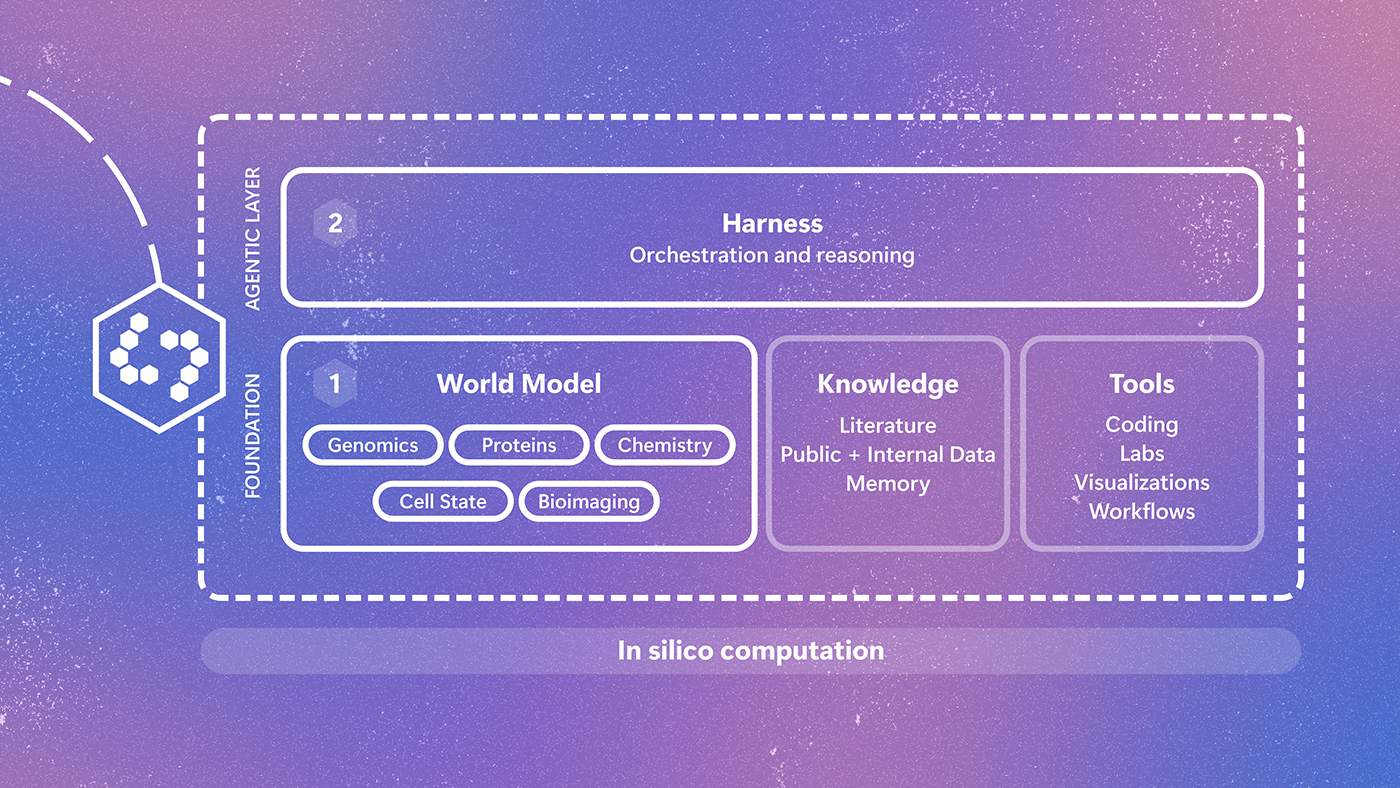
Biology doesn't operate in silos, and neither should the AI representation of it. Quine is an early-stage research effort to create a multimodal world model of biology. By connecting insights across biological scales and modalities, Quine helps scientists computationally search a space far larger than intuition allows and prioritize hypotheses before they reach the lab. Experimental results provide important feedback, helping researchers sharpen future research directions. The post Introducing Q…