Skip to content

Emotionally Adaptive IoT Ecosystems for Neurodivergent Cognitive Regulation

Sep 2026 · Advances in computational intelligence and robotics book series · 43 references

Abstract

Neurodivergent factors that commonly have their effect on learning, behavior and social participation are sensory hypersensitivity, emotional dysregulation and cognitive overload. It is on this chapter, where the Emotionally Adaptive IoT Ecosystem is proposed and it takes a step beyond the simple identification of emotions, to environmental control, on a closed-loop fashion. It is a framework that integrates multimodal affect sensing, predictive sensory load model, adaptation based on Reinforcement Learning and privacy preserving edge computing into one architecture. The system anticipates the occurrence of overloads and helps to achieve cognitive stability via real-time regulation of the lighting, acoustic and contextual assistance. The factors that are attained through embedded governance mechanisms are transparency, consent and ethical adherence. The model presents the intelligent and human oriented model of neurocognitive support, which has been scaled and provided at homes, classes, and therapeutic locations.

View source

Similar papers

#computer vision Review Sep 2017

Agile Software Development Methods: Review and Analysis

This publication proposes a definition and a classification of agile software development approaches and analyses ten software development methods that can be characterized as being "agile" against the defined criterion.

P. Abrahamsson, O. Salo, Jussi Ronkainen et al. · 727 citations · ⚡54
#computer vision Jun 2008

The impact of agile practices on communication in software development

The study shows that agile practices improve both informal and formal communication, but indicates that, in larger development situations involving multiple external stakeholders, a mismatch of adequate communication mechanisms can sometimes even hinder the communication.

M. Pikkarainen, Jukka Haikara, O. Salo et al. · 401 citations · ⚡48
#machine learning Review Open access Oct 2014

Software development in startup companies: A systematic mapping study

The results indicate that software engineering work practices are chosen opportunistically, adapted and configured to provide value under the constrains imposed by the startup context.

Nicolò Paternoster, Carmine Giardino, M. Unterkalmsteiner et al. · 394 citations · ⚡54

Related blog posts

Microsoft Research Blog Sep 29, 2026

Introducing Quine: An AI research system designed for the complexity of biology

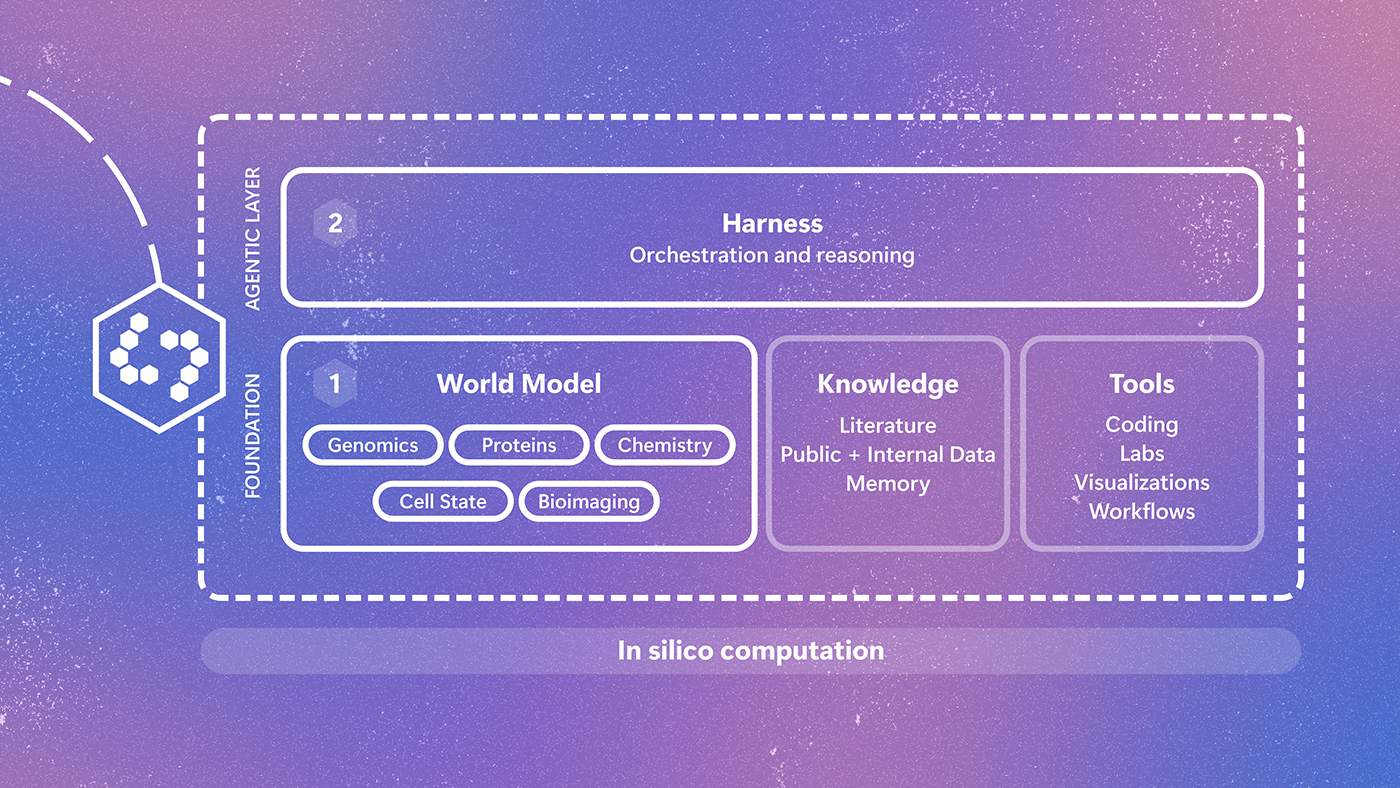
Biology doesn't operate in silos, and neither should the AI representation of it. Quine is an early-stage research effort to create a multimodal world model of biology. By connecting insights across biological scales and modalities, Quine helps scientists computationally search a space far larger than intuition allows and prioritize hypotheses before they reach the lab. Experimental results provide important feedback, helping researchers sharpen future research directions. The post Introducing Q…

We use cookies to run the site and, with your consent, for analytics and to show ads. See our Cookie Policy.