Skip to content
#federated learning Open access

FuzzyCS-Proto: fuzzy client selection with class-wise prototype learning for federated ship underwater structural surface condition classification

Sep 2026 · Journal of King Saud University - Computer and Information Sciences · 41 references
Infrastructure Maintenance and Monitoring

Abstract

Underwater structural inspection is essential for ship maintenance and marine infrastructure management, but practical inspection data are often distributed across different vessels, ports, inspection platforms and sensing devices. Direct centralized training may be limited by data ownership, communication cost, and operational privacy, while standard federated learning is vulnerable to non-independent and identically distributed (non-IID) data distributions, underwater image degradation and severe class imbalance. To address these challenges, this paper proposes FuzzyCS-Proto, a quality-aware fuzzy client selection framework with class-wise prototype learning for federated underwater structural surface condition classification. The proposed method evaluates client reliability using local validation performance, prediction uncertainty, image quality, and class balance, and selects more informative clients for server aggregation. In addition, class-wise prototypes are extracted from local feature embeddings and aggregated with class-specific reliability to provide semantic anchors for cross-client representation alignment. A minority-class coverage constraint is further introduced to reduce the risk of excluding rare but safety-critical categories. Experiments are conducted on an image-level classification dataset derived from LIACi by cropping annotated surface-condition regions into class-specific image patches and generating normal samples from non-defective regions. The resulting dataset contains five classes: corrosion, defect, marine growth, normal surface, and paint peel. Four federated settings, including IID, Label-skew Non-IID, Quality-skew, and Label+Quality-skew, are constructed to evaluate different types of client heterogeneity. Experimental results show that FuzzyCS-Proto improves Macro-F1 over several typical baselines such as FedAvg and FedProx, achieving Macro-F1 scores of 0.6501, 0.6292, 0.6641, and 0.5074 under the four settings, respectively. Ablation, sensitivity, and Grad-CAM analyses further verify the effectiveness and interpretability of reliability-aware client selection and class-wise prototype guidance.
View source

Similar papers

#machine learning Review Open access Oct 2014

Software development in startup companies: A systematic mapping study

The results indicate that software engineering work practices are chosen opportunistically, adapted and configured to provide value under the constrains imposed by the startup context.

Nicolò Paternoster, Carmine Giardino, M. Unterkalmsteiner et al. · 394 citations · ⚡54
#machine learning Review Open access Jun 2014

Why Early-Stage Software Startups Fail: A Behavioral Framework

This state-of-practice investigation was performed using a literature review followed by a multiple-case study approach and presents how inconsistency between managerial strategies and execution can lead to failure by means of a behavioral framework.

Carmine Giardino, Xiaofeng Wang, P. Abrahamsson · 175 citations · ⚡19
#machine learning Review Open access Oct 2016

“Failures” to be celebrated: an analysis of major pivots of software startups

This study conducts a case survey study based on the secondary data of the major pivots happened in 49 software startups, and demonstrates that customer need pivot is the most common among all pivot types.

Sohaib Shahid Bajwa, Xiaofeng Wang, Anh Nguyen-Duc et al. · 127 citations · ⚡15
#machine learning Review Open access May 2016

Key Challenges in Software Startups Across Life Cycle Stages

It is found that what perceived as biggest challenges by software startups do vary across different life cycle stages, even though its significance decreases when the learning focuses of the startups move from problem to solution and their products mature.

Xiaofeng Wang, Henry Edison, Sohaib Shahid Bajwa et al. · 62 citations · ⚡6

Related blog posts

Microsoft Research Blog Sep 30, 2026

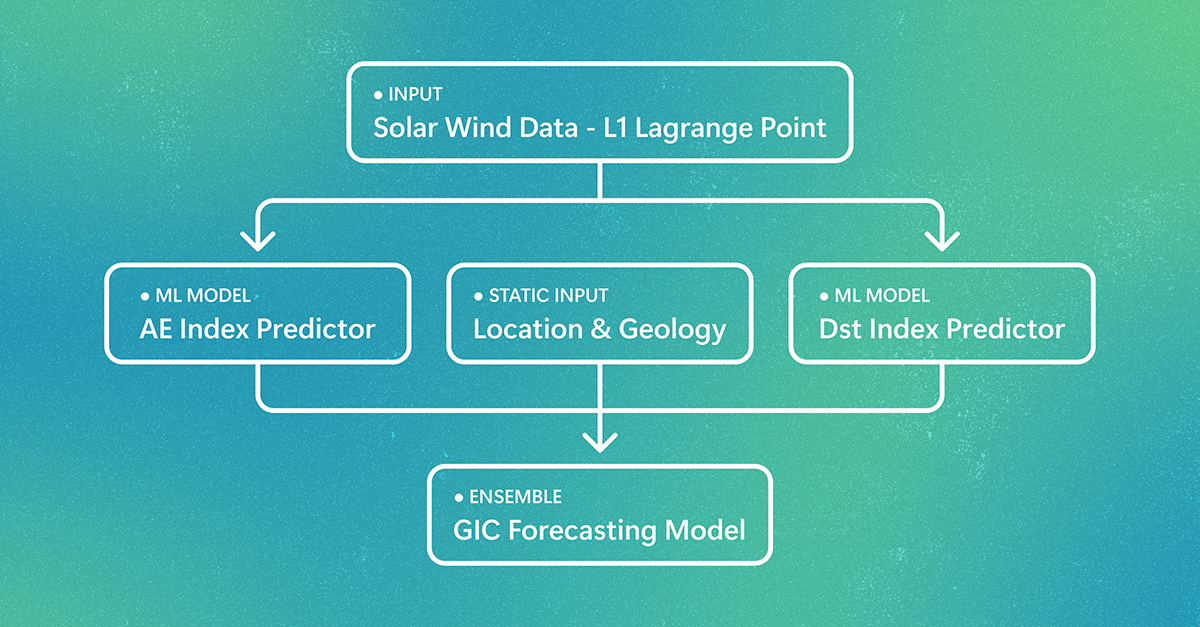
Forecasting space weather risks on power grids

Extreme space-weather events can damage power systems on Earth and degrade GPS accuracy and satellite operations. A new machine learning system can predict where damage is likely to occur 30-60 minutes before a storm arrives. The post Forecasting space weather risks on power grids appeared first on Microsoft Research.

We use cookies to run the site and, with your consent, for analytics and to show ads. See our Cookie Policy.