Skip to content

Modeling Imbalanced Financial Transactions for Credit Card Fraud Detection Using Machine Learning and Deep Learning Techniques

Sep 2026 · International Journal for Research in Applied Science and Engineering Technology · 0 citations
Imbalanced Data Classification Techniques

TL;DR

This review aims at presenting a comprehensive review of the advanced techniques in the field of credit card fraud detection with special emphasis on the evolution of advanced deep learning techniques from conventional machine learning techniques in the time frame of 2023-2025.

Abstract

As the growth of electronic commerce and digital payment systems is increasing at a rapid pace, the menace of credit card fraud has surfaced as a highly advanced global threat with a huge financial loss of billions of dollars on a yearly basis. The conventional fraud detection systems using traditional rule-based systems or conventional machine learning techniques have become inadequate in dealing with the huge volume, velocity, and complex nonlinear characteristics of the transactions. This review aims at presenting a comprehensive review of the advanced techniques in the field of credit card fraud detection with special emphasis on the evolution of advanced deep learning techniques from conventional machine learning techniques in the time frame of 2023-2025. It highlights a critical review of conventional machine learning techniques such as Random Forest and Support Vector Machines with advanced deep learning techniques such as Convolutional Neural Network and Long ShortTerm Memory networks. This demonstrates that the results of these individual models face difficulties in handling issues like class imbalance and the need for intensive feature engineering. On the other hand, recent hybrid models, such as the Deep Hybrid CLST model, have shown promising results in handling the problem of detecting financial fraud by integrating spatial feature learning and temporal sequence learning. Furthermore, the review has shown the increasing trend of data silos in the industry due to the enforcement of privacy policies and has introduced Federated Learning and Graph Neural Networks as possible solutions for collaborative learning in the detection of financial fraud. Lastly, the review has shown the difficulties in handling the problem of detecting financial fraud, including the interpretability of the model and scalability in real-time, and has shown the possible future direction of developing stronger and more efficient financial fraud detection systems by focusing on Explainable AI and distributed computing frameworks

Read PDF

Similar papers

#machine learning Review Open access Oct 2014

Software development in startup companies: A systematic mapping study

The results indicate that software engineering work practices are chosen opportunistically, adapted and configured to provide value under the constrains imposed by the startup context.

Nicolò Paternoster, Carmine Giardino, M. Unterkalmsteiner et al. · 394 citations · ⚡54
#machine learning Review Open access Jun 2014

Why Early-Stage Software Startups Fail: A Behavioral Framework

This state-of-practice investigation was performed using a literature review followed by a multiple-case study approach and presents how inconsistency between managerial strategies and execution can lead to failure by means of a behavioral framework.

Carmine Giardino, Xiaofeng Wang, P. Abrahamsson · 175 citations · ⚡19
#machine learning Review Open access Oct 2016

“Failures” to be celebrated: an analysis of major pivots of software startups

This study conducts a case survey study based on the secondary data of the major pivots happened in 49 software startups, and demonstrates that customer need pivot is the most common among all pivot types.

Sohaib Shahid Bajwa, Xiaofeng Wang, Anh Nguyen-Duc et al. · 127 citations · ⚡15
#computer vision Review Open access Mar 2016

Determinants of overweight or obesity among ever-married adult women in Bangladesh

The findings of the study indicate that a large number of women in Bangladesh are suffering from being overweight or obese, and multiple factors are responsible for this including, older age,being from wealthy households, higher education, being from food-secured households, watching TV at least once a week, and being...

Haribondhu Sarma, N. Saquib, M. Hasan et al. · 75 citations · ⚡5
#artificial intelligence Open access Sep 2026

Generating Interesting Scientific Ideas using Knowledge Graphs and LLMs: Evaluations with 100 Research Group Leaders

The rapid growth of scientific literature makes it increasingly challenging for researchers to identify novel and impactful ideas, especially across disciplines. Modern artificial intelligence (AI) systems offer new opportunities for scientific ideation, but how compelling are AI-generated ideas, and how can their qual...

Xuemei Gu, Mario Krenn · 65 citations

Related blog posts

Microsoft Research Blog Jul 13, 2026

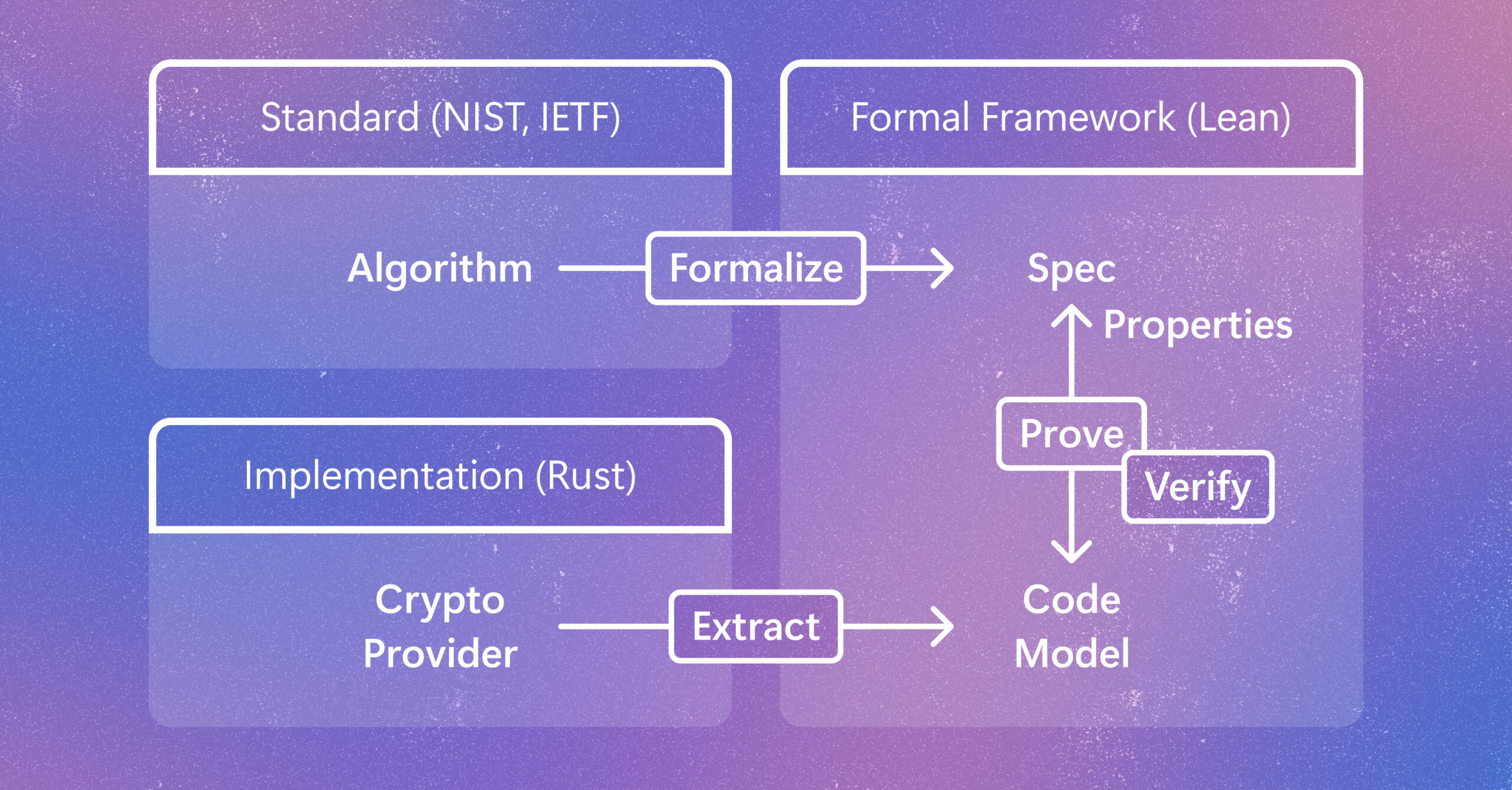
Verifying Rust cryptography in SymCrypt, from standards to code

Cryptographic code supports vital protections in modern computing systems. Learn how a new method helps verify code as developers write it while preserving speed and adaptability as it gets implemented and evolves. The post Verifying Rust cryptography in SymCrypt, from standards to code appeared first on Microsoft Research.

MIT News · Artificial Intelligence Nov 23, 2026

Many languages, one common neural code

Analyzing speakers of 21 languages, an MIT study using multilingual AI finds the human brain may represent meaning in much the same way.

We use cookies to run the site and, with your consent, for analytics and to show ads. See our Cookie Policy.