Skip to content
#federated learning Open access

Capability-Aware Distributed Learning and Inference for Heterogeneous 6G Edge Environments

Sep 2026 · Zenodo (CERN European Organization for Nuclear Research)

Abstract

The rapid evolution of sixth-generation (6G) wireless networks is increasing the demand for AI-enabled edge intel ligence that can operate across devices with different capabil ities, resource constraints, and availability. Existing distributed learning paradigms, including Federated Learning (FL) and Split Learning (SL), either impose uniform computational burdens regardless of device capability or rely on sequential execution pipelines that are sensitive to node failures. To address these challenges, we propose a Capability-Aware Orchestrator (CAO) for joint distributed learning and inference in heterogeneous 6G environments. CAO profiles both node resources and model component requirements, then assigns workloads according to the capability of each node. To improve reliability, model components are assigned with overlapping coverage, allowing training to continue even when nodes become unavailable. A layer-aware aggregation mechanism is used to combine model updates and produce stable global models. Experiments on CIFAR-10 using ResNet-18 across eight heterogeneous edge nodes show that CAO achieves over 96% of the accuracy of FL and SL while reducing training time by up to 81%, communication overhead by up to 66%, and trained parameters by up to 53%. Unlike SL, which stalls when nodes fail, CAO maintains successful end-to end training under both permanent and transient node failures. In addition, the capability-aware allocation strategy reduces distributed inference latency by up to 89% compared with random deployment, demonstrating its suitability for practical 6G edge environments.
View source

Similar papers

#machine learning Review Open access Oct 2014

Software development in startup companies: A systematic mapping study

The results indicate that software engineering work practices are chosen opportunistically, adapted and configured to provide value under the constrains imposed by the startup context.

Nicolò Paternoster, Carmine Giardino, M. Unterkalmsteiner et al. · 394 citations · ⚡54
#machine learning Review Open access Jun 2014

Why Early-Stage Software Startups Fail: A Behavioral Framework

This state-of-practice investigation was performed using a literature review followed by a multiple-case study approach and presents how inconsistency between managerial strategies and execution can lead to failure by means of a behavioral framework.

Carmine Giardino, Xiaofeng Wang, P. Abrahamsson · 175 citations · ⚡19
#machine learning Review Open access Oct 2016

“Failures” to be celebrated: an analysis of major pivots of software startups

This study conducts a case survey study based on the secondary data of the major pivots happened in 49 software startups, and demonstrates that customer need pivot is the most common among all pivot types.

Sohaib Shahid Bajwa, Xiaofeng Wang, Anh Nguyen-Duc et al. · 127 citations · ⚡15
#machine learning Review Open access May 2016

Key Challenges in Software Startups Across Life Cycle Stages

It is found that what perceived as biggest challenges by software startups do vary across different life cycle stages, even though its significance decreases when the learning focuses of the startups move from problem to solution and their products mature.

Xiaofeng Wang, Henry Edison, Sohaib Shahid Bajwa et al. · 62 citations · ⚡6

Related blog posts

Microsoft Research Blog Sep 30, 2026

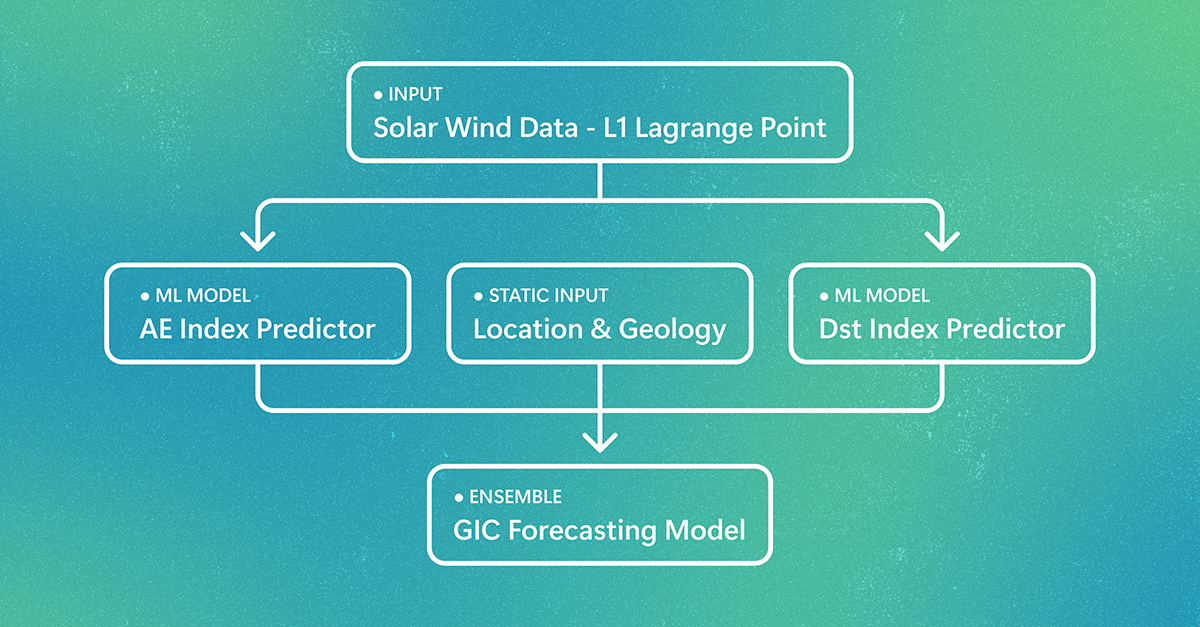
Forecasting space weather risks on power grids

Extreme space-weather events can damage power systems on Earth and degrade GPS accuracy and satellite operations. A new machine learning system can predict where damage is likely to occur 30-60 minutes before a storm arrives. The post Forecasting space weather risks on power grids appeared first on Microsoft Research.

We use cookies to run the site and, with your consent, for analytics and to show ads. See our Cookie Policy.