Spatio-Temporal Video Grounding (STVG) aims to localize the spatio-temporal tube in a video corresponding to a natural language query. While recent methods achieve strong performance in fully supervised, weakly supervised, and zero-shot settings, they typically rely on computationally expensive architectures, complex training pipelines, or multimodal large language models. We present Pocket-STVG (P-STVG), a lightweight cascade architecture that addresses STVG by combining efficient pre-trained components instead of large end-to-end models. P-STVG integrates a temporal-aware video encoder based on MobileViCLIP, a spatial encoder-decoder derived from MDETR, and a shared aligned text encoder. Temporal localization is performed through either a lightweight 1D U-Net or a simple thresholding strategy, enabling the same framework to operate in both weakly supervised and zero-shot settings. Furthermore, video representations are precomputed independently of the query, yielding an indexing-friendly pipeline for efficient inference and large-scale video collections. Despite requiring fewer than 90M parameters, P-STVG performs on par with weakly supervised methods and improves on earlier zero-shot approaches at a fraction of their memory and computational cost, establishing a favorable performance-efficiency trade-off for STVG.

This publication proposes a definition and a classification of agile software development approaches and analyses ten software development methods that can be characterized as being "agile" against the defined criterion.
P. Abrahamsson, O. Salo, Jussi Ronkainen et al.· arXiv.org· 727 citations· ⚡54
The study shows that agile practices improve both informal and formal communication, but indicates that, in larger development situations involving multiple external stakeholders, a mismatch of adequate communication mechanisms can sometimes even hinder the communication.
M. Pikkarainen, Jukka Haikara, O. Salo et al.· Empirical Software Engineeri...· 401 citations· ⚡48
The results indicate that software engineering work practices are chosen opportunistically, adapted and configured to provide value under the constrains imposed by the startup context.
Nicolò Paternoster, Carmine Giardino, M. Unterkalmsteiner et al.· Information and Software Tec...· 394 citations· ⚡54
The possibility of inferring high-dimensional data inference in a model that consists of a prior and an auxiliary differentiable constraint given some additional information is considered, thereby allowing a range of potential applications in adapting models to new domains and tasks.
Alexandros Graikos, Esmeralda S. Whitammer, N. Jojic et al.· Neural Information Processin...· 316 citations· ⚡15
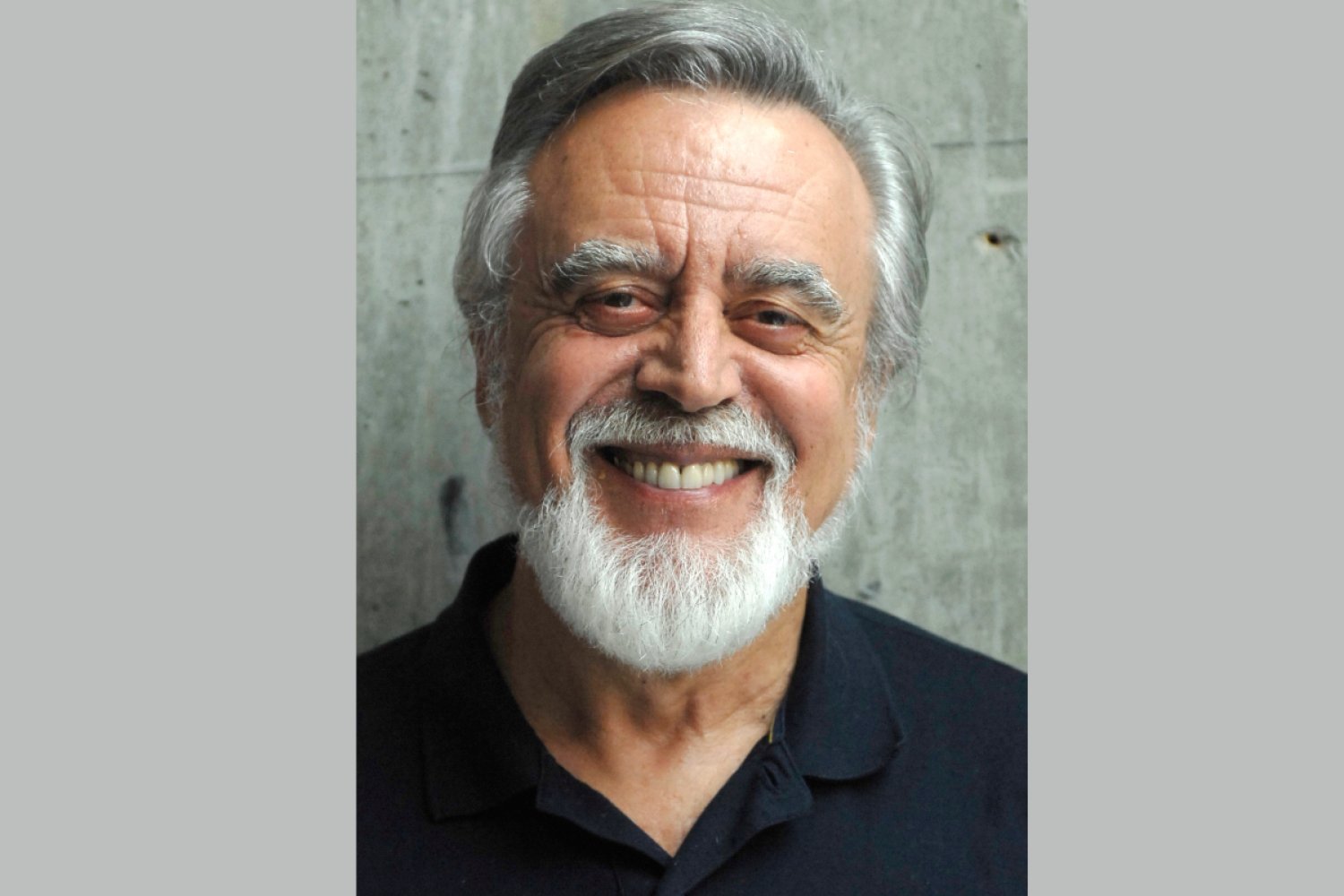
Known for his clear and elegant writing style, Bertsekas shaped fields from control and optimization to large-scale computation and artificial intelligence.