Theoretical analysis shows that the fixed-point distributions of RWTD interpolate between off-policy reward tilting of the reference and on-policy tilting of the current model, providing a principled approach to balancing reward adaptation with retention of prior knowledge.
Abstract
One-step generators enable high-quality visual generation with a single network evaluation, but their post-training is difficult: general implicit generators provide neither tractable likelihoods nor denoising trajectories, and many rewards are non-differentiable. We introduce Reward-Weighted Transport Distillation (RWTD), a post-training method that requires only generated samples and scalar reward evaluations. Rather than aligning solely to the conventional reward-tilted reference distribution, RWTD constructs an adaptive target that mixes separately tilted current and reference distributions. The current component incorporates improvements discovered during training, while the reference component anchors the target to the pretrained generator. RWTD realizes this target through feature-space optimal transport and fixed-point regression. Theoretical analysis shows that the fixed-point distributions of RWTD interpolate between off-policy reward tilting of the reference and on-policy tilting of the current model, providing a principled approach to balancing reward adaptation with retention of prior knowledge. Empirically, RWTD substantially improves the GenEval score of the one-step SANA Sprint 1.6B backbone from 0.73 to 0.80, while separate preference alignment experiments demonstrate strong cross-reward generalization that yields balanced improvements and preservation of compositional capabilities.
This work considers one-step generators from an optimal transport view, investigating Wasserstein Gradient Flow (WGF) for modeling smooth and controlled distributional evolution in probability space, and proposes a novel reward-guided fine-tuning of a one-step generative model via WGF.
Hoseong Hwang, Woorim Han, Joungin Chun et al.· 0 citations
Reward fine-tuning aims to update a pre-trained flow-based generative model to improve the downstream reward of its generated samples. Existing methods typically formulate this problem as sampling from a reward-tilted distribution, the solution to a KL-regularized reward-maximization problem. Here, we introduce an opti...
Abbas Mammadov, Jerry Huang, Justin Lin et al.· 0 citations
This work proposes REST (Reward-Enhanced Scored-Trajectory Distillation), a single-stage RL-distillation co-training framework that attaches a decoupled student to an arbitrary RL teacher that enables few-step CFG-free inference that matches or surpasses its 40-step RL teacher, with an overall additional training cost...
Yuhan Li, Fan-Gao Zeng, Sicong Kang et al.· 0 citations
This work proposes DreOPD, a Degraded-reference extrapolative OPD method for flow-matching models that bridges these two paradigms, and converts implicit reward extrapolation into closed-form velocity regression, enabling extrapolative post-training with the stability of OPD.
Ming-Hung Lin, Cheng-Fei Cai, Lin Xu et al.· 2 citations
Variance-reduced Guidance and Adaptive Selection (VGAS), a simple yet effective inference-time framework that reduces the variance of the guidance estimate for both reward types, applies the reward tilting in the clean-token logits, where the pretrained schedule is preserved, and sets the selection temperature per step...
Few-step generative models can generate high-fidelity samples within a few function evaluations. Despite this efficiency, generated samples may not exhibit desirable properties. When these properties are difficult to encode as an explicit reward function, direct preference optimization (DPO) can align generative models...
Jaewoo Lee, Kyuil Sim, Hyeongyu Kang et al.· 0 citations
Related blog posts
Microsoft Research Blog· microsoft.comAug 11, 2026
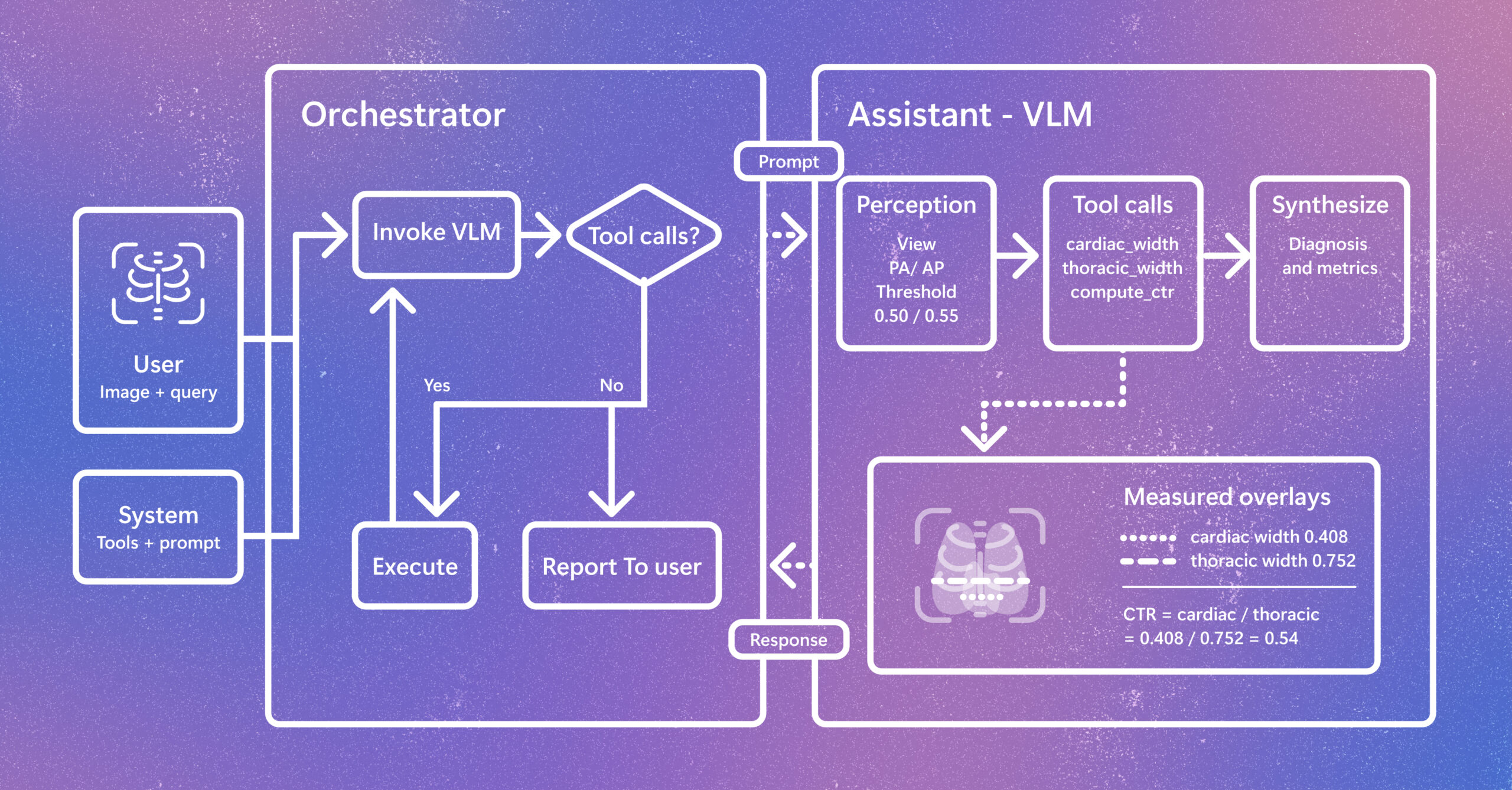
Radiology AI is evolving beyond report generation. CARE-X explores a unified approach that combines flexible reasoning, calibrated predictions, and measurement-based tools for chest X-ray interpretation. The post Introducing CARE-X: Towards Clinically Useful Radiology VLMs with Auxiliary Supervision, Reward-Aligned Learning, and Tool-Augmented Measurement appeared first on Microsoft Research.
