Sep 2026· International Journal of Machine Learning and Cybernetics· Vol 17· 0 citations· 44 references
Stock Market Forecasting Methods
TL;DR
This work rethink financial risk contagion from the perspective of frequency domain analysis in signal processing and proposes an innovative Frequency-Guided Adaptive Graph Network (FAGNet) framework, proving the effectiveness of frequency domain decoupling.
A Constraint-Guided Dynamic Graph Network (ConDyGNet), whose core idea is “global basis, dynamic weights”, which learns a low-rank global basis as a shared structural constraint and generates patch-wise basis mixing weights to construct dynamic propagation graphs.
Zhen-Zhou Li, Xiang Li, Zhibin Niu· Proceedings of the Thirty-Fi...· 0 citations
A capacity theorem shows that, under a full-rank feature assumption, a restricted subfamily matches the chaos coefficients of any Gaussian-latent random graph signal, with exponentially decaying truncation error under a growth condition; the task-level claims are established empirically.
Fred Xu, Thomas Markovich, Florence Regol et al.· 0 citations
This paper proposes ICSS-AGCN-GRU, a novel deep learning architecture addressing conservative bias and over-smoothing in multivariate time series forecasting. The framework integrates three technical innovations: (1) a modified ICSSGARCH- t algorithm for automatic variance breakpoint detection and regime segmentation;...
Sai Ren, Jiani Heng· International Conference on...· 0 citations
Multiresolution analysis is widely applied to equity markets on the assumption that different frequency bands capture distinct trading behaviors and information flows. Whether those bands reveal structurally distinct equity communities, or mostly re-express a shared dependence backbone, remains unresolved. We address t...
FreqNet is presented, a compact and interpretable forecaster that operates in the frequency domain that achieves the best average error on ETTh2, Exchange, and NASDAQ 100, is competitive across the remaining ETT datasets and the high-dimensional sets, and improves on the closely related frequency-domain baseline FITS.
This paper proposes a structurally regularized causal network framework, denoted by STIC×PCMCI, for directional transmission identification and network-based signal construction in high-dimensional financial time series. The framework uses PCMCI to identify lagged causal relations under multivariate conditioning, while...
Zhen-Hua Liu, Li Lin· Mathematics· 0 citations
Related blog posts
MIT News · Artificial Intelligence· news.mit.eduJul 15, 2026
Assistant Professor Pat Pataranutaporn describes a new interface that lets everyday users glimpse inside an AI's neural network before their chatbot ever says a word.
Microsoft Research Blog· microsoft.comJul 13, 2026
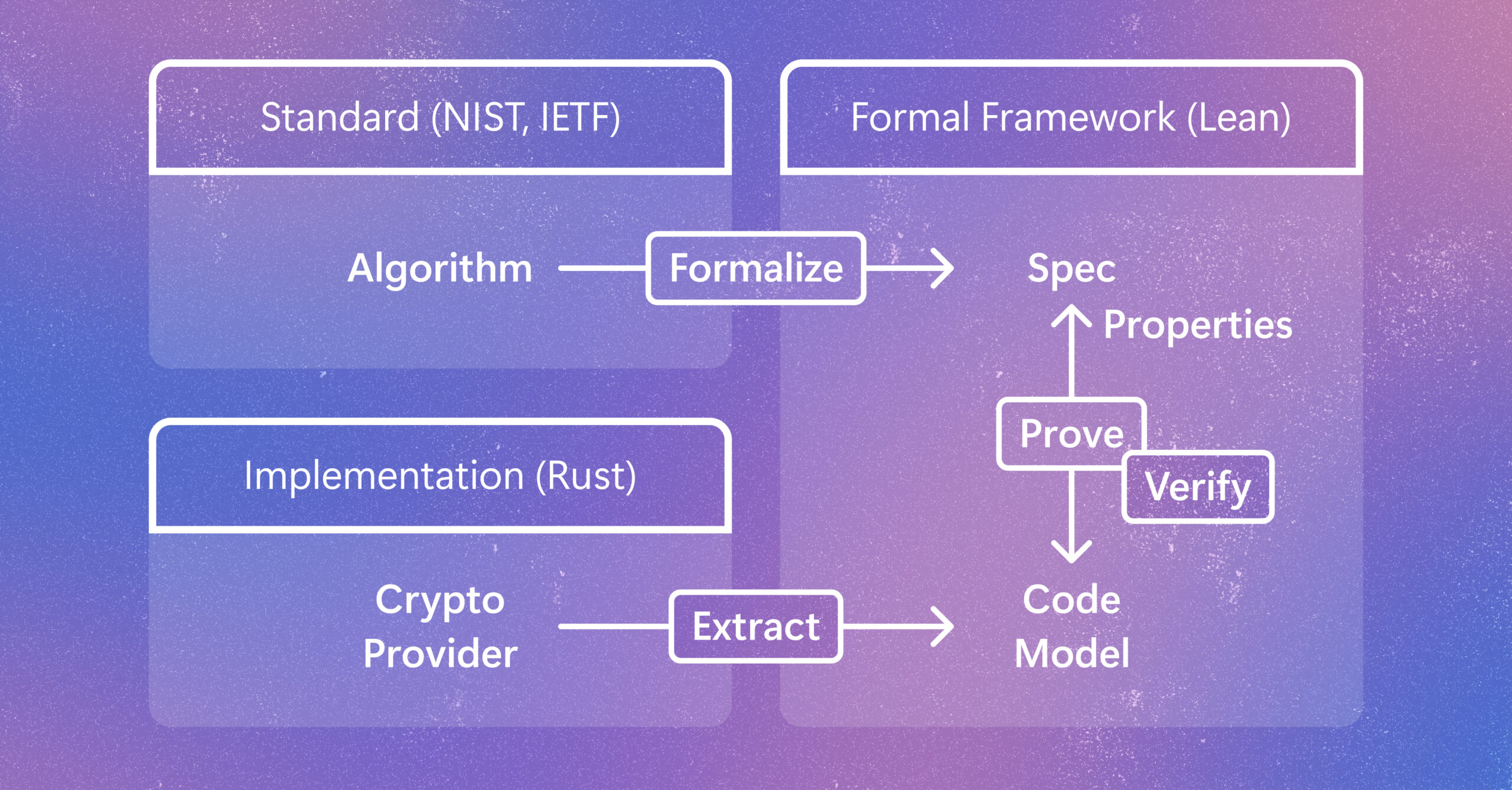
Cryptographic code supports vital protections in modern computing systems. Learn how a new method helps verify code as developers write it while preserving speed and adaptability as it gets implemented and evolves. The post Verifying Rust cryptography in SymCrypt, from standards to code appeared first on Microsoft Research.
MIT News · Artificial Intelligence· news.mit.eduJul 6, 2026
PhD student Rachel Sava, winner of the Envisioning the Future of Computing Prize, explores transformative improvements and dystopian risks of neural technology.