Skip to content

Analysis of intelligent offloading and hybrid optimization for low-latency and energy-efficient Fog–Cloud computing in IoT systems

Sep 2026 · Journal of High Speed Networks · 0 citations · 19 references
IoT and Edge/Fog Computing

Abstract

A high rate of increment in the internet-based devices generates huge amounts of data every day in almost all aspects of life. These internet-enabled devices don’t have any storage, processing, or subject capacity to handle and store this large quantity of correct and voluminous data. Nevertheless, the current fog computing solutions have been limited to being able to completely reduce latency through poor task scheduling and high communication impediments. The present paper discusses and enhances the low-latency in Fog computing architectures on the Internet of Things (IoT) systems. This work presents a comparative analytical framework called EDGE-LAT for systematically evaluating the existing latency-aware task offloading and resource allocation approaches in IoT–Fog–Cloud environments. The EDGE-LAT analytical framework evaluates representative latency-aware approaches that are based on task offloading, hybrid optimization, communication delay, computational cost, energy consumption, and execution time. The comparative evaluation of three models, MCEETO, PSOSA-LB, and Chaotic HBA-OBL, is done under various workloads. This comparison shows that the EDGE-LAT analytical framework identifies better latency-aware strategies under the evaluated simulation settings. In particular, the network can attain a latency of 11.42 ms, a power consumption of 0.852 kJ, and an execution time of 2.94 s, which proves that it outperforms the others in the management of real-time Internet of Things. Overall, this analytical study highlights the potential of a latency-aware and energy-efficient task offloading strategy for enhancing the future IoT–Fog–Cloud systems.

View source

Similar papers

#computer vision Review Sep 2017

Agile Software Development Methods: Review and Analysis

This publication proposes a definition and a classification of agile software development approaches and analyses ten software development methods that can be characterized as being "agile" against the defined criterion.

P. Abrahamsson, O. Salo, Jussi Ronkainen et al. · 727 citations · ⚡54
#computer vision Jun 2008

The impact of agile practices on communication in software development

The study shows that agile practices improve both informal and formal communication, but indicates that, in larger development situations involving multiple external stakeholders, a mismatch of adequate communication mechanisms can sometimes even hinder the communication.

M. Pikkarainen, Jukka Haikara, O. Salo et al. · 401 citations · ⚡48
#machine learning Review Open access Oct 2014

Software development in startup companies: A systematic mapping study

The results indicate that software engineering work practices are chosen opportunistically, adapted and configured to provide value under the constrains imposed by the startup context.

Nicolò Paternoster, Carmine Giardino, M. Unterkalmsteiner et al. · 394 citations · ⚡54

Related blog posts

Microsoft Research Blog Sep 29, 2026

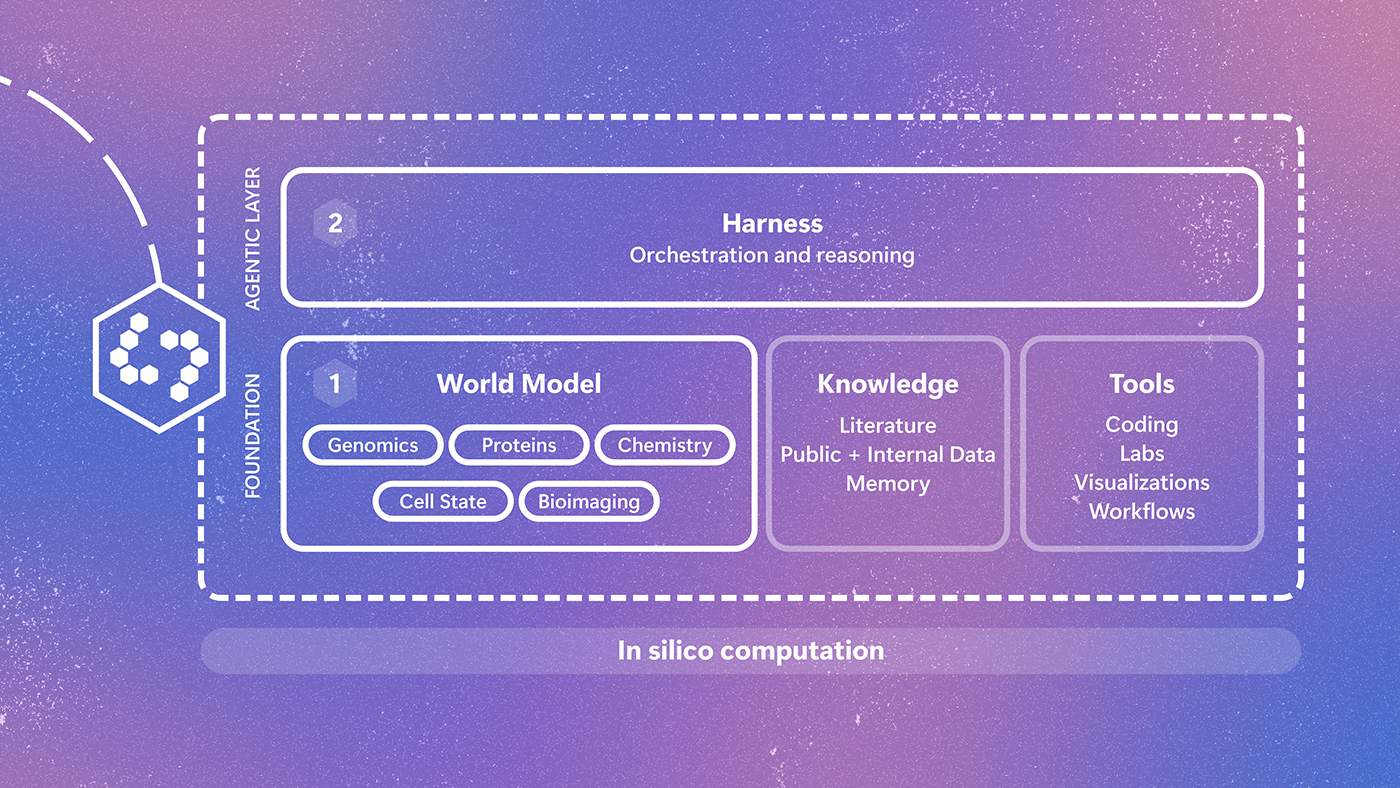
Introducing Quine: An AI research system designed for the complexity of biology

Biology doesn't operate in silos, and neither should the AI representation of it. Quine is an early-stage research effort to create a multimodal world model of biology. By connecting insights across biological scales and modalities, Quine helps scientists computationally search a space far larger than intuition allows and prioritize hypotheses before they reach the lab. Experimental results provide important feedback, helping researchers sharpen future research directions. The post Introducing Q…

We use cookies to run the site and, with your consent, for analytics and to show ads. See our Cookie Policy.