Edge federated learning with adaptive optimization and lightweight design facilitates collaborative security situation awareness in the Industrial Internet of Things
Sep 2026· Discover Internet of Things· Vol 6· 0 citations· 20 references
IoT and Edge/Fog Computing
TL;DR
The research provides a new security situation awareness solution with real-time, privacy and scalability for the Industrial Internet of Things, which has practical application value for collaborative security protection in complex industrial environments.

Abstract
As the scale of the Industrial Internet of Things expands, its security issues become increasingly prominent. Traditional centralized security architecture faces challenges such as high data processing latency and easy privacy leaks. To solve the above problems, a collaborative security situation awareness model that integrates edge computing and federated learning is built to optimize the security protection capabilities. The federated learning is applied to implement distributed model training and complete cross-device knowledge sharing while protecting data privacy. Edge computing is used to optimize model lightweighting, and then pruning, quantification and other technologies are used to reduce computing overhead and improve real-time response efficiency. The model introduces three key improvements: an adaptive gradient update with momentum to accelerate convergence, a multi-dimensional threat quantification function for unknown attack detection, and an abnormal node isolation mechanism to enhance robustness against malicious participants. On IDS2025 and NSL-KDD datasets, Edge-Federated Learning based Security Situation Awareness (EFL-SSA) achieves a throughput of 370-420 items/second 18-22% higher than Federated Averaging (FedAvg), average latency of 50-72 ms (15-20% lower than FedAvg) and local detection accuracy (96.5%). In actual multi-factory tests, the false positive rate is less than 2.3%, and the data leakage rateis less than 3% under typical attacks. The research provides a new security situation awareness solution with real-time, privacy and scalability for the Industrial Internet of Things, which has practical application value for collaborative security protection in complex industrial environments.

The rapid proliferation of Internet of Things (IoT) systems has significantly increased the attack surface of modern cyber-physical infrastructures, creating the need for scalable, intelligent, and privacy-preserving security solutions. Traditional centralized intrusion detection approaches are limited by high communic...
Afef Slimani, K. Karoui· International Symposium on N...· 0 citations
This paper proposes a federated edge intelligence framework to effectively tackle some of the important issues of privacy, security and scalability in Internet of Things enabled smart systems. An effective approach that combines federated learning with edge intelligence while adding a trust aware aggregation mechanism...
S. Saranya, M. S., S. R et al.· 2026 International Conferenc...· 0 citations
The proposed framework introduces several innovative features, such as federated learning with momentum-based optimization, adaptive differential privacy, trust verification via blockchain, and Byzantine-resilient aggregation, to enhance the security, scalability, and robustness of the system compared with traditional...
The proposed model effectively improves the efficiency and timeliness of collaborative detection of cross-organizational threats while ensuring data privacy and provides a feasible solution for building a safe and reliable collaborative defense system.
The rapid expansion of Internet of Things (IoT) devices has intensified security challenges, particularly malware attacks that continue to grow in sophistication while operating under strict resource constraints. Conventional centralized machine learning–based malware detection approaches face significant limitations i...
Baraa I. Farhan· Al-Noor Journal of Engineeri...· 0 citations
Results demonstrate the practicality of integrating predictive intelligence and decentralized coordination for scalable and secure FL, and avoids overloading any single node and ensures fault-tolerant, adaptive selection through continuous monitoring and helper-assisted data gathering.
Mohamed Aiche, Samir Ouchani, Hafida Bouarfa· Innovations in Systems and S...· 0 citations
Related blog posts
MIT News · Artificial Intelligence· news.mit.eduOct 2, 2026
A weeklong summer workshop brought higher education faculty to campus to explore how AI and machine learning materials can be adapted for their classrooms.
MIT News · Artificial Intelligence· news.mit.eduAug 27, 2026
A new machine-learning framework aims to improve the success rate of computational protein design while moving away from results that reproduce sequences found in nature.
Microsoft Research Blog· microsoft.comAug 20, 2026
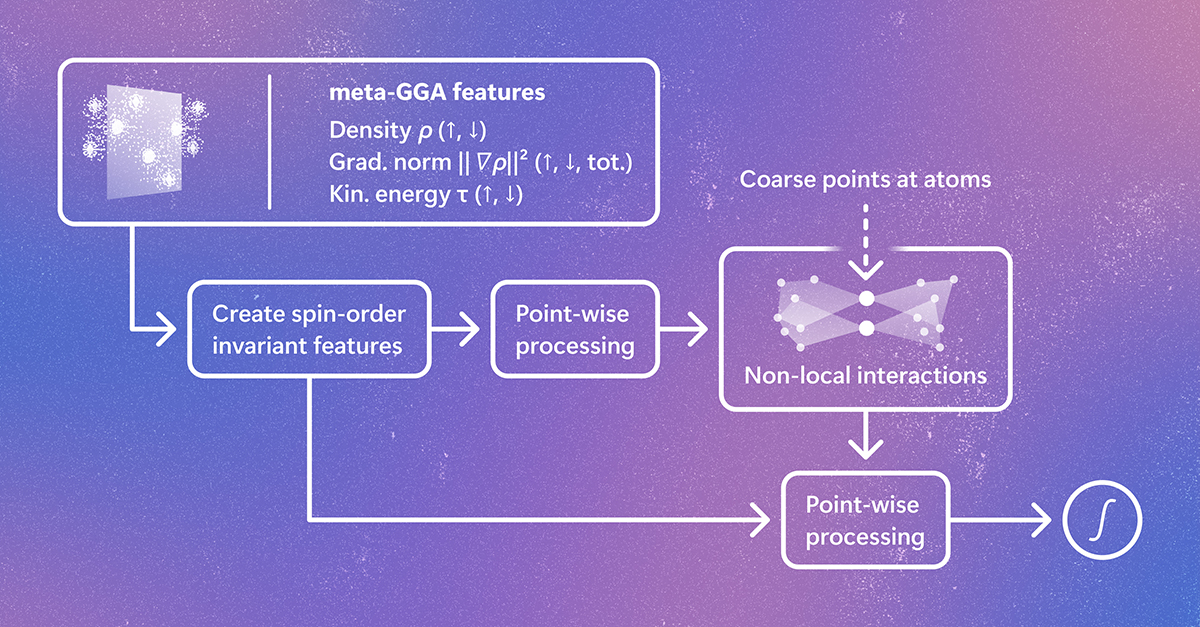
Skala 1.1, the updated deep-learning exchange-correlation functional from Microsoft Research, provides greater accuracy, expanded accessibility across the computational chemistry ecosystem, and a living benchmark to track computational performance. The post Broadening access to Skala creates a faster path to predictive DFT appeared first on Microsoft Research.
We use cookies to run the site and, with your consent, for analytics and to show ads.
See our Cookie Policy.