It is found that, given task-specific natural-language guidance, VLMs can estimate actuator-response relationships, resolve ambiguous observations through intervention, and actively create informative visual feedback when signals are sparse, suggesting that pretrained multimodal models can serve as important decision-making agents within the experimental loop.
Abstract
Vision-language models (VLMs) are increasingly being used in scientific workflows, but their ability as agents to directly control laboratory experiments from visual feedback remains underexplored. This capability is important because many laboratory tasks do not naturally provide dense, pre-defined numerical objectives: informative signals can be sparse, intermittent, or visually ambiguous. A more general laboratory agent should instead be able to interpret visual observations, take actions to acquire useful feedback, and adapt its behavior based on the consequences of those actions. We study whether general-purpose VLMs can perform this kind of closed-loop scientific control using experimental optics as a testbed. We evaluate agents on three experimental systems that isolate distinct capabilities: a Michelson interferometer, a two-mirror cavity, and a four-mirror optical relay. The agents observe camera images, directly issue actuator and measurement commands, and retain their interaction history without receiving an engineered scalar objective during control. Across these experiments and matched simulations, we find that, given task-specific natural-language guidance, VLMs can estimate actuator-response relationships, resolve ambiguous observations through intervention, and actively create informative visual feedback when signals are sparse. These results suggest that pretrained multimodal models can serve as important decision-making agents within the experimental loop. Our work also establishes optics as a physically grounded testbed for visual reasoning and active perception in scientific agents.
This work proposes SAVLA, an end-to-end symmetry-aware VLA model for robust and data-efficient policy learning, which keeps the pretrained vision-language backbone entirely frozen while combining it with an equivariant flow-matching action head and a learned canonicalizer.
AR-WAM is presented, a visual-conditioned, agent-ready world action model that replaces language with two complementary conditions: a visual grounding prompt and a learnable operation token dictating the atomic skill to execute, predicting scene evolution within compact latent states while decoding actions.
Yi-Cheng Jiang, Ze-Sen Gan, Xiao-Bo Wang et al.· 0 citations
Vision-Language-Action (VLA) models have shown strong promise for general-purpose robotic manipulation, but existing approaches often condition control on entangled multimodal features that do not explicitly preserve task-relevant structure during action generation. This limitation is especially pronounced in long-hori...
Pei-Sen Huang, Jian-Hua Hu, Jie-Ren Deng et al.· 2026 IEEE 22nd International...· 0 citations
VA-Bench is introduced to evaluate the complete observe-reason-act-revise loop and tests whether general-purpose MLLMs can turn visual demonstrations and actively acquired evidence into successful embodied action.
Zhong-Bo Zhang, Jia-Yi Jin, Yi-Fan Wang et al.· 1 citation
MINT is proposed, which first trains VLA policies to remain functional under missing visual inputs, and selectively supplements missing observations using optical-flow extrapolation or an action-conditioned world model, and withdraws predicted views when they become unreliable.
Ming-Le Jiang, Rui Xu, Yun-Ke Wang et al.· 0 citations
Vision-Language Models are increasingly used in autonomous-driving systems, yet their ability to recover dynamic physical state from visual input remains insufficiently characterized. We study velocity understanding as a controlled diagnostic across three tasks: surrounding-agent speed, current ego speed, and short-hor...
Katharina Winter, Stefan Englmeier, Fabian B. Flohr· 0 citations
Related blog posts
MIT News · Artificial Intelligence· news.mit.eduJul 30, 2026
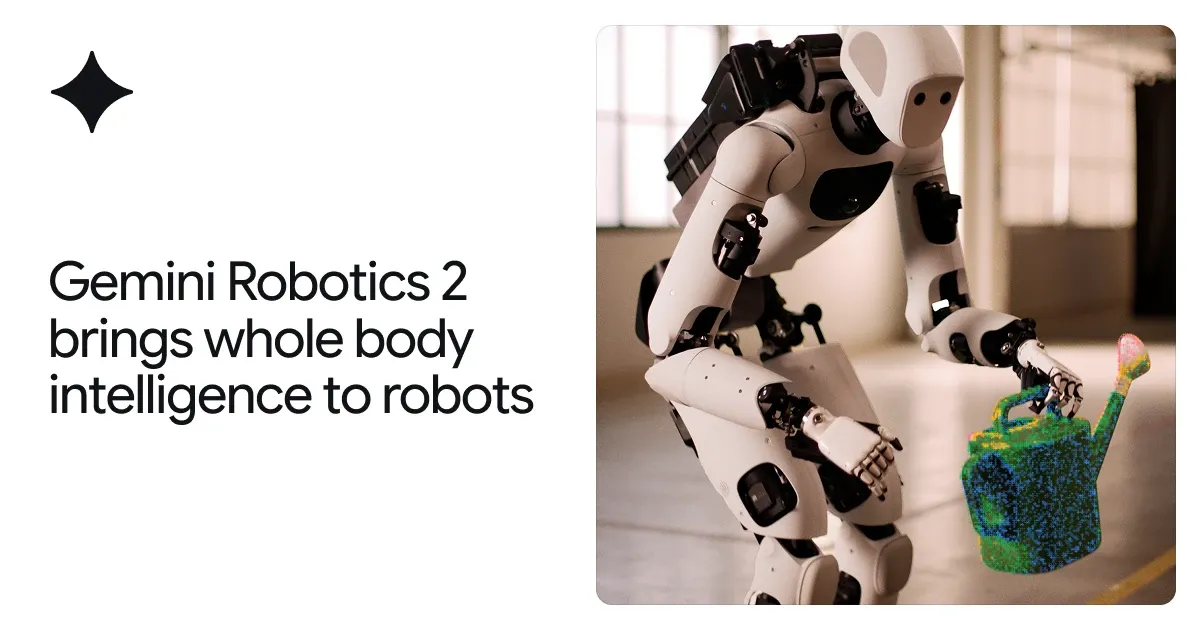
From feet to fingertips — we are teaching robots intelligent whole-body control, fine dexterity, and teamwork to complete a broad range of complex tasks.
Known for his clear and elegant writing style, Bertsekas shaped fields from control and optimization to large-scale computation and artificial intelligence.
We use cookies to run the site and, with your consent, for analytics and to show ads.
See our Cookie Policy.