Skip to content

KiT: A Foundation Model for Financial Time-Series Forecasting using DiffusionTransformers

Sep 2026 · 0 citations · 81 references
Computer Science

TL;DR

KiT, a K-line Diffusion Transformer foundation model, is introduced and reformulate future prediction as conditional path generation via flow matching: given a historical context window, the model generates an ensemble of plausible future OHLCV trajectories.

Abstract

Financial candlestick forecasting is fundamental to quantitative investment, yet it remains exceptionally challenging due to extremely low signal-to-noise ratios and vast heterogeneity across markets and instruments. Existing approaches have largely attempted to introduce deep learning to capture hidden temporal features, but most adopt an auto-regressive formulation, which leads to error accumulation during inference. Meanwhile, general-purpose time-series foundation models are not tailored to the unique structure of k-line data and yield unsatisfactory performance on downstream candlestick forecasting tasks. To tackle these problems, we introduce KiT, a K-line Diffusion Transformer foundation model, and reformulate future prediction as conditional path generation via flow matching: given a historical context window, the model generates an ensemble of plausible future OHLCV trajectories. We pre-train KiT at multiple parameter scales on billions of candlestick bars spanning multiple markets and timescales. Across three markets and seven resolutions, KiT attains a mean return RankIC of 0.057 and a mean volatility RankIC of 0.66, leading at every timescale and outperforming both task-specific financial forecasters and general time-series foundation models. Code will be available at: https://github.com/Luciferbobo/KiT.

View source

Similar papers

Volatility-Clustering Adaptation for Financial Time Series

Time-series foundation models are increasingly adapted to new domains through fine-tuning on target data, under the implicit assumption that more target data yields better forecasts. We show that this assumption can fail in financial forecasting, where individual price changes are difficult to predict, but large moves...

Manh Nguyen, M. Nguyen, H. Nguyen et al. · 0 citations

DualCast: A Dual-Path Language Model for Bimodal Financial Time-Series Forecasting

Financial time-series forecasting must capture price dynamics across heterogeneous assets while incorporating news available at prediction time. We introduce DualCast, a dual-path framework that extends a frozen language model with a discrete financial vocabulary. Each log-return patch is represented by a learned summa...

Wen-Tao Zhao, Hong-Qiang Wu, Shang-Hang Liu et al. · 0 citations
#artificial intelligence Open access Jul 2026

A Hybrid LSTM–XGBoost Framework for Multi-Horizon Stock Return Prediction Across Diversified Equity Portfolios

Accurate prediction of equity returns remains a major challenge in computational finance due to the non-stationary, nonlinear, and low signal-to-noise ratio nature of financial time series. This paper proposes a hybrid two-stage architecture that combines a long short-term memory (LSTM) network with an XGBoost gradient...

Seifeldin Mostafa, Yahia Ahmed, Farah Darwish et al. · 0 citations
Open access 2026

Dynamic-Flooding Transformer Ensembles for Reinforcement-Learning-Based Equity Market Timing

This framework offers a scalable and adaptive engineering blueprint for automated market timing across diverse equity markets, outperforming reference indices on the Dow 30, S&P 100, and NASDAQ 100 and securing top ranks in cumulative return, Sharpe, and Calmar ratios.

Tung-Liang Chen, Jyh-Shing Roger Jang · 0 citations
Open access Sep 2026

Using large models and time series forecasting for market reaction analysis

Forecasting financial market movements requires integrating numerical time-series data with semantic information from financial narratives that shape investor behavior. While deep learning has advanced time-series prediction, existing methods often exploit trivial price autocorrelation rather than capturing genuine pre...

Hong-、-Ji-Jian He, Xin-Hai Li · 0 citations

Related blog posts

MIT News · Artificial Intelligence Oct 28, 2026

Making machines that can listen

Professor Paris Smaragdis develops computers with superhuman hearing for applications like speech recognition, music understanding, and environmental monitoring.

Microsoft Research Blog Aug 11, 2026

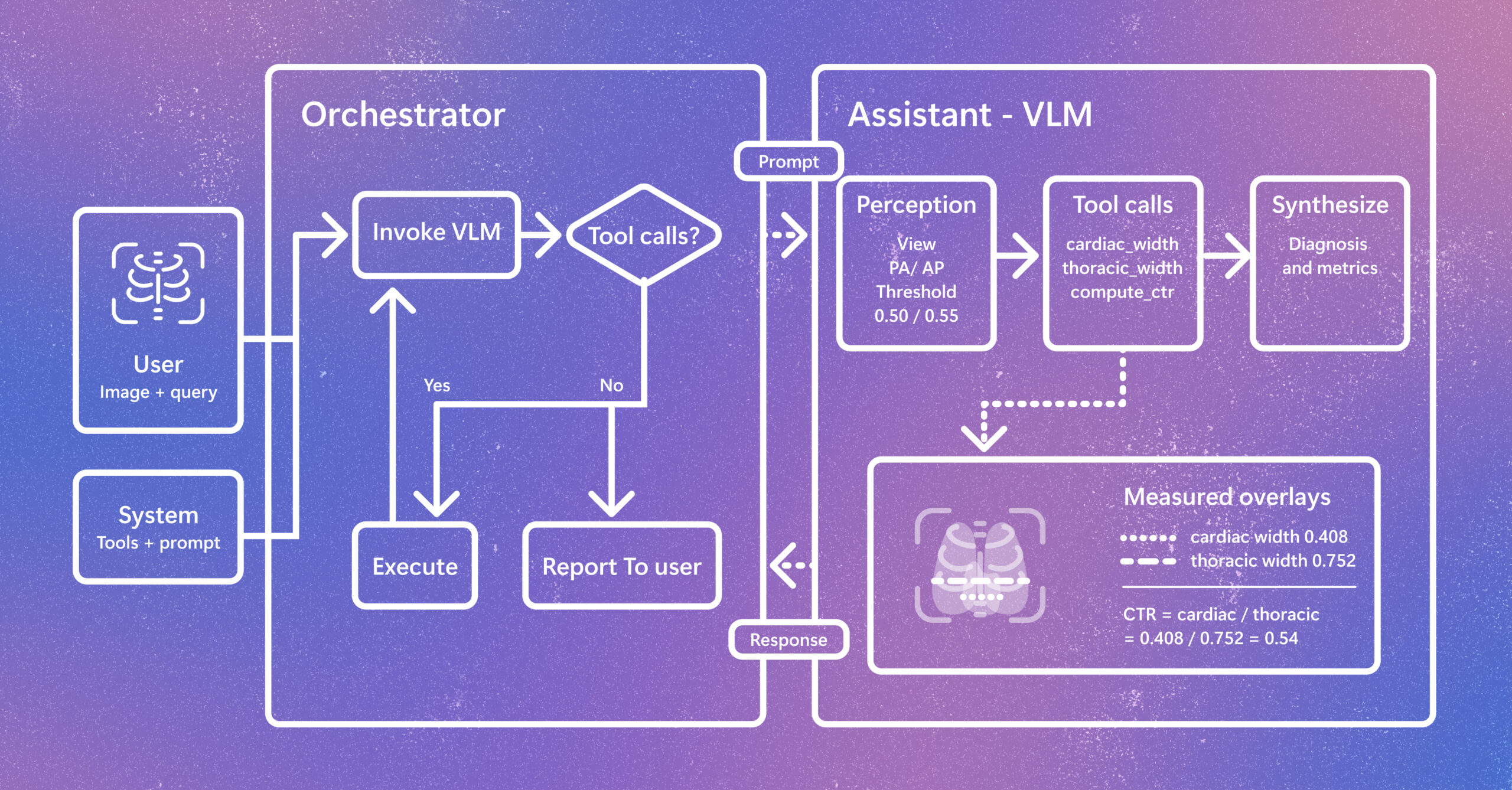
Introducing CARE-X: Towards Clinically Useful Radiology VLMs with Auxiliary Supervision, Reward-Aligned Learning, and Tool-Augmented Measurement

Radiology AI is evolving beyond report generation. CARE-X explores a unified approach that combines flexible reasoning, calibrated predictions, and measurement-based tools for chest X-ray interpretation. The post Introducing CARE-X: Towards Clinically Useful Radiology VLMs with Auxiliary Supervision, Reward-Aligned Learning, and Tool-Augmented Measurement appeared first on Microsoft Research.

We use cookies to run the site and, with your consent, for analytics and to show ads. See our Cookie Policy.