Skip to content

USAI-Quant: A Quantitative Reasoning Benchmark for Vision-Language Models in Built Environments

Sep 2026 · 0 citations · 39 references
Computer Science

Abstract

Large vision-language models (VLMs) have emerged as a powerful paradigm for urban and spatial AI. However, current state-of-the-art large VLMs still struggle with quantitative reasoning on remote sensing imagery. Existing benchmarks and algorithms are predominantly based on qualitative Visual Question Answering (VQA), providing limited insights into the quantitative reasoning capabilities of VLMs for built environment metrics. To address this gap, we develop Quantitative Urban and Spatial AI benchmark (USAI-Quant), the first benchmark designed to quantitatively evaluate VLM's reasoning capabilities on built environment metrics via remote sensing imagery. USAI-Quant is curated from the 335 largest U.S. cities, aligning high-resolution remote sensing images with quantitative built environment metrics. We then evaluate both general-purpose and remote sensing VLMs (RS-VLMs) by applying VQAs to tens of built environment metrics across three complexity levels. Our results reveal that current state-of-the-art models consistently fall short on numeric reasoning tasks. We further conduct in-depth analyses across models, question types, and geographic locations, uncovering insights into performance variability and task-specific challenges.

View source

Similar papers

#computer vision Review Sep 2017

Agile Software Development Methods: Review and Analysis

This publication proposes a definition and a classification of agile software development approaches and analyses ten software development methods that can be characterized as being "agile" against the defined criterion.

P. Abrahamsson, O. Salo, Jussi Ronkainen et al. · 727 citations · ⚡54
#computer vision Jun 2008

The impact of agile practices on communication in software development

The study shows that agile practices improve both informal and formal communication, but indicates that, in larger development situations involving multiple external stakeholders, a mismatch of adequate communication mechanisms can sometimes even hinder the communication.

M. Pikkarainen, Jukka Haikara, O. Salo et al. · 401 citations · ⚡48
#machine learning Review Open access Oct 2014

Software development in startup companies: A systematic mapping study

The results indicate that software engineering work practices are chosen opportunistically, adapted and configured to provide value under the constrains imposed by the startup context.

Nicolò Paternoster, Carmine Giardino, M. Unterkalmsteiner et al. · 394 citations · ⚡54

Diffusion models as plug-and-play priors

The possibility of inferring high-dimensional data inference in a model that consists of a prior and an auxiliary differentiable constraint given some additional information is considered, thereby allowing a range of potential applications in adapting models to new domains and tasks.

Alexandros Graikos, Esmeralda S. Whitammer, N. Jojic et al. · 316 citations · ⚡15

Related blog posts

MIT News · Artificial Intelligence Aug 27, 2026

Looking beyond natural sequences

A new machine-learning framework aims to improve the success rate of computational protein design while moving away from results that reproduce sequences found in nature.

Microsoft Research Blog Aug 11, 2026

Introducing CARE-X: Towards Clinically Useful Radiology VLMs with Auxiliary Supervision, Reward-Aligned Learning, and Tool-Augmented Measurement

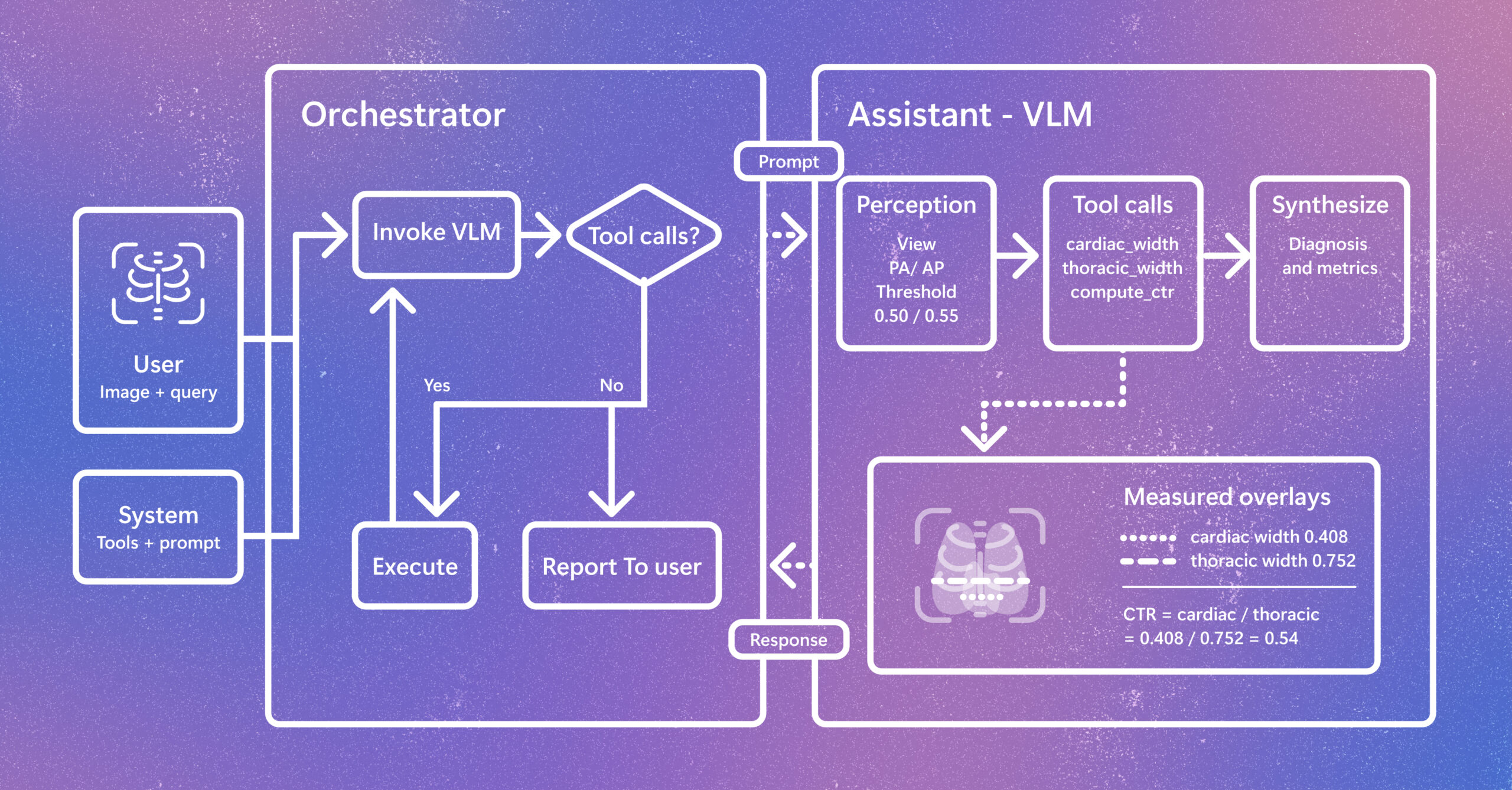
Radiology AI is evolving beyond report generation. CARE-X explores a unified approach that combines flexible reasoning, calibrated predictions, and measurement-based tools for chest X-ray interpretation. The post Introducing CARE-X: Towards Clinically Useful Radiology VLMs with Auxiliary Supervision, Reward-Aligned Learning, and Tool-Augmented Measurement appeared first on Microsoft Research.

We use cookies to run the site and, with your consent, for analytics and to show ads. See our Cookie Policy.