Adversarial attacks have long posed a fundamental threat to machine learning systems. As multimodal large language models (MLLMs) rapidly evolve and become widely deployed, assessing their vulnerability to such attacks is essential for their safe use. In this work, we investigate whether a single adversarial image can consistently mislead diverse frontier MLLMs in black-box settings. We propose O-Attack, a highly transferable black-box attack framework. This framework builds on our insight that surrogate models contain a broad, high-level, cross-modally aligned semantic space. This space extends beyond final-layer outputs and provides multiple semantically consistent representations that remain underexploited by existing attacks. Within this space, O-Attack anchors aligned representations, progressively broadens semantic conditions, and optimizes perturbations through semantic consensus to promote consistent target alignment. By fully exploiting this space with the same surrogate models as M-Attack, O-Attack raises attack success rates on GPT-5.4 (29.1% to 77.2%), Claude-4.6 (42.8% to 81.6%), and Gemini-3.1 (38.2% to 80.9%). Extensive experiments across 24 MLLMs show that O-Attack outperforms six state-of-the-art methods in black-box transferability, with consistent effectiveness across prompts and improved efficiency and imperceptibility. This work exposes the practical safety risks posed by black-box adversarial attacks against frontier MLLMs, underscoring the need for more rigorous robustness evaluation and more effective defenses.
This publication proposes a definition and a classification of agile software development approaches and analyses ten software development methods that can be characterized as being "agile" against the defined criterion.
P. Abrahamsson, O. Salo, Jussi Ronkainen et al.· arXiv.org· 727 citations· ⚡54
The study shows that agile practices improve both informal and formal communication, but indicates that, in larger development situations involving multiple external stakeholders, a mismatch of adequate communication mechanisms can sometimes even hinder the communication.
M. Pikkarainen, Jukka Haikara, O. Salo et al.· Empirical Software Engineeri...· 401 citations· ⚡48
The results indicate that software engineering work practices are chosen opportunistically, adapted and configured to provide value under the constrains imposed by the startup context.
Nicolò Paternoster, Carmine Giardino, M. Unterkalmsteiner et al.· Information and Software Tec...· 394 citations· ⚡54
The possibility of inferring high-dimensional data inference in a model that consists of a prior and an auxiliary differentiable constraint given some additional information is considered, thereby allowing a range of potential applications in adapting models to new domains and tasks.
Alexandros Graikos, Esmeralda S. Whitammer, N. Jojic et al.· Neural Information Processin...· 316 citations· ⚡15
It is proved that any global minimizer of the trajectory balance objective can define a policy that samples exactly from the target distribution, and empirically demonstrate the benefits of the trajectories balance objective for GFlowNet convergence, diversity of generated samples, and robustness to long action sequenc...
Esmeralda S. Whitammer, Moksh Jain, Emmanuel Bengio et al.· Neural Information Processin...· 302 citations· ⚡60
Related blog posts
Microsoft Research Blog· microsoft.comAug 11, 2026
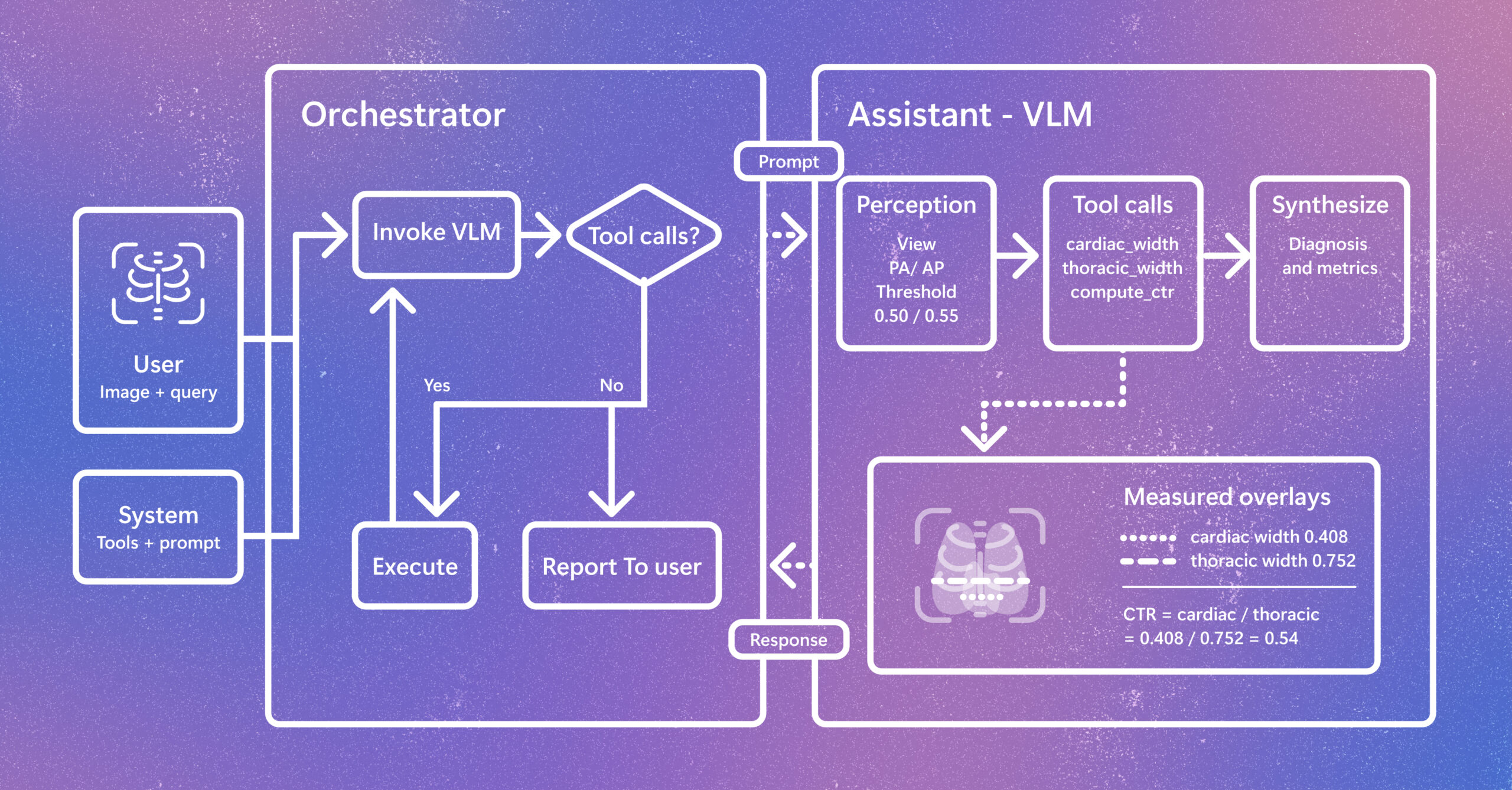
Radiology AI is evolving beyond report generation. CARE-X explores a unified approach that combines flexible reasoning, calibrated predictions, and measurement-based tools for chest X-ray interpretation. The post Introducing CARE-X: Towards Clinically Useful Radiology VLMs with Auxiliary Supervision, Reward-Aligned Learning, and Tool-Augmented Measurement appeared first on Microsoft Research.
