Oct 2026· Proceedings of the 2026 ACM Internet Measurement Conference· 0 citations· 14 references
TL;DR
This work deploys a platform (RetryWatch) that simulates various types of bounce errors returned by email receiving servers, covering the DNS, TCP, and SMTP communication stages and finds that many providers and software exhibit defects in their email retry implementations.
Abstract
Reliable delivery is a basic expectation of email services. The increasingly complex ecosystem has led to more frequent email bounces. When encountering various errors, properly handling failures and retrying are crucial to ensuring email deliverability. Currently, the community lacks a comprehensive understanding of email retry strategies, and bridging this gap can enhance the reliability of email services. In this paper, we measure the email delivery retry strategies of 11 email service providers and 8 open-source email software. We deploy a platform (RetryWatch) that simulates various types of bounce errors returned by email receiving servers, covering the DNS, TCP, and SMTP communication stages. We find that many providers and software exhibit defects in their email retry implementations. For example, we find that six email systems exhibit poor load balancing across MX record entries in dual-stack environments. In addition, when encountering blocklist- and greylist-related SMTP error messages, most email providers fail to handle retries appropriately. We release RetryWatch to support further testing by the email community. We hope this work helps improve email reliability and inspires efforts to refine email retry strategies.

EmailBench is introduced, a benchmark of 206 email and productivity scenarios across 16 task categories that couples a typed email API specification with provider-neutral naming, a deterministic synthetic Enron-inspired corpus, and a scenario suite whose topic selection was informed by aggregate task-intent telemetry f...
Mukul Singh, Mansi Uniyal, Devin Devlin et al.· 0 citations
Five OpenAI models that act only through the tools of Berkeley Function Calling Leaderboard tasks, and the agents did what the step said, even though they did not know what the step said.
The retry amplification factor (RAF) is introduced, a metric quantifying the additional request volume that retry policies generate during partial failures, and it is shown that budget-constrained retries maintain success rates close to the no-retry baseline while still recovering from transient faults.
Outcome Monitors, which detect violations of outcome contracts mined from task-disjoint traces or derived from public schemas, are introduced, which detect violations of outcome contracts mined from task-disjoint traces or derived from public schemas.
The findings show that defense evaluation should report attack outcomes, goal feasibility, legitimate-task utility, action availability, operational measures, and run-to-run variation.
Adil Khan, Khaled AlKhanbashi, Azza Mohamed· Computers· 2 citations
This paper describes the re-architecture of a distributed payment system around an event-driven saga pattern, tracking transactions from initiation through settlement and automatically triggering compensations when a step fails. The results are given directly: transaction processing time fell by 83 per cent, payment er...
Tarun Kumar Chatterjee· Proceedings of the Raptors C...· 0 citations
Related blog posts
Microsoft Research Blog· microsoft.comNov 12, 2026
What's new in research at Microsoft? Host Anson Ho explores the latest, including AI-powered universal translation, a breakthrough in a 31-year-old mathematics challenge, and advances making AI coding agents faster and more efficient. The post Microsoft Research Focus – Edition #98 appeared first on Microsoft Research.
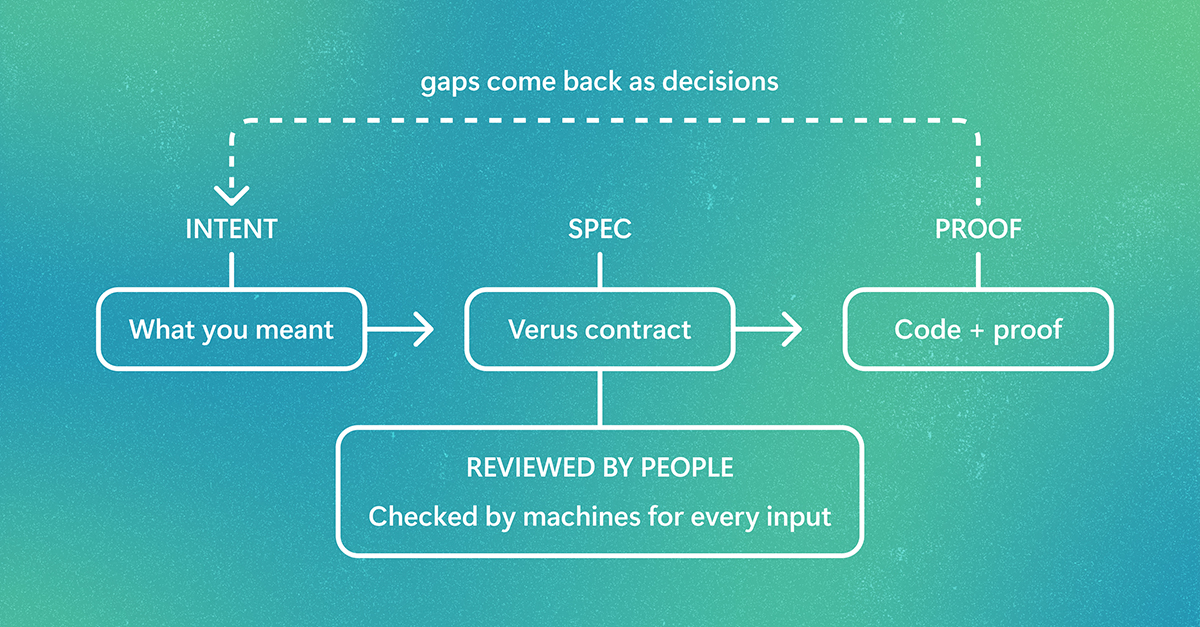
AI agents can generate code at a scale that’s hard for humans to review line-by-line. PDD Kit helps ensure the code is doing what the developer intended by creating formal specifications and testing against them. It converts developer intent into a Verus specification, proves AI-generated code meets it for every input, and uses tests where proofs aren't practical. Developers review intent, not every line. The post Formally verifying agent-written full-stack web apps with PDD Kit appeared first o…