Skip to content

Decoupling candidate dual AGN from chance superpositions in the GOTHIC survey via a deep-learning framework

Aug 2026 · 0 citations · 7 references
Physics Computer Science Mathematics

Abstract

Dual active galactic nuclei (DAGN) mark a critical phase in the evolution of merging galaxies and the pairing of supermassive black holes, yet they remain difficult to identify in large imaging surveys because of projection effects and limited spatial resolution. Compact foreground stars and unresolved substructure can mimic dual nuclei through chance superposition, complicating automated detection. We revisit the 46,061 galaxies flagged but rejected as DAGN candidates by the GOTHIC pipeline, primarily because the two nuclei fell within the SDSS fibre aperture or exceeded its separation threshold. We train a supervised deep-learning framework based on the YOLOv11 oriented-bounding-box architecture on annotated SDSS imaging to separate genuine dual nuclei from foreground stellar contaminants and other spurious alignments. The final model attains a validation precision of 0.919, recall of 0.905, and $F_1$ of 0.912 for the dual-nuclei class, and yields 29,605 dual-nucleus candidates after removing star-dominated and blended detections. Structured visual inspection indicates that $54.5$--$62\%$ are consistent with genuine dual nuclei, implying $\sim(1.4$--$1.8)\times10^{4}$ plausible systems. Cross-calibrating the YOLO separation against the deterministic GOTHIC centroid measurement and restricting to the compact regime ($d \le 6.87''$) gives a conservative subset of $\sim 13{,}672$ candidates, reaching calibrated separations of $\sim 0.56''$. Spectroscopy of the most compact ($\le 1$~kpc) systems shows they are dominated by passive, absorption-line galaxies with no resolved double-peaked emission, so confirmation requires higher-resolution follow-up. The catalogue is a statistically refined list of candidates, not confirmed DAGN. Nonetheless, deep-learning detection substantially reduces contamination and expands the plausible DAGN census.

View source

Similar papers

#artificial intelligence Preprint Jul 2024

The Llama 3 Herd of Models

It is found that Llama 3 delivers comparable quality to leading language models such as GPT-4 on a plethora of tasks, and performs competitively with the state-of-the-art on image, video, and speech recognition tasks.

Aaron Grattafiori, Abhimanyu Dubey, Abhinav Jauhri et al. · 21,082 citations · ⚡3,832
#artificial intelligence Conference Open access Jun 2018

Gibson Env: Real-World Perception for Embodied Agents

This paper investigates developing real-world perception for active agents, proposes Gibson Environment for this purpose, and showcases a set of perceptual tasks learned therein.

F. Xia, Amir Zamir, Zhi-Yang He et al. · 1,069 citations · ⚡112
#computer vision Review Sep 2017

Agile Software Development Methods: Review and Analysis

This publication proposes a definition and a classification of agile software development approaches and analyses ten software development methods that can be characterized as being "agile" against the defined criterion.

P. Abrahamsson, O. Salo, Jussi Ronkainen et al. · 727 citations · ⚡54
#computer vision Jun 2008

The impact of agile practices on communication in software development

The study shows that agile practices improve both informal and formal communication, but indicates that, in larger development situations involving multiple external stakeholders, a mismatch of adequate communication mechanisms can sometimes even hinder the communication.

M. Pikkarainen, Jukka Haikara, O. Salo et al. · 401 citations · ⚡48
#machine learning Review Open access Oct 2014

Software development in startup companies: A systematic mapping study

The results indicate that software engineering work practices are chosen opportunistically, adapted and configured to provide value under the constrains imposed by the startup context.

Nicolò Paternoster, Carmine Giardino, M. Unterkalmsteiner et al. · 394 citations · ⚡54

Related blog posts

MIT News · Artificial Intelligence Oct 28, 2026

Making machines that can listen

Professor Paris Smaragdis develops computers with superhuman hearing for applications like speech recognition, music understanding, and environmental monitoring.

Microsoft Research Blog Aug 11, 2026

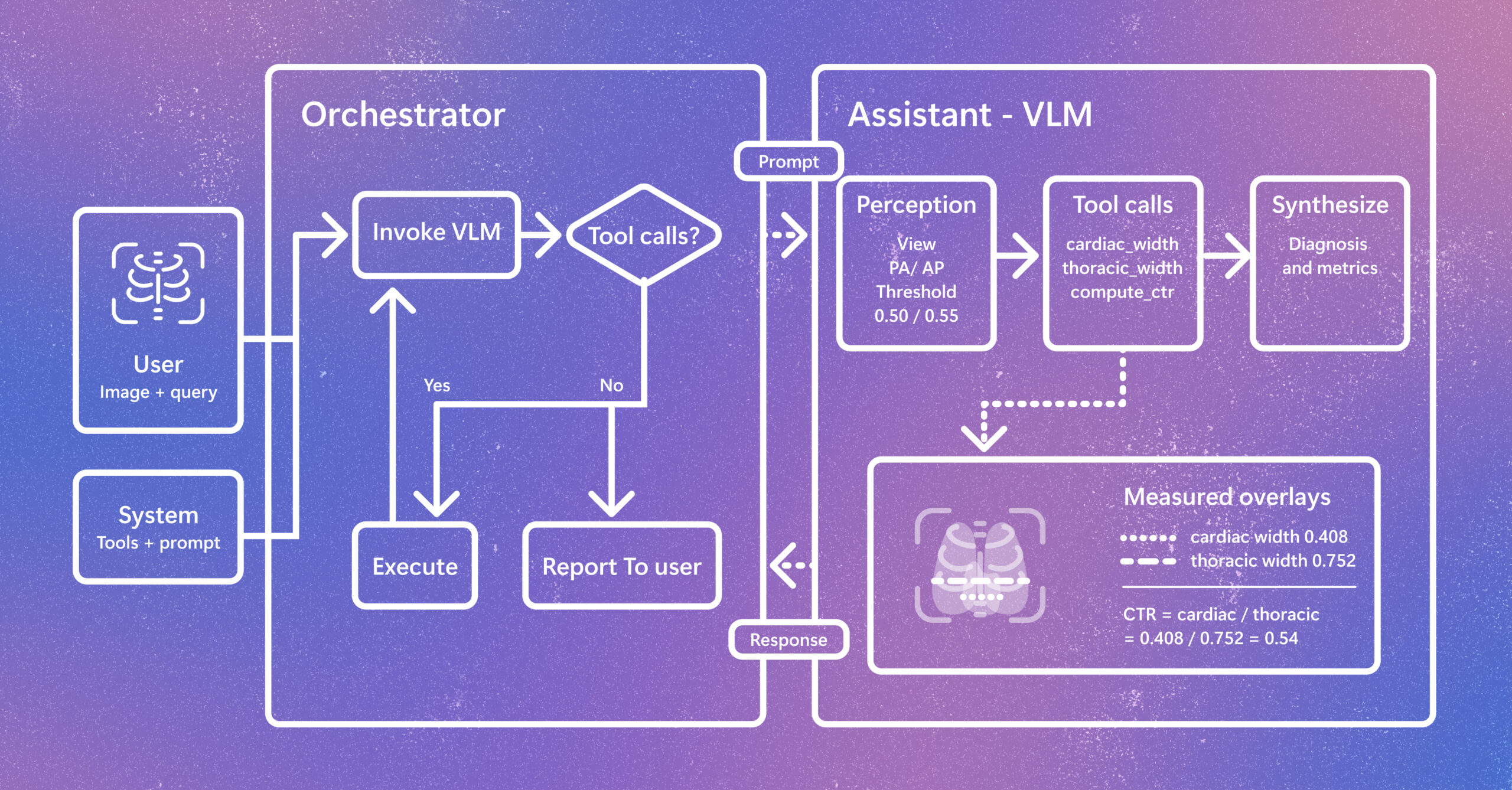
Introducing CARE-X: Towards Clinically Useful Radiology VLMs with Auxiliary Supervision, Reward-Aligned Learning, and Tool-Augmented Measurement

Radiology AI is evolving beyond report generation. CARE-X explores a unified approach that combines flexible reasoning, calibrated predictions, and measurement-based tools for chest X-ray interpretation. The post Introducing CARE-X: Towards Clinically Useful Radiology VLMs with Auxiliary Supervision, Reward-Aligned Learning, and Tool-Augmented Measurement appeared first on Microsoft Research.

We use cookies to run the site and, with your consent, for analytics and to show ads. See our Cookie Policy.