Sep 2026· Applied and Computational Engineering· 0 citations
Advanced Graph Neural Networks
Abstract
Graph-structured data is ubiquitous, yet labeled graph data remains scarce and expensive, limiting the effectiveness of supervised graph neural networks (GNNs). To address this, self-supervised learning (SSL) has emerged as a promising paradigm to pre-train GNNs on unlabeled graphs. However, existing SSL methods typically rely on a single pretext task, either contrastive or generative, leaving the potential of a synergistic combination underexplored. This paper conducts a systematic literature review and proposes a novel hybrid framework that integrates contrastive learning (GraphCL-style) with generative learning (GraphMAE-style). Specifically, the proposed method introduces three key innovations: curriculum masking, adaptive loss weighting, and Laplacian positional encoding, tailored to handle graph sparsity and class imbalance. Experiments on the Cora citation network demonstrate that the proposed hybrid model achieves 79.6% accuracy, closing 66% of the performance gap to fully supervised GCN without using any node labels. The findings indicate that hybrid SSL significantly reduces label dependency and offers a robust foundation for scalable graph foundation models.
Graph contrastive learning (GCL) has emerged as an effective paradigm for learning discriminative graph representations. However, applying GCL to large-scale graphs remains challenging, since conventional GCL frameworks often rely on message-passing GNN encoders and pairwise contrastive objectives, which may introduce...
Heterogeneous information networks (HINs) provide a flexible graph representation for relational data with different entity and relation types. Such heterogeneity enriches semantic modeling, but also increases the difficulty of representation learning. Existing heterogeneous graph neural networks have achieved promisin...
Run-Feng Wang, Xing-Yang Zhao, Bing-Yu Zhang et al.· IEEE Latin America Transacti...· 0 citations
Graph Contrastive Learning (GCL) has achieved remarkable success in self-supervised representation learning by maximizing agreement between augmented views of a graph. Although augmented view generation is the central step in GCL, existing models rely on stochastic augmentation of the input graph, such as edge perturba...
Muhammad Ifte Khairul Islam, Tanvir Hossain, Esra Akbas· 0 citations
Currently, vanilla graph contrastive learning (GCL) has become the mainstream paradigm for learning discriminative node representations in unsupervised settings. However, its performance is limited by two issues. First, traditional graph augmentation strategies lack awareness of edge semantic relationships, which may c...
Cheng-Cheng Xu, Tian-Feng Wang, Bin Sun et al.· IEEE Transactions on Computa...· 0 citations
Recent years have witnessed the flourishing of self-supervised learning (SSL) on heterogeneous graphs, e.g., masked autoencoder (MAE)-based methods. However, existing MAE-based methods mostly suffer from three issues, including the prohibitive computational cost of constructing meta-path-induced subgraphs, the limitati...
Hao Geng, De-Qing Wang, Li-Hao Ge et al.· IEEE Transactions on Neural...· 0 citations
Graph-level out-of-distribution (OOD) generalization is critical for deploying graph neural networks in real-world applications where distribution shifts are inevitable. Existing approaches typically require class labels during representation learning to decide which substructures are predictive, limiting their applica...
Tian-Jun Yao, Cheng-Hu Xi, Xin-Yang Li et al.· 0 citations
Related blog posts
MIT News · Artificial Intelligence· news.mit.eduOct 26, 2026
Machine-learning networks can learn without detailed instructions from a designer. Those that do may offer insight into how the brain reorganizes itself during learning.
MIT News · Artificial Intelligence· news.mit.eduJul 15, 2026
Assistant Professor Pat Pataranutaporn describes a new interface that lets everyday users glimpse inside an AI's neural network before their chatbot ever says a word.
Microsoft Research Blog· microsoft.comJul 13, 2026
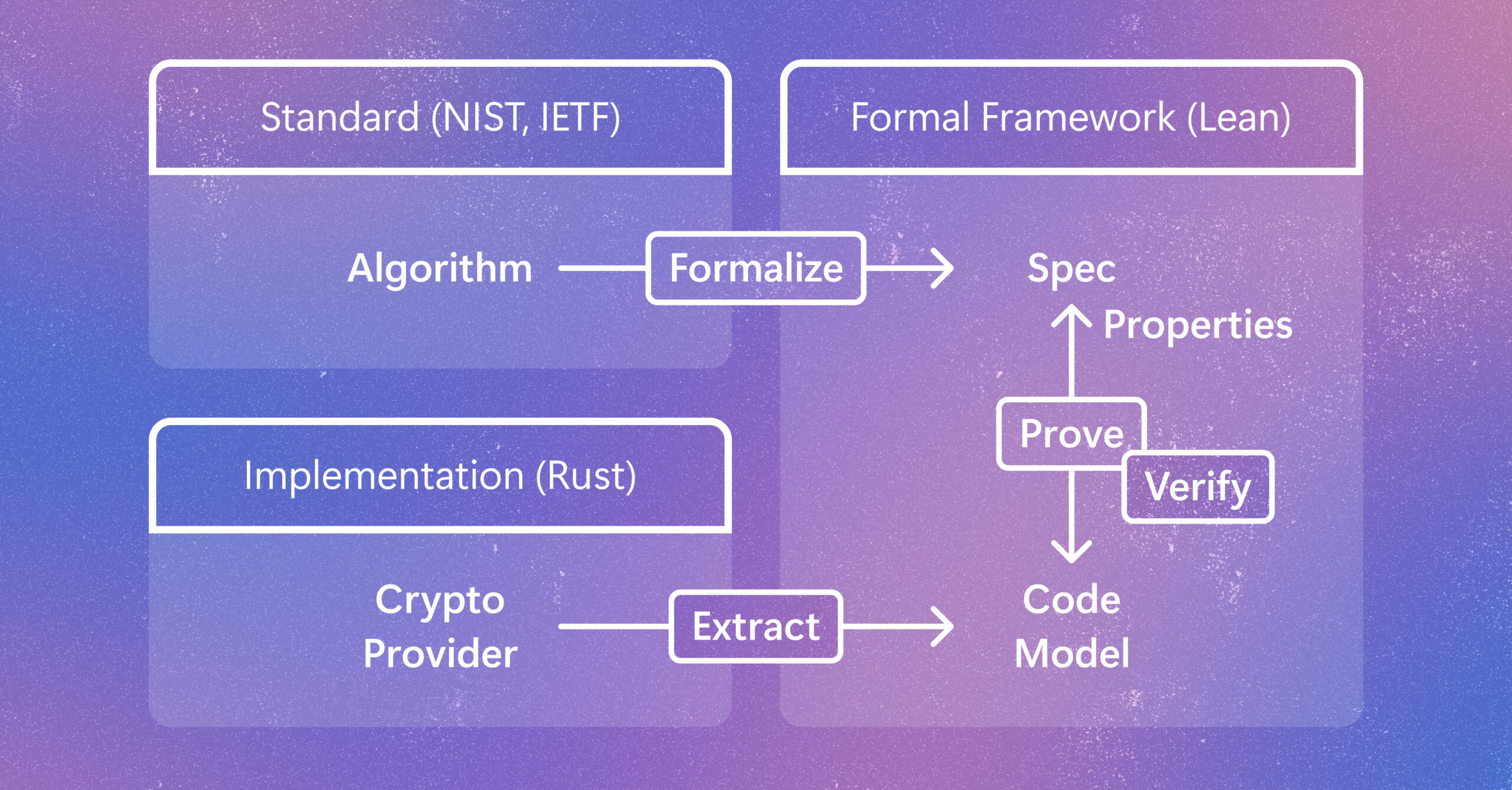
Cryptographic code supports vital protections in modern computing systems. Learn how a new method helps verify code as developers write it while preserving speed and adaptability as it gets implemented and evolves. The post Verifying Rust cryptography in SymCrypt, from standards to code appeared first on Microsoft Research.
We use cookies to run the site and, with your consent, for analytics and to show ads.
See our Cookie Policy.