Skip to content

AI Approaches for Industrial Control System Cybersecurity: A Comprehensive Review of Methodological Contexts

Sep 2026 · Journal of Information and Communications Technology Algorithms Systems and Applications · 0 citations · 23 references
Smart Grid Security and Resilience

TL;DR

A re-view is systematic, analyzing the use of artificial intelligence (AI) methodologies in ICS cybersecurity from the year 2018 to 2024, suggesting that graph-based and hybrid methods yield the best detection accuracy, whereas classical methods still seem to be the most suitable for resource-constrained applications.

Abstract

The cyber infrastructure of Industrial Control Systems (ICSs) that monitor power grids, water treatment facilities, pipelines, and manufacturing lines has become a very com-plex cyber-physical systems, which now face a growing range of cyber threats, such as Stuxnet, Industroyer, TRITON, and Colonial Pipeline incident. In the era of new and sophisticated attacks, such as zero-day exploits, multi-stage intrusions and adversaries taking advantage of the unique ‘availability first' constraints of operational technology (OT), traditional signatures and rule-based defenses are proving less effective. This re-view is systematic, analyzing the use of artificial intelligence (AI) methodologies in ICS cybersecurity from the year 2018 to 2024. According to the guidelines of the PRISMA 2020, from the five scholarly databases, 1578 records were retrieved and 147 studies were included in the qualitative synthesis, and 102 studies were included in the quantitative comparison. The provided literature is categorized in a methodological taxonomy from classical machine learning to deep learning; from graph neural networks (GNNs) to reinforcement learning (RL); from autonomous response to intrusion detection, at-tack-graph analysis, malware analysis and vulnerability prioritization. Overall, the synthesis suggests that graph-based and hybrid methods yield the best detection accuracy (reported from 92% to 99.5% with less than 3% false-positive rates), whereas classical methods still seem to be the most suitable for resource-constrained applications. There are ongoing deficiencies in standardized benchmarking, adversarial robustness, safety–security co-engineering, and real-world validation. A research roadmap is advocated for guiding future research, which focuses on safe RL, federated learning, explainable GNNs, and digital-twin-based security assessment.

Read PDF

Similar papers

Open access Oct 2026

INTEGRATION OF AUTOMATION SYSTEMS INTO CRITICAL ENERGY INFRASTRUCTURE: CYBERSECURITY AND RESILIENCE CHALLENGES

Purpose. The purpose of this study is to examine the cybersecurity and resilience challenges associated with the increasing integration of supervisory control and data acquisition (SCADA) and programmable logic controller (PLC) systems into critical energy infrastructure. Particular attention is given to automation sys...

A. Shcherba · 0 citations
Preprint Aug 2026

A Roadmap to Available ICS Datasets and Testbeds for Cybersecurity Research

The main objective of this paper is to provide the roadmap of existing ICS cybersecurity datasets, testbeds and digital twins, and provide the identification of research gaps and recommendations on creation of new tools.

Ebtesam S. Alqahtani, Mohammad Hammoudeh · 0 citations
#explainable ai Review Aug 2026

Explainable Artificial Intelligence for Industrial Cybersecurity: A Review of Methods, Operational Integration, and Research Challenges

A comprehensive review of XAI techniques in industrial cybersecurity, focusing on industrial SOC environments and operational security workflows, and identifies open research directions and opportunities for developing trustworthy, operationally viable, and domain-specific XAI-enabled cybersecurity solutions for indust...

Amr S. Mohamed, Charlotte Fritz, A. M. Saber et al. · 0 citations
Open access Aug 2026

Comparative Analysis of ICS Cybersecurity Testbeds Using a Purdue-Aligned Approach

A comparative analysis of 34 ICS cybersecurity testbeds within a Purdue-aligned framework based on two complementary dimensions: Functional Maturity (FM) and Architectural Completeness (AC) reveals that many platforms provide advanced experimentation capabilities while offering only partial representation of industrial...

Jovan Andrés Guillén-Mass, Roberto Magán-Carrión · 0 citations
Review Open access Sep 2026

A Comprehensive Review of Cybersecurity Frameworks and Defense Mechanisms for Modbus and HTTP in Industrial Control Systems

Industrial Control Systems (ICS) form the backbone of critical infrastructure, enabling automation and control in sectors such as energy, water, and manufacturing. The convergence of Operational Technology (OT) and Information Technology (IT) has introduced significant cybersecurity challenges, particularly for legacy...

Lukumba Phiri, Mukubesa Kamutumwa · 0 citations

Related blog posts

Microsoft Research Blog Jul 13, 2026

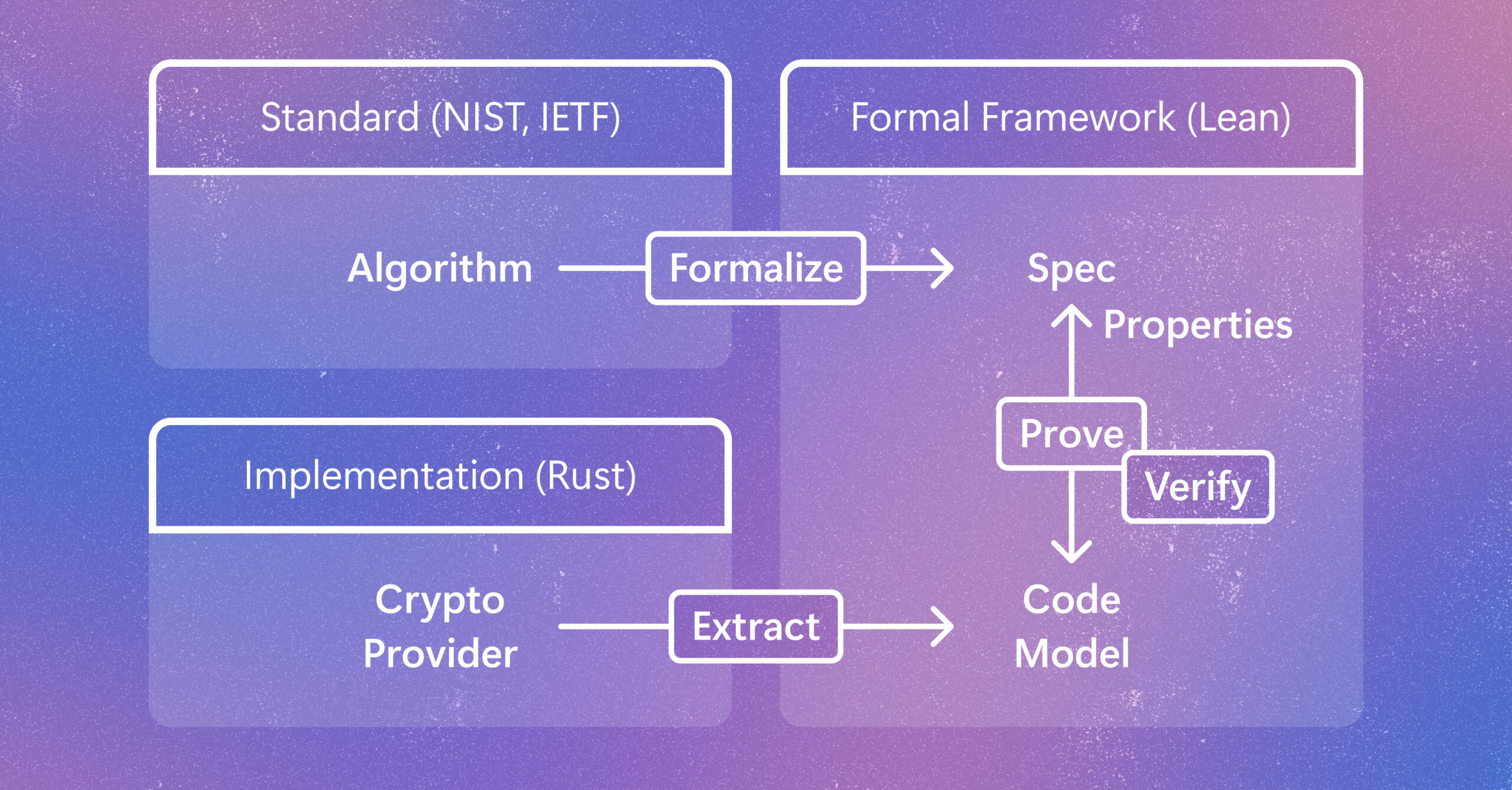
Verifying Rust cryptography in SymCrypt, from standards to code

Cryptographic code supports vital protections in modern computing systems. Learn how a new method helps verify code as developers write it while preserving speed and adaptability as it gets implemented and evolves. The post Verifying Rust cryptography in SymCrypt, from standards to code appeared first on Microsoft Research.

MIT News · Artificial Intelligence Nov 23, 2026

Many languages, one common neural code

Analyzing speakers of 21 languages, an MIT study using multilingual AI finds the human brain may represent meaning in much the same way.

We use cookies to run the site and, with your consent, for analytics and to show ads. See our Cookie Policy.