TopoGCN is proposed, a topology-informed graph convolutional network that integrates topological data analysis (TDA) into structure—function prediction and incorporating persistent-homology information into graph learning improves the modeling of structure-function relationships in the human brain.
Abstract
Introduction Understanding the relationship between structural and functional brain connectivity remains a fundamental challenge in network neuroscience. While structural connectivity constrains neural interactions, functional connectivity emerges from complex, nonlinear dynamics that are not fully explained by anatomical wiring alone. Existing graph-based and deep learning approaches often focus on pairwise relationships, thereby overlooking higher-order topological organization in brain networks. Methods We propose TopoGCN, a topology-informed graph convolutional network that integrates topological data analysis (TDA) into structure—function prediction. Persistent homology is used to extract multiscale topological features from structural connectomes, which are incorporated as node-level inputs. Additionally, a topology-aware loss function is incorporated to enforce preservation of higher-order structures in predicted functional networks. The model is evaluated on Human Connectome Project data (n = 998) using both edge-wise metrics and topological measures, including motif distributions, Betti curves, and Wasserstein distances between persistence diagrams. Results TopoGCN achieves competitive accuracy in reconstructing functional connectivity while significantly improving the preservation of higher-order network organization. Compared to state-of-the-art models, it yields lower KL divergence for node strength and motif distributions, and smaller Wasserstein distances between persistence diagrams, indicating better recovery of multiscale topological structures. Furthermore, hypothesis tests on Betti curves show no significant differences between observed and predicted networks, demonstrating strong agreement in both connected-component and cycle-based topology. Discussion Our findings show that incorporating persistent-homology information into graph learning improves the modeling of structure-function relationships in the human brain. By preserving multiscale topological features beyond pairwise connections, TopoGCN provides an improved framework for topology-aware connectome prediction and offers new opportunities for studying brain organization and individual variability.

BackgroundThe prevalence of overweight and obesity is increasing in Bangladesh. It is higher among Bangladeshi women than among men. This study was conducted to assess a host of demographic and socioeconomic correlates of overweight and obesity, separately for the urban and rural women of Bangladesh.MethodsWe used data...
Haribondhu Sarma, N. Saquib, M. Hasan et al.· BMC Obesity· 75 citations· ⚡5
Purpose Overall health status indicators have improved significantly over the past three decades in Indonesia. However, the country’s maternal mortality ratio remains high with a stark inequality by region. Fewer studies have explored access inequity in maternal health care service over time using multiple inequality m...
Herfina Y. Nababan, M. Hasan, Tiara Marthias et al.· International Journal of Wom...· 64 citations· ⚡2
Agile methods continue to gain popularity. In particular, the Scrum method appears to be on the verge of becoming a de-facto standard in the industry, leading the so called Agile movement. While there are success stories and recommendations, there is little scientifically valid evidence of the challenges in the adoptio...
A. Marchenko, P. Abrahamsson· Agile Conference· 59 citations· ⚡11
Findings demonstrate a strong positive association between mother’s education and IYCF indicators and suggest strengthening national policies to educate women at least to the secondary level in SACs might be a cost-effective intervention for improving IY CF practices.
M. Tariqujjaman, M. Hasan, M. Mahfuz et al.· Nutrients· 45 citations· ⚡4
A comprehensive taxonomy of the challenges faced when a medium-scale organization decided to adopt software platforms is provided, namely: business challenges, organizational challenges, technical challenges, and people challenges.
Yaser Ghanam, F. Maurer, P. Abrahamsson· Information and Software Tec...· 41 citations· ⚡3
Good knowledge, positive attitude and some sociodemographic factors were significant with exclusive breastfeeding which are needed to improve for promoting exclusive breastfeeding practices and reducing infant mortality and morbidity.
M. Hasan, M. Hassan, M. Khan et al.· Population Medicine· 32 citations· ⚡6
Related blog posts
MIT News · Artificial Intelligence· news.mit.eduOct 26, 2026
Machine-learning networks can learn without detailed instructions from a designer. Those that do may offer insight into how the brain reorganizes itself during learning.
MIT News · Artificial Intelligence· news.mit.eduJul 15, 2026
Assistant Professor Pat Pataranutaporn describes a new interface that lets everyday users glimpse inside an AI's neural network before their chatbot ever says a word.
Microsoft Research Blog· microsoft.comJul 13, 2026
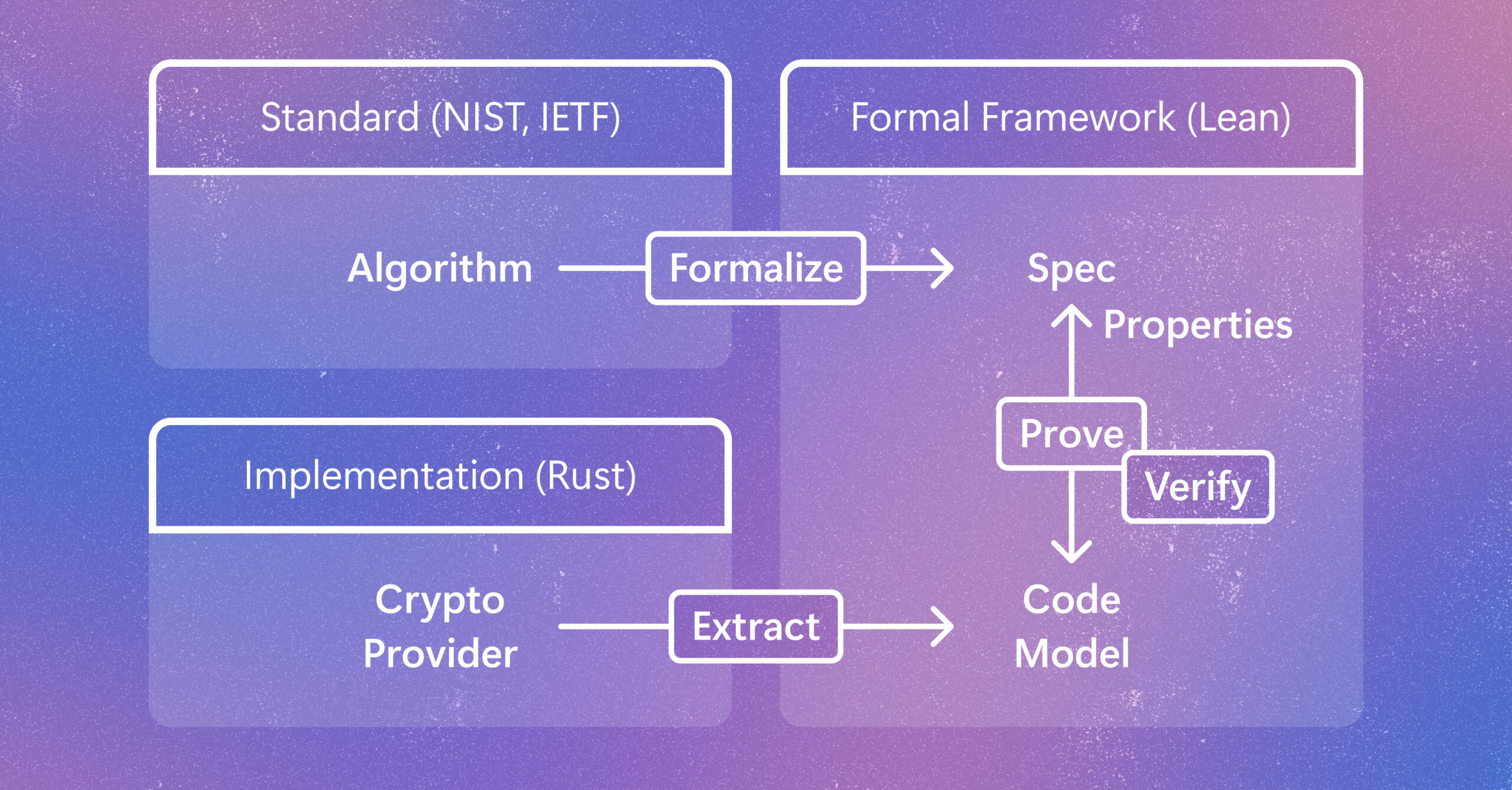
Cryptographic code supports vital protections in modern computing systems. Learn how a new method helps verify code as developers write it while preserving speed and adaptability as it gets implemented and evolves. The post Verifying Rust cryptography in SymCrypt, from standards to code appeared first on Microsoft Research.
We use cookies to run the site and, with your consent, for analytics and to show ads.
See our Cookie Policy.