This work presents LAION-BVD, a large-scale open video dataset for multimodal learning, which contains 1.3B platform-specific video URLs collected from CommonCrawl, and explores video frames as an alternative source of image-text data by extracting scene-changing frames.
Abstract
We present LAION-BVD, a large-scale open video dataset for multimodal learning, which contains 1.3B platform-specific video URLs collected from CommonCrawl. From these, we download 80M videos with a total duration of 10 million hours. The dataset is designed for multimodal pre-training across the video, audio, and image modalities. Using content-aware scene detection, we extract clips for which we synthetically generate video and audio captions. Models trained on these data achieve competitive performance on standard video-text and audio-text benchmarks, with consistent improvements as training or model scale increases. Additionally, we explore video frames as an alternative source of image-text data by extracting scene-changing frames. These frames exhibit a visual distribution distinct from standard web image corpora, and models trained on this dataset achieve strong image-text retrieval performance. We release LAION-BVD to the research community. It significantly expands open access to multimodal videos at an unprecedented scale.
A Motion-Aware Frame Sampling (MAFS) strategy for constructing motion-aware captions enables more effective utilization of video frames and improves captioning quality for large-motion videos.
Ke-Pan Nan, Tie-Han Fan, Rui Xie et al.· International Journal of Com...· 1 citation
ClearText-Video (CTVid), a large-scale, scene-text-aware benchmark for studying text-centric video understanding under controlled quality variation, is introduced, providing a rigorous foundation for restoration-aware, quality-robust text-centric video systems.
Jinlong Li, Jiaming Ding, Ding-Fu Lu et al.· 0 citations
This paper proposes self-supervised VOS with Sliding window, Wavelet transform and optimal Transport (SWT), a self-supervised VOS framework entirely trained on static dataset using contrastive learning that achieves excellent results on five VOS datasets as well as an additional body part propagation dataset.
Zheng Zhu, Jia-Qing Fan, Han-Wen Qian et al.· ACM Transactions on Multimed...· 0 citations
Unified Multimodal Models (UMMs) often rely on separate visual representations for understanding and generation, increasing visual context length and complicating integration with established vision-language pretraining pipelines. Recent advances in pixel-space modeling offer an encoder-free alternative, but extending...
This work introduces StrAD, a benchmark for long-form AD generation on full-length videos spanning diverse genres such as movies, documentaries, short films, performances, and video games, and reformulates AD generation as streaming dense video captioning, generating ADs on the fly without ground-truth timestamps.
Julian Spravil, Sebastian Houben, Sven Behnke· 0 citations
Now a days identification of convincing synthetic videos created with the help of deepfake is a big challenge. Unfortunately, deepfakes represent a serious threat to the integrity of media, as they can cause individuals to lose trust in the digital content they see. Among all types of deepfakes, face-swap videos are ex...
Pratik Bhosale, Rujul Rajarapollu, Kartikya Durgesh Gawali et al.· International Conference on...· 0 citations
Related blog posts
MIT News · Artificial Intelligence· news.mit.eduOct 28, 2026
Professor Paris Smaragdis develops computers with superhuman hearing for applications like speech recognition, music understanding, and environmental monitoring.
Exploring how generative AI could make machine vision more accessible to businesses. The post GenEye in a Box: Making Machine Vision Something You Can Just Ask For appeared first on GPT-Lab.
Microsoft Research Blog· microsoft.comAug 11, 2026
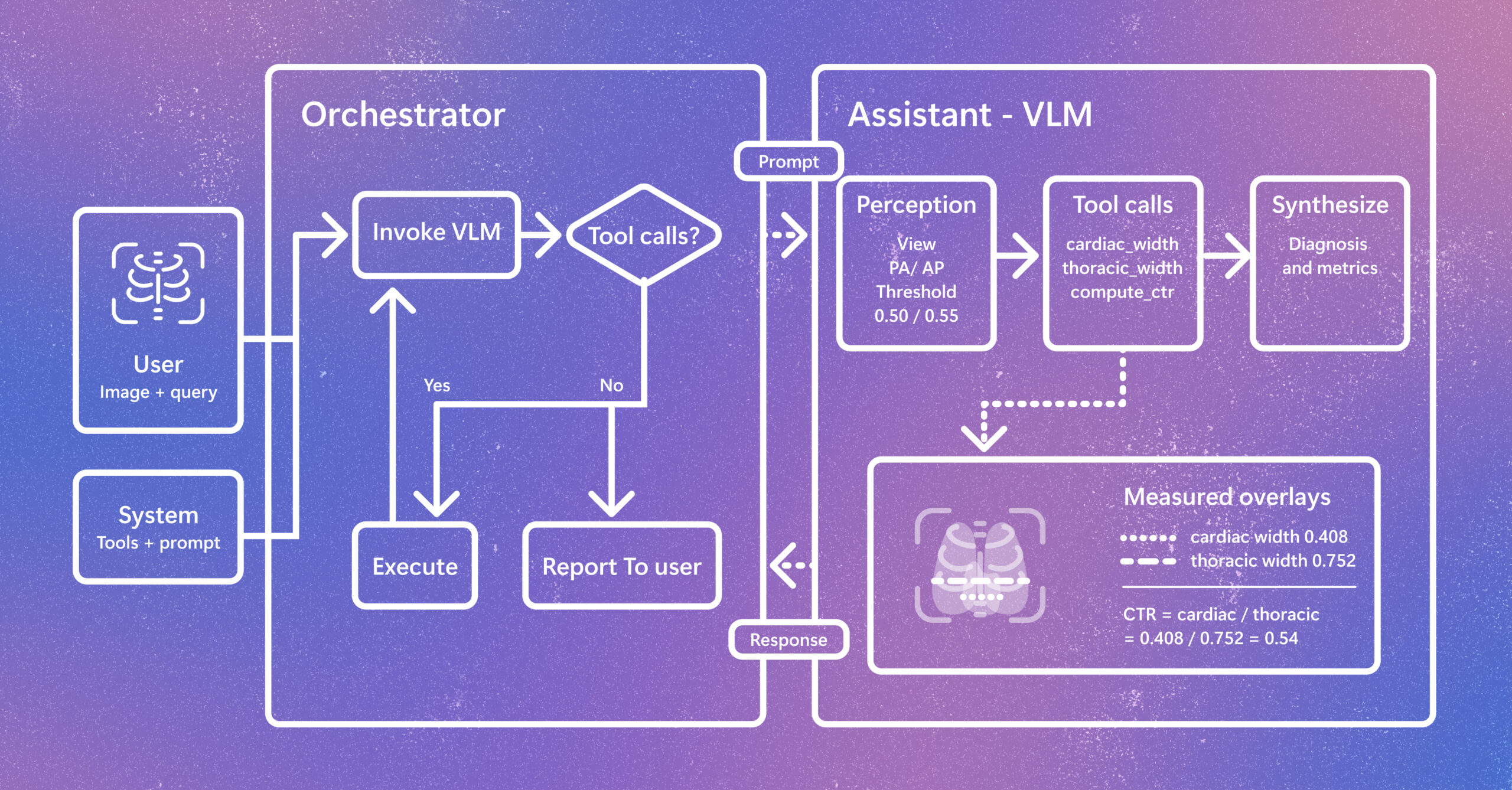
Radiology AI is evolving beyond report generation. CARE-X explores a unified approach that combines flexible reasoning, calibrated predictions, and measurement-based tools for chest X-ray interpretation. The post Introducing CARE-X: Towards Clinically Useful Radiology VLMs with Auxiliary Supervision, Reward-Aligned Learning, and Tool-Augmented Measurement appeared first on Microsoft Research.