Extrapolative temporal knowledge graph reasoning (TKGR) predicts future facts from historical snapshots. Most existing methods train once on an early prefix of the timeline and then use a frozen model for all future timestamps. We argue that this fixed-prefix protocol is misaligned with extrapolation. It learns from a static prefix, whereas the target stream is non-stationary: new entities and facts emerge, temporal dependencies shift across regimes, and recurring historical signals must be refreshed online. As a result, models trained only on early snapshots become outdated and degrade over long horizons. We address this mismatch by formulating extrapolative TKGR as continual learning over streaming snapshots. Under this view, effective extrapolation must jointly handle current dynamics, stable knowledge, and recurring historical evidence. Based on these requirements, we propose History-enhanced Two-Step Continual Learning (HiTS-CL), a backbone-agnostic continual learning framework for extrapolative TKGR. HiTS-CL tracks current dynamics via continual fine-tuning, preserves stable knowledge via multi-teacher adaptive distillation, and retains recurring historical evidence via a selective memory of recent and frequent facts. We integrate HiTS-CL into five representative TKGR backbones and evaluate it on four benchmark datasets. HiTS-CL consistently improves extrapolation accuracy, reduces long-horizon degradation, and outperforms strong continual-learning baselines, including a recent method for temporal knowledge graphs. Source code and data are available at https://github.com/liuyansong98/HiTS-CL.
The results indicate that software engineering work practices are chosen opportunistically, adapted and configured to provide value under the constrains imposed by the startup context.
Nicolò Paternoster, Carmine Giardino, M. Unterkalmsteiner et al.· Information and Software Tec...· 394 citations· ⚡54
The possibility of inferring high-dimensional data inference in a model that consists of a prior and an auxiliary differentiable constraint given some additional information is considered, thereby allowing a range of potential applications in adapting models to new domains and tasks.
Alexandros Graikos, Esmeralda S. Whitammer, N. Jojic et al.· Neural Information Processin...· 316 citations· ⚡15
It is proved that any global minimizer of the trajectory balance objective can define a policy that samples exactly from the target distribution, and empirically demonstrate the benefits of the trajectories balance objective for GFlowNet convergence, diversity of generated samples, and robustness to long action sequenc...
Esmeralda S. Whitammer, Moksh Jain, Emmanuel Bengio et al.· Neural Information Processin...· 302 citations· ⚡60
GAOKAO-Bench is introduced, an intuitive benchmark that employs questions from the Chinese GAOKAO examination as test samples, including both subjective and objective questions that contribute a robust evaluation benchmark for future large language models and offers valuable insights into the advantages and limitations...
Xiaotian Zhang, Chun-yan Li, Yi Zong et al.· arXiv.org· 216 citations· ⚡17
This state-of-practice investigation was performed using a literature review followed by a multiple-case study approach and presents how inconsistency between managerial strategies and execution can lead to failure by means of a behavioral framework.
Carmine Giardino, Xiaofeng Wang, P. Abrahamsson· International Conference on...· 175 citations· ⚡19
This work investigates the possibilities of using LLMs in a resume screening setting via a document retrieval framework that simulates job candidate selection and finds that the MTEs are biased, significantly favoring White-associated names in 85% of cases and female-associated names in only 11.1% of cases.
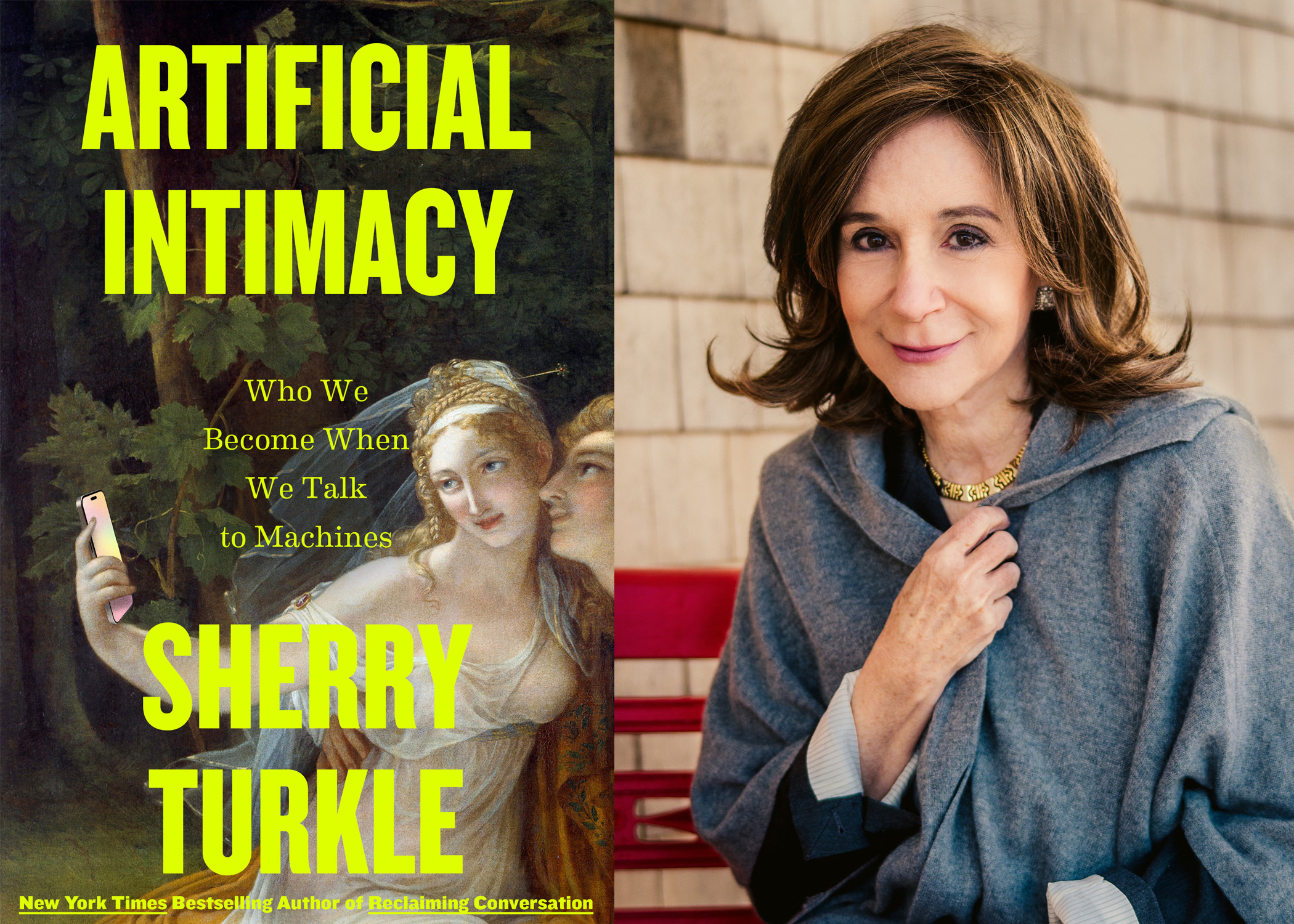
Professor Sherry Turkle’s new book, “Artificial Intimacy,” offers a withering critique of chatbots and the antisocial dynamics she believes they encourage.