A three-stage reinforced fine-tuning (RFT) pipeline for multi-agent VLAs is presented, which freezes the VLA and performs RL in its latent noise space and finds existing online RL for VLAs are less effective for hard multi-agent tasks, which are attributed to noisy co-exploration and unstable updates.
Abstract
We study reinforcement learning (RL) methods for cooperative multi-agent Vision-Language-Action (VLA) models. This problem is challenging because VLAs are pretrained on large-scale single-agent data and therefore lack the fine-grained coordination skills required for inter-robot collaboration. Supervised fine-tuning (SFT) on multi-robot demonstrations partially bridges this gap, but its performance is bounded by the demonstration data and cannot improve from its own experience. We present a three-stage reinforced fine-tuning (RFT) pipeline for multi-agent VLAs. First, initialization-aware data collection sweeps over initial configurations and invokes human demonstrations only when the pretrained VLA repeatedly fails, yielding robustness to initialization shift with reduced human cost. Second, offline credit-filtered tuning assigns credit to individual agents and fine-tunes on per-agent trajectories with positive advantage rather than on entire joint rollouts. Third, we find existing online RL for VLAs are less effective for hard multi-agent tasks, which we attribute to noisy co-exploration and unstable updates. We instead use online latent-space fine tuning, which freeze the VLA and perform RL in its latent noise space. We evaluate our multi-agent VLA with both $\pi_0$ and $\pi_{0.5}$ backbones across 11 tasks in RoboTwin, RoboFactory and real-world manipulation with two Franka robots. Our multi-agent VLA improves the average success rate by $+23.1\%$, $+16.4\%$, and $+44\%$ on RoboTwin, RoboFactory, and real-world tasks, respectively. Code available at https://anonymous.4open.science/r/mavla_rft-2BC0/.
This work instantiates Real-Time EXPO-FT, an RL framework for finetuning real-time VLA policies that meets the real-time control requirements of dynamic real-world manipulation, demonstrating rapid, sample-efficient adaptation to challenging real-world dynamics.
Perry Dong, Kuo-Han Hung, D. Sadigh et al.· 1 citation
FIND is introduced, an agentic real-world RL framework that closes the loop between scene understanding, weakness-aware practice, self-evaluation, and policy improvement in a persistent workspace and reframes autonomous practice as a scene-conditioned, performance-aware task-selection problem.
Yuan Fang, Ze-Chu Li, Hao-Lei Tong et al.· 0 citations
RoboTalk is introduced, a synthetic data-generation pipeline and dataset of 7,950 multimodal trajectories spanning 53 mobile-manipulation kitchen tasks for training small VLMs to communicate and coordinate and fine-tuning open-source models on this dataset can reach 77% success on novel held-out tasks.
Dorian Benhamou Goldfajn, Mason Nakamura, Saaduddin Mahmud et al.· 0 citations
Vision-and-Language Navigation (VLN) has largely focused on a single agent following a single instruction, yet many real-world applications require teams of robots to tackle tasks beyond the capabilities of any individual agent. We present Systematic Multi-Agent Vision-and-Language Navigation, providing, to our knowled...
Vision-language-action (VLA) and world-action models typically absorb unfamiliar manipulation tasks through additional robot data collection and policy optimization. This recurring retraining burden slows the acquisition of new behavior. We present Teach-and-Grow Learning (TGL), a training-free architecture that turns...
Chang Nie, Zhe Liu, He-Sheng Wang· The international journal of...· 2 citations
This work proposes a parameter-efficient approach to fine-tune a pretrained VLM for autonomous navigation using an Imperative Learning paradigm, and introduces a unified end-to-end navigation pipeline for natural-language-driven robotic control.
Sebastian Berger, Katharina Winter, Fabian B. Flohr· 0 citations
Related blog posts
MIT News · Artificial Intelligence· news.mit.eduJul 30, 2026
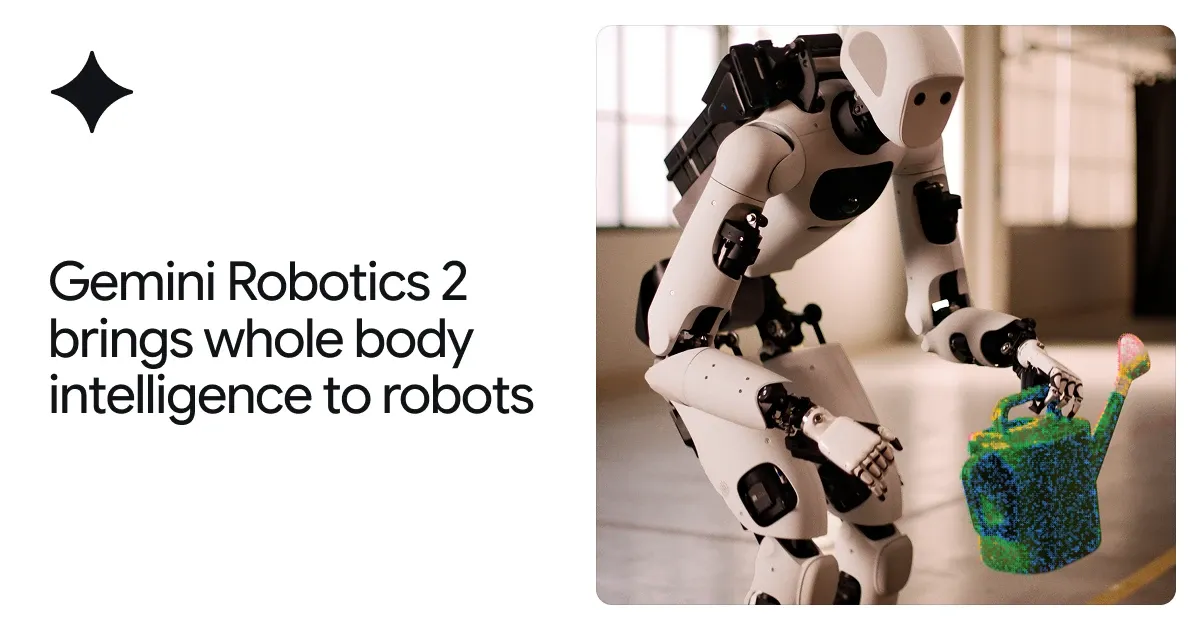
From feet to fingertips — we are teaching robots intelligent whole-body control, fine dexterity, and teamwork to complete a broad range of complex tasks.
MIT News · Artificial Intelligence· news.mit.eduOct 13, 2026
Machine-learning networks can learn without detailed instructions from a designer. Those that do may offer insight into how the brain reorganizes itself during learning.