Skip to content

Visual Branch is What You Need for CLIP-based Class-Incremental Learning

Sep 2026 · 0 citations · 73 references
Computer Science

Abstract

Class-Incremental Learning (CIL) requires models to recognize new classes over time without forgetting previously learned ones. With the rise of vision-language pre-training, CLIP has become a strong foundation for CIL. A common design in CLIP-based CIL is to construct textual classifier weights by encoding class-name templates with the CLIP text encoder, and then classify visual features by image-text cosine similarity. This design is appealing: since CLIP aligns images and text in a shared embedding space, textual weights appear to provide an off-the-shelf classifier for incremental classes. However, we show that this seemingly natural design is not always beneficial, as a modality gap can still separate the two modalities and make textual classifier weights deviate from visual class distributions. Empirically, under identical task-wise CIL training, initializing the cosine classifier with visual class centers yields lower loss and better incremental accuracy than using CLIP textual features. Motivated by these observations, we propose VIS, a visual-only method for CLIP-based CIL that removes the deployed textual branch and constructs the incremental classifier entirely in the visual space. To obtain stronger task-adaptive visual representations, VIS uses only base-session data to enhance CLIP's final visual representation with informative visual-layer features. Built on the enhanced visual representation, VIS employs a simple kernelized incremental least-squares SVM, whose classifier weights are solved in closed form from additive sufficient statistics. When new classes arrive, VIS accumulates their sufficient statistics and recomputes the classifier weights for all seen classes, enabling efficient incremental updates while preserving historical class knowledge. Extensive experiments show that VIS achieves state-of-the-art performance without a textual branch.

View source

Similar papers

#computer vision Review Sep 2017

Agile Software Development Methods: Review and Analysis

This publication proposes a definition and a classification of agile software development approaches and analyses ten software development methods that can be characterized as being "agile" against the defined criterion.

P. Abrahamsson, O. Salo, Jussi Ronkainen et al. · 727 citations · ⚡54
#computer vision Jun 2008

The impact of agile practices on communication in software development

The study shows that agile practices improve both informal and formal communication, but indicates that, in larger development situations involving multiple external stakeholders, a mismatch of adequate communication mechanisms can sometimes even hinder the communication.

M. Pikkarainen, Jukka Haikara, O. Salo et al. · 401 citations · ⚡48
#machine learning Review Open access Oct 2014

Software development in startup companies: A systematic mapping study

The results indicate that software engineering work practices are chosen opportunistically, adapted and configured to provide value under the constrains imposed by the startup context.

Nicolò Paternoster, Carmine Giardino, M. Unterkalmsteiner et al. · 394 citations · ⚡54

Diffusion models as plug-and-play priors

The possibility of inferring high-dimensional data inference in a model that consists of a prior and an auxiliary differentiable constraint given some additional information is considered, thereby allowing a range of potential applications in adapting models to new domains and tasks.

Alexandros Graikos, Esmeralda S. Whitammer, N. Jojic et al. · 316 citations · ⚡15

Trajectory Balance: Improved Credit Assignment in GFlowNets

It is proved that any global minimizer of the trajectory balance objective can define a policy that samples exactly from the target distribution, and empirically demonstrate the benefits of the trajectories balance objective for GFlowNet convergence, diversity of generated samples, and robustness to long action sequenc...

Esmeralda S. Whitammer, Moksh Jain, Emmanuel Bengio et al. · 302 citations · ⚡60

Related blog posts

Microsoft Research Blog Aug 11, 2026

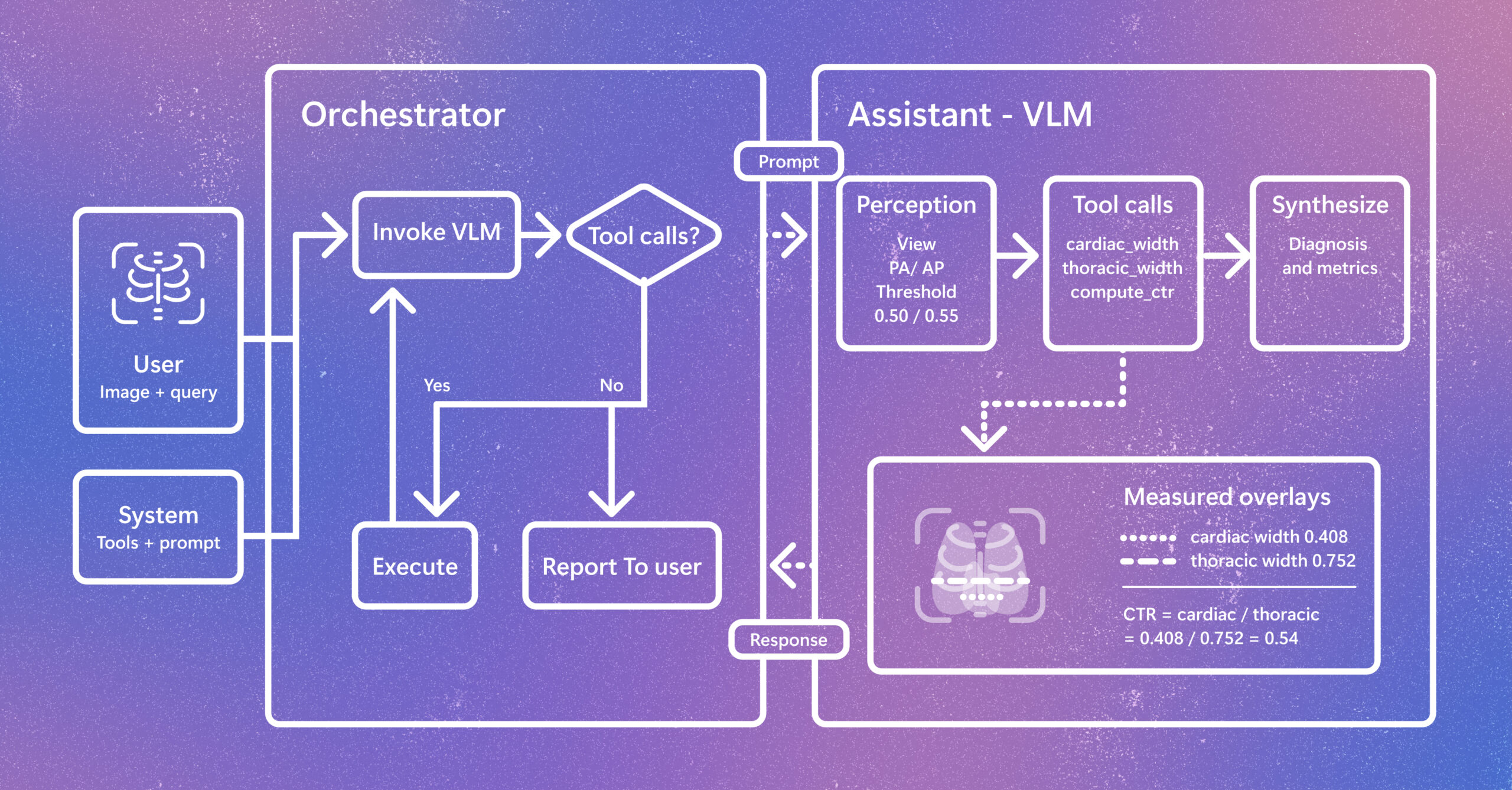
Introducing CARE-X: Towards Clinically Useful Radiology VLMs with Auxiliary Supervision, Reward-Aligned Learning, and Tool-Augmented Measurement

Radiology AI is evolving beyond report generation. CARE-X explores a unified approach that combines flexible reasoning, calibrated predictions, and measurement-based tools for chest X-ray interpretation. The post Introducing CARE-X: Towards Clinically Useful Radiology VLMs with Auxiliary Supervision, Reward-Aligned Learning, and Tool-Augmented Measurement appeared first on Microsoft Research.

MIT News · Artificial Intelligence Oct 7, 2026

Discovering the value of humanistic inquiry

Students in MIT’s Concourse program delve deeply into the human condition, debate challenging questions, and learn to develop judgment about issues that can’t be quantified.

We use cookies to run the site and, with your consent, for analytics and to show ads. See our Cookie Policy.
