RealGUINoise: An Interactive Cross-Platform Benchmark for GUI Agent Robustness under Real-World Interface Noise
Yongjiang WuJunyuan ZhangAda ChenKuiyi GaoWenxuan Wang
Oct 2026
Human-computer Interaction
Abstract
Graphical User Interface (GUI) agents and Computer-Using Agents (CUAs) are rapidly becoming practical tools. However, real-world deployment increasingly exposes performance failures and safety risks, while a major yet underexplored source of these problems lies in the complex and noisy conditions of everyday interfaces. Existing benchmarks largely assume clean environments or focus narrowly on security-specific settings, and lack a unified framework for consistent, automated end-to-end evaluation across diverse agents and platforms. Hence, we introduce RealGUINoise, an interactive cross-platform, extensible benchmark for systematically evaluating GUI Agents under common realistic interface noise in fully interactive environments. Specifically, RealGUINoise comprises 42 noise types spanning web, desktop, and mobile tasks and integrates 7 representative agent frameworks. It evaluates these agents on real-world daily tasks through real-time interaction, comparing their performance against task-specific golden rubrics and clean-environment trajectories in terms of reliability, safety, and trajectory-level behavior. Our experiments show that these noises not only degrade task performance but also substantially redirect agents' action trajectories and increase their propensity for unsafe behavior. These findings expose a critical gap between capability in clean environments and dependable operation in real-world settings, establishing RealGUINoise as a testbed for developing more robust and trustworthy GUI agents.

This publication proposes a definition and a classification of agile software development approaches and analyses ten software development methods that can be characterized as being "agile" against the defined criterion.
P. Abrahamsson, O. Salo, Jussi Ronkainen et al.· arXiv.org· 727 citations· ⚡54
The study shows that agile practices improve both informal and formal communication, but indicates that, in larger development situations involving multiple external stakeholders, a mismatch of adequate communication mechanisms can sometimes even hinder the communication.
M. Pikkarainen, Jukka Haikara, O. Salo et al.· Empirical Software Engineeri...· 401 citations· ⚡48
The results indicate that software engineering work practices are chosen opportunistically, adapted and configured to provide value under the constrains imposed by the startup context.
Nicolò Paternoster, Carmine Giardino, M. Unterkalmsteiner et al.· Information and Software Tec...· 394 citations· ⚡54
The perception of the impact of agile methods is predominantly positive, and several challenge areas were discovered, but based on this study, agile methods are here to stay.
M. Laanti, O. Salo, P. Abrahamsson· Information and Software Tec...· 260 citations· ⚡20
AI agents can generate code at a scale that’s hard for humans to review line-by-line. PDD Kit helps ensure the code is doing what the developer intended by creating formal specifications and testing against them. It converts developer intent into a Verus specification, proves AI-generated code meets it for every input, and uses tests where proofs aren't practical. Developers review intent, not every line. The post Formally verifying agent-written full-stack web apps with PDD Kit appeared first o…
Professor Paris Smaragdis develops computers with superhuman hearing for applications like speech recognition, music understanding, and environmental monitoring.
MIT News · Artificial Intelligence· news.mit.eduOct 23, 2026
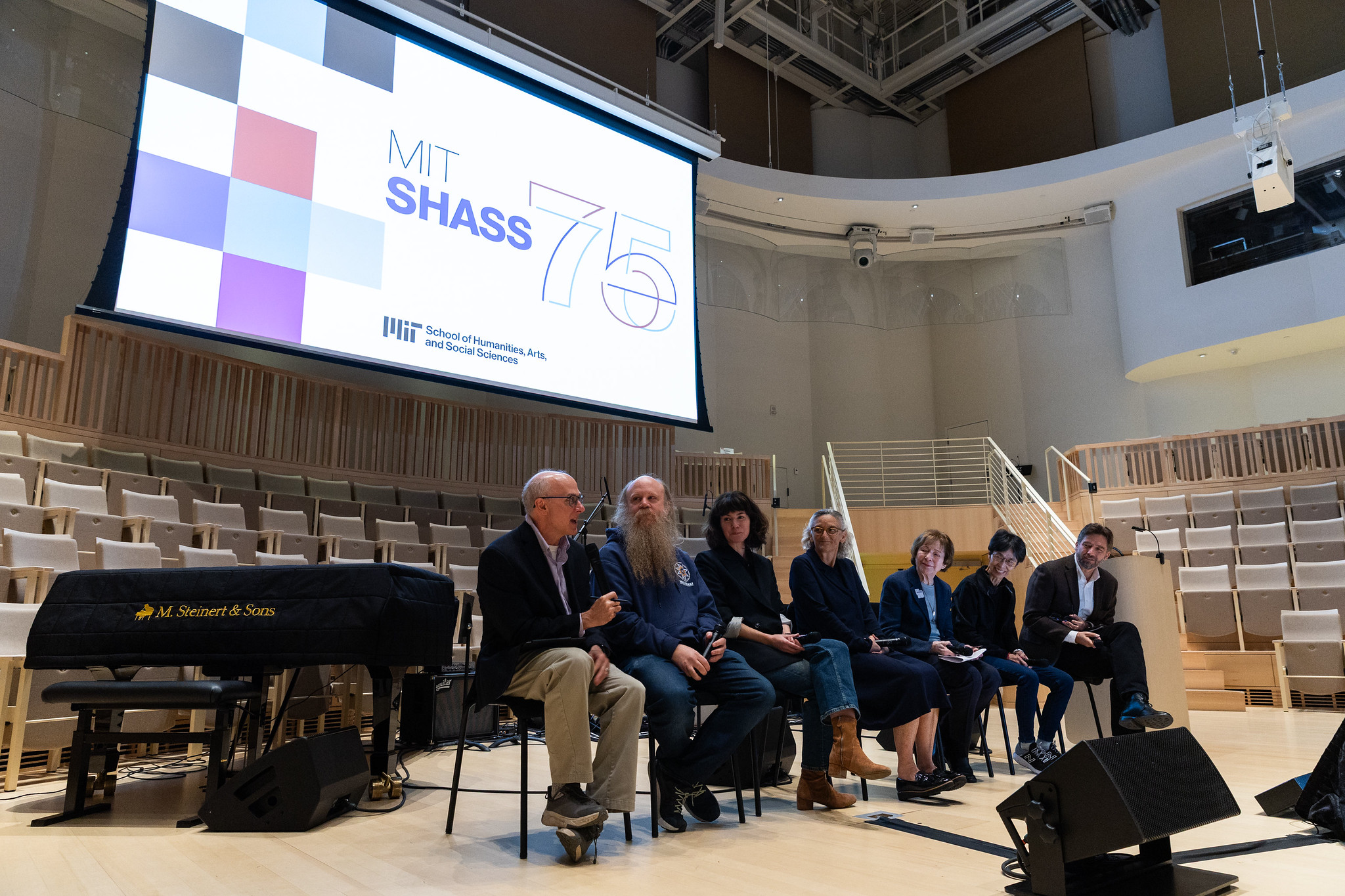
During the School of Humanities, Arts, and Social Sciences’ 75th Anniversary Symposium, President Sally Kornbluth said “MIT has never needed your particular insight and guidance more than we do now.”
We use cookies to run the site and, with your consent, for analytics and to show ads.
See our Cookie Policy.