Sep 2026· ACM Transactions on Intelligent Systems and Technology· 0 citations· 49 references
Advanced Graph Neural Networks
Abstract
Text-Attributed Graphs (TAGs) are prevalent in various real-world scenarios, where each node is associated with a text attribute. Representation learning on TAGs relies on a comprehensive understanding of both the textual attributes and the topological connections. Recent works have enhanced graph neural networks (GNNs) with pre-trained language models (PLMs) for textual attribute modeling, achieving promising results compared with shallow text representations such as BoW. With the advent of more powerful LLMs, how to effectively and efficiently inject the generic knowledge in LLMs into representation learning on TAGs still calls for systematic investigation. To this end, we first examine whether mainstream generative LLMs can provide high-quality generic text embeddings that can be directly used by downstream GNNs, and further explore their complementarity with the task-specific knowledge from a tuned PLM (TLM). Based on these observations, we propose a dual-channel knowledge fusion framework, named MoKGNN, to simultaneously leverage the generic semantic knowledge from LLMs and the task adaptation capability of TLM. Specifically, we design a dual-channel feature extraction module to learn generic and task-specific text representations separately. Next, we introduce a Knowledge Alignment Network to align the LLM embeddings with the TLM representations. Finally, MoKGNN adopts a global mixing weight to fuse the two channels, obtaining a unified node embedding for downstream GNN training. Moreover, we further analyze a key limitation of such early feature fusion under message passing: once heterogeneous text features are merged before neighborhood aggregation, source-specific noise and non-aligned semantics may be diffused together and become harder to disentangle and correct. Motivated by this observation, we propose IMoKGNN, a decoupled dual-stream framework that propagates LLM and TLM features in parallel with a shared GNN backbone and performs late fusion in logit space. Extensive experiments on five TAG datasets demonstrate the effectiveness of our approaches for both node classification and link prediction, and show that IMoKGNN yields more reliable improvements than MoKGNN.
Agile methods continue to gain popularity. In particular, the Scrum method appears to be on the verge of becoming a de-facto standard in the industry, leading the so called Agile movement. While there are success stories and recommendations, there is little scientifically valid evidence of the challenges in the adoptio...
A. Marchenko, P. Abrahamsson· Agile Conference· 59 citations· ⚡11
A comprehensive taxonomy of the challenges faced when a medium-scale organization decided to adopt software platforms is provided, namely: business challenges, organizational challenges, technical challenges, and people challenges.
Yaser Ghanam, F. Maurer, P. Abrahamsson· Information and Software Tec...· 41 citations· ⚡3
It is shown that high article processing charges are not sufficiently justified by the publishers, which often lack transparency and may prevent authors from adopting OA.
D. Graziotin, Xiaofeng Wang, P. Abrahamsson· Scientometrics· 21 citations· ⚡1
MCGLPPI, a novel geometric representation learning framework that combines graph neural networks (GNNs) with the MARTINI molecular coarse-grained (CG) model to predict overall PPI properties accurately and efficiently, offers an effective and efficient solution for PPI overall property predictions.
Yang Yue, Shu Li, Yihua Cheng et al.· bioRxiv· 15 citations
PepPCBench enables a robust evaluation of PFNN-based methods and supports their continued development for peptide-protein structure prediction, and highlights the influence of peptide length, conformational flexibility, and training set similarity on prediction accuracy.
Si-Long Zhai, Huifeng Zhao, Ji-Ke Wang et al.· Journal of Chemical Informat...· 13 citations· ⚡1
OmniMol is presented, a framework using hypergraphs to improve predictions of molecular properties, addressing challenges of imperfect data annotation and enhancing model explainability, and achieves state-of-the-art performance in properties prediction.
Assistant Professor Pat Pataranutaporn describes a new interface that lets everyday users glimpse inside an AI's neural network before their chatbot ever says a word.
Microsoft Research Blog· microsoft.comJul 13, 2026
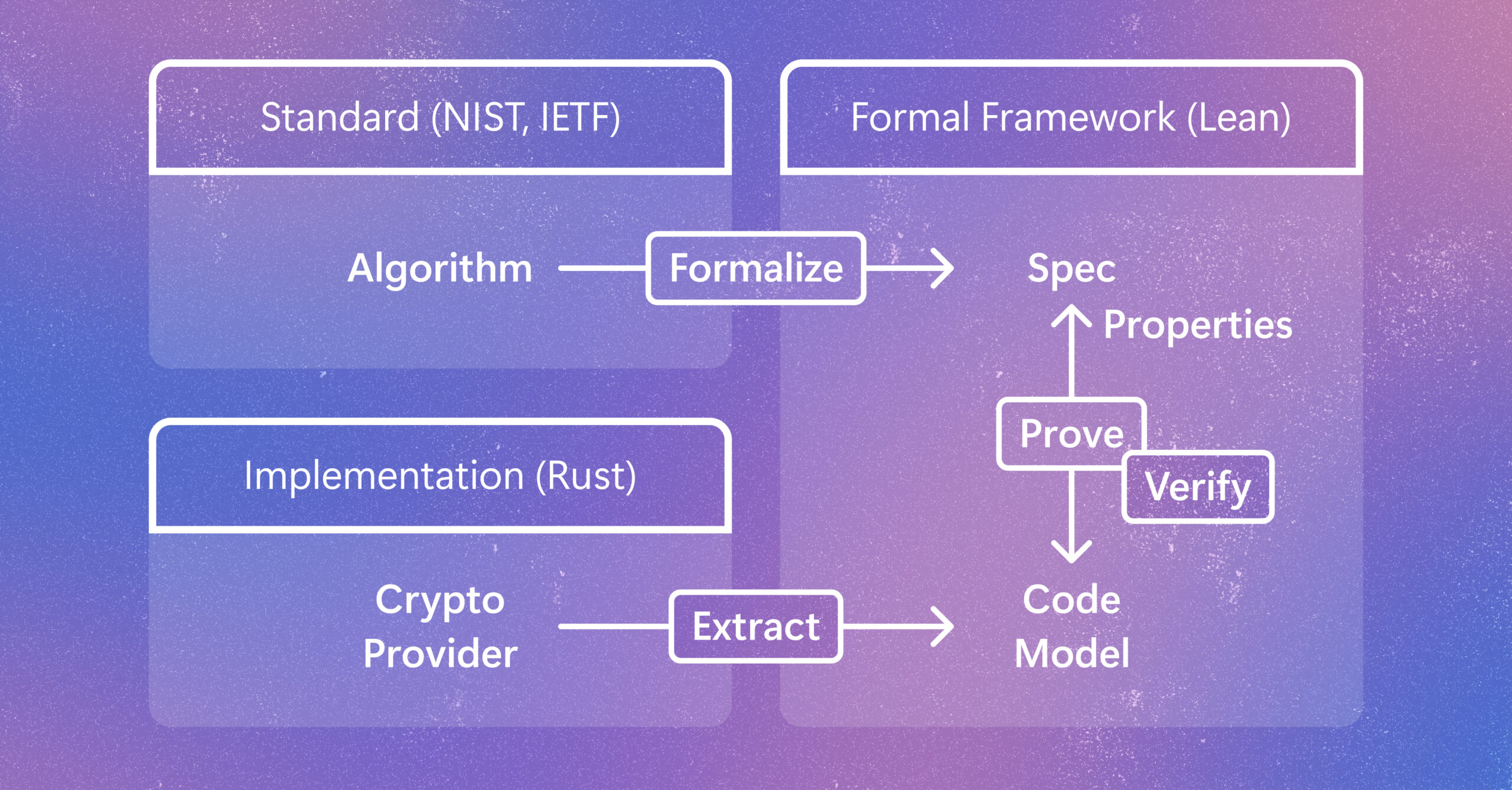
Cryptographic code supports vital protections in modern computing systems. Learn how a new method helps verify code as developers write it while preserving speed and adaptability as it gets implemented and evolves. The post Verifying Rust cryptography in SymCrypt, from standards to code appeared first on Microsoft Research.
MIT News · Artificial Intelligence· news.mit.eduJul 6, 2026
PhD student Rachel Sava, winner of the Envisioning the Future of Computing Prize, explores transformative improvements and dystopian risks of neural technology.