Skip to content

AI-Driven Intrusion Detection for Vehicular Networks: A Comprehensive Survey of Techniques, Datasets, Deployment Architectures, and Future Directions

Sep 2026 · Italian National Conference on Sensors · Vol 26 · 0 citations · 185 references
Medicine

Abstract

Intelligent transportation systems (ITSs), Vehicle-to-Everything (V2X) communication and autonomous driving technologies have brought about significant changes in the modern vehicular network. At the same time, the cyber-attack surface has grown, leading to new and existing advanced security threats for Vehicular Ad hoc Networks (VANETs) and the Internet of Vehicles (IoV). Traditional IDSs that employ static rule-based techniques are often insufficient in the context of the vehicular environment, characterized by dynamic, highly mobile systems with stringent low-latency requirements. Next generation IDS development has shifted to artificial intelligence (AI), which offers adaptive, scalable and data-driven detection capabilities. In this survey, the authors present a comprehensive overview of the state-of-the-art of AI-driven vehicle IDS in terms of machine learning (ML), deep learning (DL), federated learning (FL), reinforcement learning (RL), transformer-based techniques, and graph neural network (GNN) designs. We present a multidimensional taxonomy of vehicular attacks, an analysis of existing datasets and their weaknesses, an evaluation of the performance of AI techniques and a study of potential deployment architectures such as edge, fog and cloud. Furthermore, some of the most important open problems are identified, including data scarcity, adversarial robustness, real-time constraints, data utility-privacy conflicts, and standardization gaps. A research roadmap is provided, including 6G connectivity, blockchain-based IDS, explainable AI (XAI), Digital Twin technologies and post-quantum cryptography. This survey provides a common reference for the designers and developers of secure, efficient and interoperable VIDSs.

Read PDF

Similar papers

#machine learning Review Open access Oct 2014

Software development in startup companies: A systematic mapping study

The results indicate that software engineering work practices are chosen opportunistically, adapted and configured to provide value under the constrains imposed by the startup context.

Nicolò Paternoster, Carmine Giardino, M. Unterkalmsteiner et al. · 394 citations · ⚡54
#machine learning Review Open access Jun 2014

Why Early-Stage Software Startups Fail: A Behavioral Framework

This state-of-practice investigation was performed using a literature review followed by a multiple-case study approach and presents how inconsistency between managerial strategies and execution can lead to failure by means of a behavioral framework.

Carmine Giardino, Xiaofeng Wang, P. Abrahamsson · 175 citations · ⚡19
#machine learning Review Open access Oct 2016

“Failures” to be celebrated: an analysis of major pivots of software startups

This study conducts a case survey study based on the secondary data of the major pivots happened in 49 software startups, and demonstrates that customer need pivot is the most common among all pivot types.

Sohaib Shahid Bajwa, Xiaofeng Wang, Anh Nguyen-Duc et al. · 127 citations · ⚡15
#computer vision Review Open access Mar 2016

Determinants of overweight or obesity among ever-married adult women in Bangladesh

The findings of the study indicate that a large number of women in Bangladesh are suffering from being overweight or obese, and multiple factors are responsible for this including, older age,being from wealthy households, higher education, being from food-secured households, watching TV at least once a week, and being...

Haribondhu Sarma, N. Saquib, M. Hasan et al. · 75 citations · ⚡5
#artificial intelligence Open access Sep 2026

Generating Interesting Scientific Ideas using Knowledge Graphs and LLMs: Evaluations with 100 Research Group Leaders

The rapid growth of scientific literature makes it increasingly challenging for researchers to identify novel and impactful ideas, especially across disciplines. Modern artificial intelligence (AI) systems offer new opportunities for scientific ideation, but how compelling are AI-generated ideas, and how can their qual...

Xuemei Gu, Mario Krenn · 65 citations

Related blog posts

Microsoft Research Blog Jul 13, 2026

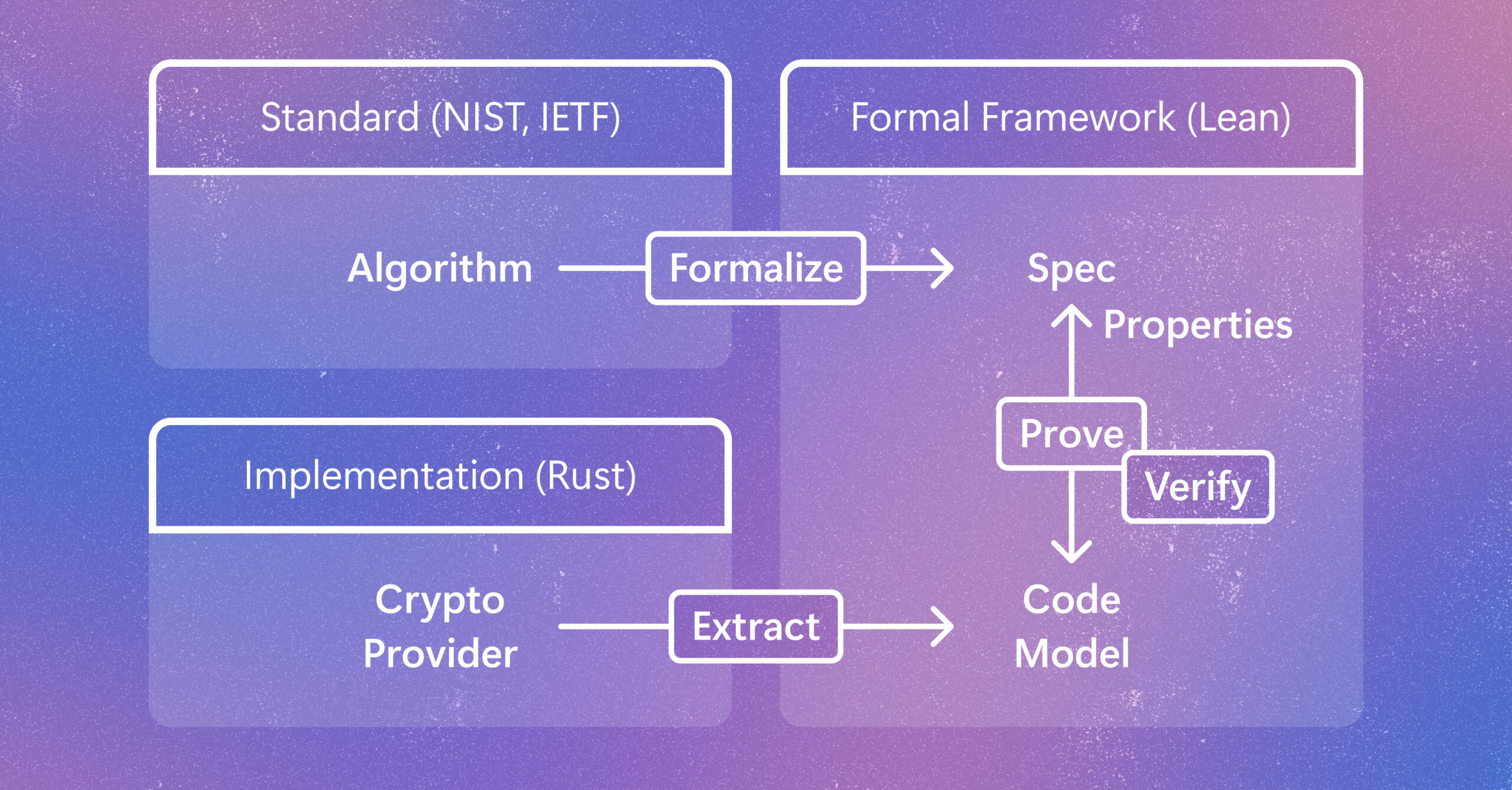
Verifying Rust cryptography in SymCrypt, from standards to code

Cryptographic code supports vital protections in modern computing systems. Learn how a new method helps verify code as developers write it while preserving speed and adaptability as it gets implemented and evolves. The post Verifying Rust cryptography in SymCrypt, from standards to code appeared first on Microsoft Research.

MIT News · Artificial Intelligence Nov 23, 2026

Many languages, one common neural code

Analyzing speakers of 21 languages, an MIT study using multilingual AI finds the human brain may represent meaning in much the same way.

We use cookies to run the site and, with your consent, for analytics and to show ads. See our Cookie Policy.