This research full paper examines how undergraduate students use large language models (LLMs) across computer science subfields. As LLMs become increasingly integrated into computing education, understanding how their use varies across technical and pedagogical contexts is essential for designing effective, subfield-aware instruction. This paper presents a cross-subfield analysis of LLM usage among 211 undergraduate students in a problem-solving course intentionally designed to support responsible and effective LLM use through structured instruction and reflection. Using post-assignment reflection data collected across seven instructional modules spanning multiple computer science subfields, we examine prompt counts, LLM role conceptualization, and verification behavior. Results show that LLM adoption varies substantially by assignment, with higher usage in algorithms and web development and lower usage in software engineering. Students predominantly treat LLMs as assistive tools rather than authoritative sources, and verification is common across all subfields, with most students using multiple strategies. Verification behavior also varies by assignment context, with testing more common in structured tasks and web search more common in open-ended tasks. These findings suggest that assignment characteristics play a central role in shaping how students interact with and evaluate LLM outputs, even under a single, consistently applied instructional design. This work contributes empirical evidence on how LLM adoption, role conceptualization, and verification behavior vary across computer science subfields, extending our prior work on structured, reflective LLM instruction to show how its effects differ by task rather than only in aggregate.

This publication proposes a definition and a classification of agile software development approaches and analyses ten software development methods that can be characterized as being "agile" against the defined criterion.
P. Abrahamsson, O. Salo, Jussi Ronkainen et al.· arXiv.org· 727 citations· ⚡54
The study shows that agile practices improve both informal and formal communication, but indicates that, in larger development situations involving multiple external stakeholders, a mismatch of adequate communication mechanisms can sometimes even hinder the communication.
M. Pikkarainen, Jukka Haikara, O. Salo et al.· Empirical Software Engineeri...· 401 citations· ⚡48
The results indicate that software engineering work practices are chosen opportunistically, adapted and configured to provide value under the constrains imposed by the startup context.
Nicolò Paternoster, Carmine Giardino, M. Unterkalmsteiner et al.· Information and Software Tec...· 394 citations· ⚡54
The perception of the impact of agile methods is predominantly positive, and several challenge areas were discovered, but based on this study, agile methods are here to stay.
M. Laanti, O. Salo, P. Abrahamsson· Information and Software Tec...· 260 citations· ⚡20
AI is making software generation faster, but speed does not remove the need for expertise. As more work is delegated to AI, tacit knowledge may become one of the most important human advantages in software engineering. The post Beyond Prompt Engineering: The Role of Tacit Knowledge in Software Engineering appeared first on GPT-Lab.
Microsoft Research Blog· microsoft.comJul 30, 2026
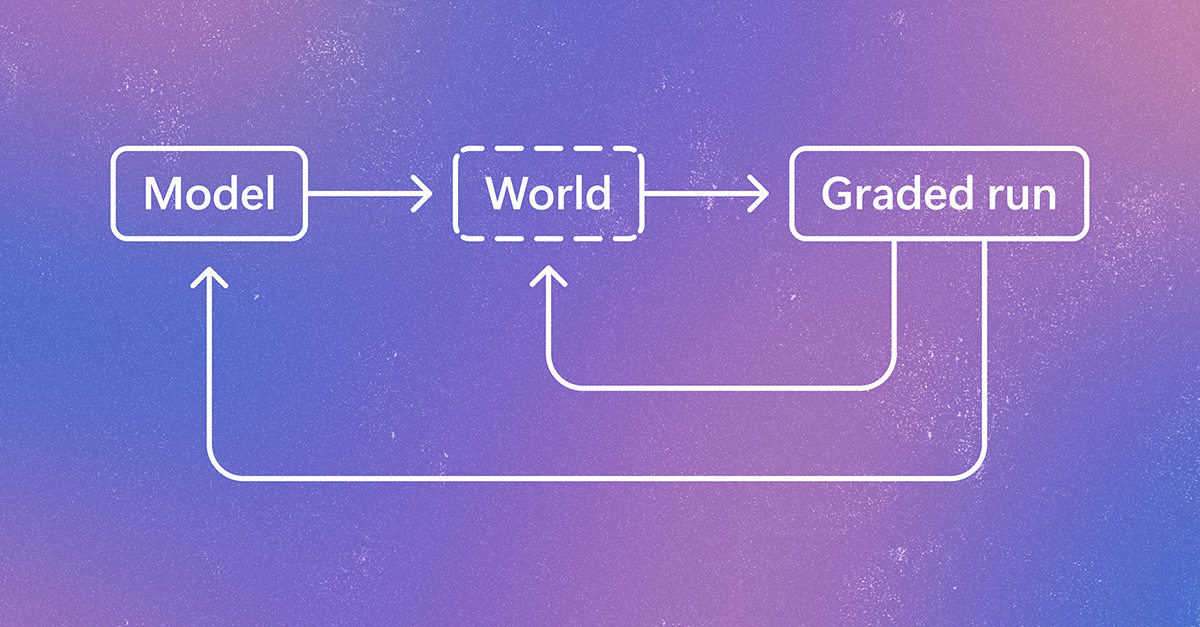
Computer-use AI agents struggle with multi-step workflows like email and customer support. Echoverse trains agents in realistic environments rather than simply providing more training tasks, helping them improve as the tasks, tests, and environments evolve. The post Echoverse: Deep, evolving environments for computer-use agents appeared first on Microsoft Research.