Oct 2026· Journal of Supercomputing· Vol 82· 0 citations· 46 references
Advanced Graph Neural Networks
TL;DR
A community detection via graph attention auto-encoders and decoders with non-negative matrix factorization (GA-NMF) with self-training module in social networks achieves deep fusion and efficient utilization of graph information for community division.
Textual-edge graphs represent interactions through both connectivity and relation-specific text. Learning community structure from these graphs requires an encoder that preserves the relevance of individual relations when combining semantic and structural information. We propose Dual-Stage Attention Embedding for Commu...
Graph Neural Networks (GNNs) have demonstrated strong performance on graph-structured data through neighborhood aggregation. However, they often underperform on heterophilic graphs and suffer from over-smoothing, leading to suboptimal representations. We attribute these limitations to the lack of view-specific factoriz...
Shu-Yan Fang, Ze-Long Yang, Yi Cai et al.· Neural Networks· 0 citations
Community detection in multiplex networks seeks groups of nodes from several types of relations. Attention mechanisms can integrate these relations, but weights based on embedding compatibility do not explicitly measure the community support provided by a node’s neighborhood. We propose Community-Guided Attentive Fusio...
Click-through rate (CTR) prediction is a crucial task to estimate the probability that users will click on items in online platforms. Recently, researchers have incorporated semantics derived from large language models (LLMs) into representations of users and items in graph neural networks (GNNs) framework to facilitat...
Shan Gao, Yan-Wu Yang· ACM Transactions on Knowledg...· 0 citations
Dynamic community detection is of great importance to understand the evolution of relationships among entities in social networks over time. However, existing methods rely on single-view graph information, ignoring the global structural and temporal information. To address this issue, this paper presents a dynamic comm...
M. Kumar· Journal of Intelligent Decis...· 0 citations
Community Search (CS) aims to retrieve query-dependent cohesive subgraphs from networks, playing a crucial role in modern applications such as computing power networks and biological systems. Given the high cost of labeling, unsupervised CS has emerged as a scalable paradigm. However, existing approaches often suffer f...
Xi Yue, Chuan-Hou Sun, Ying Yin et al.· 0 citations
Related blog posts
MIT News · Artificial Intelligence· news.mit.eduOct 26, 2026
Machine-learning networks can learn without detailed instructions from a designer. Those that do may offer insight into how the brain reorganizes itself during learning.
MIT News · Artificial Intelligence· news.mit.eduJul 15, 2026
Assistant Professor Pat Pataranutaporn describes a new interface that lets everyday users glimpse inside an AI's neural network before their chatbot ever says a word.
Microsoft Research Blog· microsoft.comJul 13, 2026
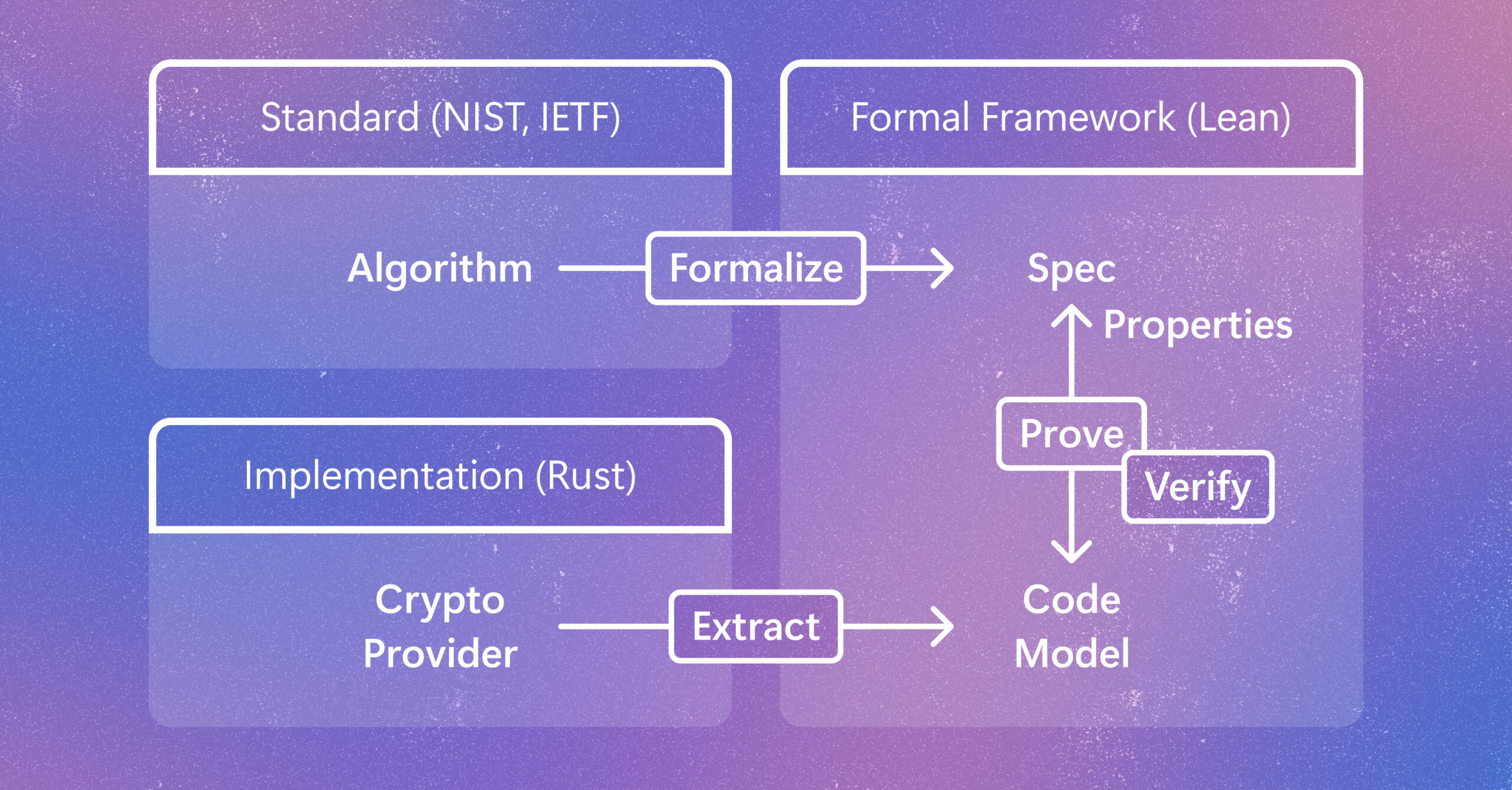
Cryptographic code supports vital protections in modern computing systems. Learn how a new method helps verify code as developers write it while preserving speed and adaptability as it gets implemented and evolves. The post Verifying Rust cryptography in SymCrypt, from standards to code appeared first on Microsoft Research.
We use cookies to run the site and, with your consent, for analytics and to show ads.
See our Cookie Policy.