Skip to content

Calibration-Aware Reinforcement Learning for Large Language Models: A Survey of Objectives, Optimization, and Decision-Making

Oct 2026 · KiltHub Repository
Topic Modeling

Abstract

Large language models increasingly emit confidence reports, predictive distributions, and typed decisions that determine whether a system answers, abstains, retrieves evidence, or spends more computation. We survey calibration-aware reinforcement learning (RL), in which a reported probability is scored by the reward, consumed by the policy’s actions, or both. Such a probability means something only relative to an event, the reporter’s information, and a population or policy. Unlike post-hoc calibration, RL can change the answers being assessed, the incentive actually optimized, and the behavior that consumes the number. We organize the literature around three gaps. Between reporting and capability, proper-score geometry shows that a joint answer-confidence reward decomposes into terms for mean accuracy, the distribution of success across inputs, and reporting error, so it can prefer a less accurate policy even under truthful reporting. Between the stated objective and the implemented update, group standardization, the treatment of parameter-dependent rewards, and finite-ensemble scoring can change what training optimizes. Between ranking and decision value, a score can keep its ordering while losing the numerical meaning that a cost-derived threshold requires. Exact constructions make each gap concrete, and a method landscape traces representative protocols to primary sources. We then give a comparator guide; an evaluation contract that separates reporting gains from changes in the answer policy, effects of the implemented update, and operating-point selection; and open questions. The practical conclusion is a comparator rule: post-hoc fitting is the comparator to beat when predictions can remain fixed, and direct supervision when the desired report has a tractable differentiable loss; RL is a distinct intervention only when reasoning, retrieval, answering, abstention, or information acquisition must adapt through outcome feedback.
View source

Similar papers

#machine learning Review Open access Oct 2014

Software development in startup companies: A systematic mapping study

The results indicate that software engineering work practices are chosen opportunistically, adapted and configured to provide value under the constrains imposed by the startup context.

Nicolò Paternoster, Carmine Giardino, M. Unterkalmsteiner et al. · 394 citations · ⚡54
#machine learning Review Open access Jun 2014

Why Early-Stage Software Startups Fail: A Behavioral Framework

This state-of-practice investigation was performed using a literature review followed by a multiple-case study approach and presents how inconsistency between managerial strategies and execution can lead to failure by means of a behavioral framework.

Carmine Giardino, Xiaofeng Wang, P. Abrahamsson · 175 citations · ⚡19
#machine learning Review Open access Oct 2016

“Failures” to be celebrated: an analysis of major pivots of software startups

This study conducts a case survey study based on the secondary data of the major pivots happened in 49 software startups, and demonstrates that customer need pivot is the most common among all pivot types.

Sohaib Shahid Bajwa, Xiaofeng Wang, Anh Nguyen-Duc et al. · 127 citations · ⚡15
#machine learning Review Open access May 2016

Key Challenges in Software Startups Across Life Cycle Stages

It is found that what perceived as biggest challenges by software startups do vary across different life cycle stages, even though its significance decreases when the learning focuses of the startups move from problem to solution and their products mature.

Xiaofeng Wang, Henry Edison, Sohaib Shahid Bajwa et al. · 62 citations · ⚡6

Related blog posts

Microsoft Research Blog Sep 30, 2026

Forecasting space weather risks on power grids

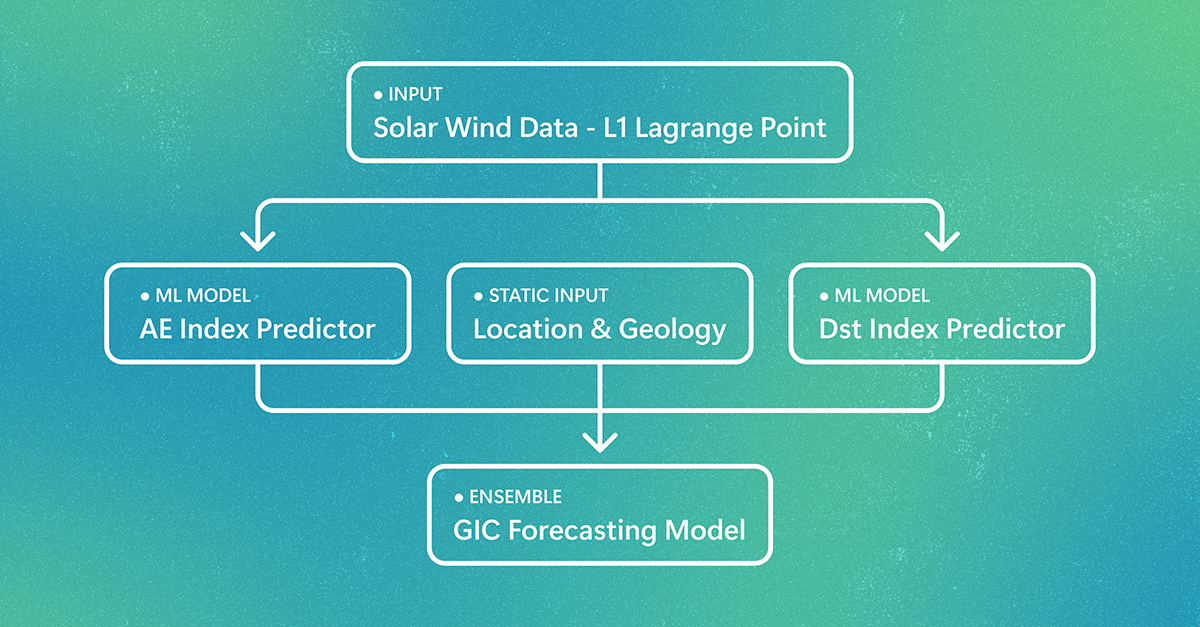
Extreme space-weather events can damage power systems on Earth and degrade GPS accuracy and satellite operations. A new machine learning system can predict where damage is likely to occur 30-60 minutes before a storm arrives. The post Forecasting space weather risks on power grids appeared first on Microsoft Research.

We use cookies to run the site and, with your consent, for analytics and to show ads. See our Cookie Policy.