Skip to content

An Interpretable AI-Based Smart Engineering Framework for Carbon Emission Prediction in Coastal Port-Industrial Zones

Oct 2026 · Technologies · 0 citations
Maritime Transport Emissions and Efficiency

Abstract

Carbon emission prediction of coastal port-industrial zones integrates industrial production, maritime logistics and spatial environmental governance. Existing models fail to simultaneously capture multi-scale temporal fluctuations and spatial correlations of industrial units under meteorological and policy interference. This paper constructs an interpretable dual-branch framework combining Ensemble Empirical Mode Decomposition–XGBoost (EEMD-XGBoost) and a Temporal Graph Neural Network (T-GNN). The EEMD-XGBoost branch extracts multi-scale temporal features from non-stationary emission sequences, while the T-GNN models spatiotemporal dependencies of industrial sub-units; weighted fusion integrates the two branches, and the framework outputs interpretable indicators including feature importance, spatial contribution and temporal attention weights to analyze emission driving factors. Two 2023 datasets are adopted: a coastal-port prefecture-level subset derived from the national regional carbon dataset (28 coastal port-related prefectures), split chronologically into 70% training and 30% test sets; the Yangtze River Delta ship dataset integrating AIS, ship properties and fuel data is partitioned via tonnage-based stratified sampling into 7:2:1 training–validation–test subsets, with an independent test subset for short-term ship-type forecasting. On the independent ship test set for maritime greenhouse gas prediction, the proposed model achieves an R2 of 0.96, 0.95 and 0.93 for container, bulk and oil ships respectively, which only applies to ship-scale forecasting rather than regional carbon prediction. Special ablation experiments show that single T-GNN converges within 72 epochs, single EEMD-XGBoost has a high-frequency fitting error of 6.82%, and the complete dual-branch model reaches a spatial feature capture rate of 94.65% with only a 3.47% fitting error, despite a 27.52 ms single-sample inference time, proving the synergy of the two branches. The model outperforms baselines under abnormal and sparse data conditions. This interpretable framework supports traceable refined carbon management and provides quantitative engineering implications for port zoning control, differentiated ship emission reduction and regional low-carbon policy implementation.


Read PDF

Similar papers

#computer vision Review Open access Mar 2016

Determinants of overweight or obesity among ever-married adult women in Bangladesh

The findings of the study indicate that a large number of women in Bangladesh are suffering from being overweight or obese, and multiple factors are responsible for this including, older age,being from wealthy households, higher education, being from food-secured households, watching TV at least once a week, and being...

Haribondhu Sarma, N. Saquib, M. Hasan et al. · 75 citations · ⚡5
#data science Review Open access Dec 2017

Trends and inequities in use of maternal health care services in Indonesia, 1986–2012

Purpose Overall health status indicators have improved significantly over the past three decades in Indonesia. However, the country’s maternal mortality ratio remains high with a stark inequality by region. Fewer studies have explored access inequity in maternal health care service over time using multiple inequality m...

Herfina Y. Nababan, M. Hasan, Tiara Marthias et al. · 64 citations · ⚡2
#computer vision Conference Aug 2008

Scrum in a Multiproject Environment: An Ethnographically-Inspired Case Study on the Adoption Challenges

Agile methods continue to gain popularity. In particular, the Scrum method appears to be on the verge of becoming a de-facto standard in the industry, leading the so called Agile movement. While there are success stories and recommendations, there is little scientifically valid evidence of the challenges in the adoptio...

A. Marchenko, P. Abrahamsson · 59 citations · ⚡11
#data science Review Open access Apr 2022

Association between Mother’s Education and Infant and Young Child Feeding Practices in South Asia

Findings demonstrate a strong positive association between mother’s education and IYCF indicators and suggest strengthening national policies to educate women at least to the secondary level in SACs might be a cost-effective intervention for improving IY CF practices.

M. Tariqujjaman, M. Hasan, M. Mahfuz et al. · 45 citations · ⚡4
#computer vision Open access Sep 2012

Making the leap to a software platform strategy: Issues and challenges

A comprehensive taxonomy of the challenges faced when a medium-scale organization decided to adopt software platforms is provided, namely: business challenges, organizational challenges, technical challenges, and people challenges.

Yaser Ghanam, F. Maurer, P. Abrahamsson · 41 citations · ⚡3
#natural language process... Review Open access Sep 2021

Prevalence, knowledge, attitudes and factors associated with exclusive breastfeeding among mothers in Dhaka, Bangladesh: A cross-sectional study

Good knowledge, positive attitude and some sociodemographic factors were significant with exclusive breastfeeding which are needed to improve for promoting exclusive breastfeeding practices and reducing infant mortality and morbidity.

M. Hasan, M. Hassan, M. Khan et al. · 32 citations · ⚡6

Related blog posts

Microsoft Research Blog Jul 13, 2026

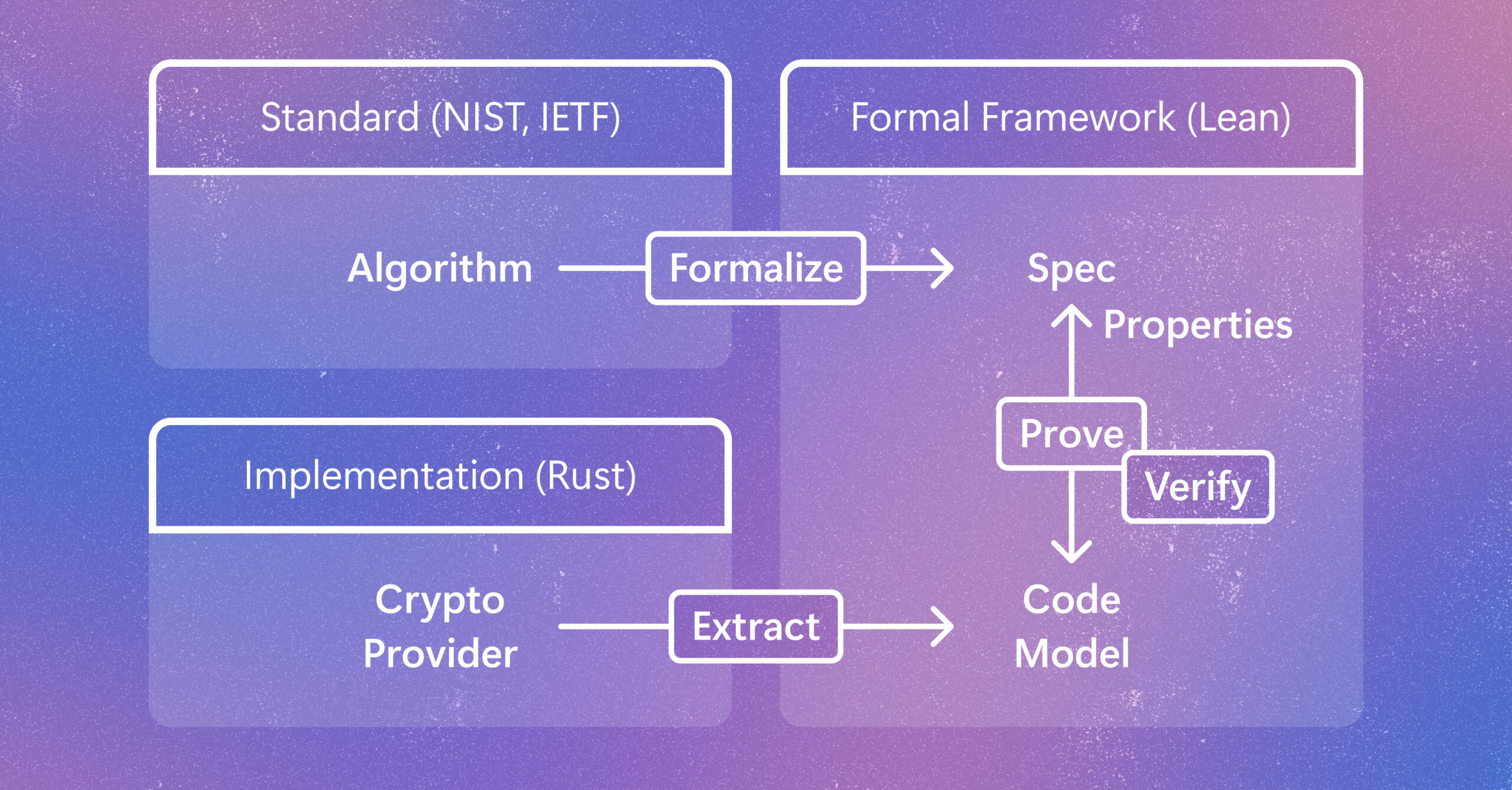
Verifying Rust cryptography in SymCrypt, from standards to code

Cryptographic code supports vital protections in modern computing systems. Learn how a new method helps verify code as developers write it while preserving speed and adaptability as it gets implemented and evolves. The post Verifying Rust cryptography in SymCrypt, from standards to code appeared first on Microsoft Research.

We use cookies to run the site and, with your consent, for analytics and to show ads. See our Cookie Policy.