Skip to content

Artificial intelligence, explainable deep learning, and generative models for osteoporosis and bone disease prediction: a systematic review and future research roadmap

Oct 2026 · Frontiers in Artificial Intelligence · 0 citations · 58 references
Bone health and osteoporosis research

Abstract

Osteoporosis is a major global health burden, with considerable morbidity, mortality, and healthcare costs. Artificial intelligence (AI) has opened new avenues for osteoporosis screening, bone mineral density quantification, fracture-risk prediction, and clinical decision support, but progress remains fragmented across machine learning, deep learning, explainable AI (XAI), generative models, and multimodal learning. This systematic review brings these strands together and identifies priority research needs for AI-based osteoporosis prediction. Following the PRISMA 2020 statement, studies were identified from Scopus and Google Scholar, published between January 2020 and the final search date of 30 June 2026, with two reviewers screening independently and resolving disagreements by consensus. Design-related risk-of-bias indicators, such as retrospective vs. prospective design, validation strategy, and reference standard, were recorded for every study; a full PROBAST, QUADAS-2, and Newcastle-Ottawa Scale appraisal is planned but not yet complete. Fifty-eight studies met the inclusion criteria and were synthesized narratively and descriptively, without formal meta-analysis, given substantial heterogeneity. Findings spanned five themes: classical machine learning, deep learning for imaging, explainable AI, generative models, and multimodal learning. Deep learning achieved strong predictive accuracy (AUC 0.82–0.96), XAI improved clinical interpretability, generative models helped offset data scarcity, and multimodal approaches boosted performance by combining imaging and clinical data. Key gaps remain, including limited external validation, heavy reliance on retrospective data, poor generalisability, and limited regulatory readiness. Building on these findings, this review proposes MXGNet, a multimodal, explainable, generative framework incorporating privacy-preserving federated learning, intended to guide development of robust, interpretable, clinically deployable AI tools for osteoporosis prediction.


Read PDF

Similar papers

#machine learning Review Open access Oct 2014

Software development in startup companies: A systematic mapping study

The results indicate that software engineering work practices are chosen opportunistically, adapted and configured to provide value under the constrains imposed by the startup context.

Nicolò Paternoster, Carmine Giardino, M. Unterkalmsteiner et al. · 394 citations · ⚡54
#machine learning Review Open access Jun 2014

Why Early-Stage Software Startups Fail: A Behavioral Framework

This state-of-practice investigation was performed using a literature review followed by a multiple-case study approach and presents how inconsistency between managerial strategies and execution can lead to failure by means of a behavioral framework.

Carmine Giardino, Xiaofeng Wang, P. Abrahamsson · 175 citations · ⚡19
#machine learning Review Open access Oct 2016

“Failures” to be celebrated: an analysis of major pivots of software startups

This study conducts a case survey study based on the secondary data of the major pivots happened in 49 software startups, and demonstrates that customer need pivot is the most common among all pivot types.

Sohaib Shahid Bajwa, Xiaofeng Wang, Anh Nguyen-Duc et al. · 127 citations · ⚡15
#artificial intelligence Conference Open access Apr 2020

ECCOLA - a Method for Implementing Ethically Aligned AI Systems

The method, ECCOLA, is presented, which aims at making the high-level AI ethics principles more practical, making it possible for developers to more easily implement them in practice.

Ville Vakkuri, Kai-Kristian Kemell, P. Abrahamsson · 64 citations · ⚡6
#machine learning Review Open access May 2016

Key Challenges in Software Startups Across Life Cycle Stages

It is found that what perceived as biggest challenges by software startups do vary across different life cycle stages, even though its significance decreases when the learning focuses of the startups move from problem to solution and their products mature.

Xiaofeng Wang, Henry Edison, Sohaib Shahid Bajwa et al. · 62 citations · ⚡6

Related blog posts

Microsoft Research Blog Oct 12, 2026

Simulating student learning for better AI tutoring

StudentSim is a research system for evaluating and improving AI tutoring tools before they are tested with learners. It models how individuals may engage with tutors, giving feedback to improve tutor performance across subjects like chess, writing, and mathematics. The post Simulating student learning for better AI tutoring appeared first on Microsoft Research.

Microsoft Research Blog Oct 7, 2026

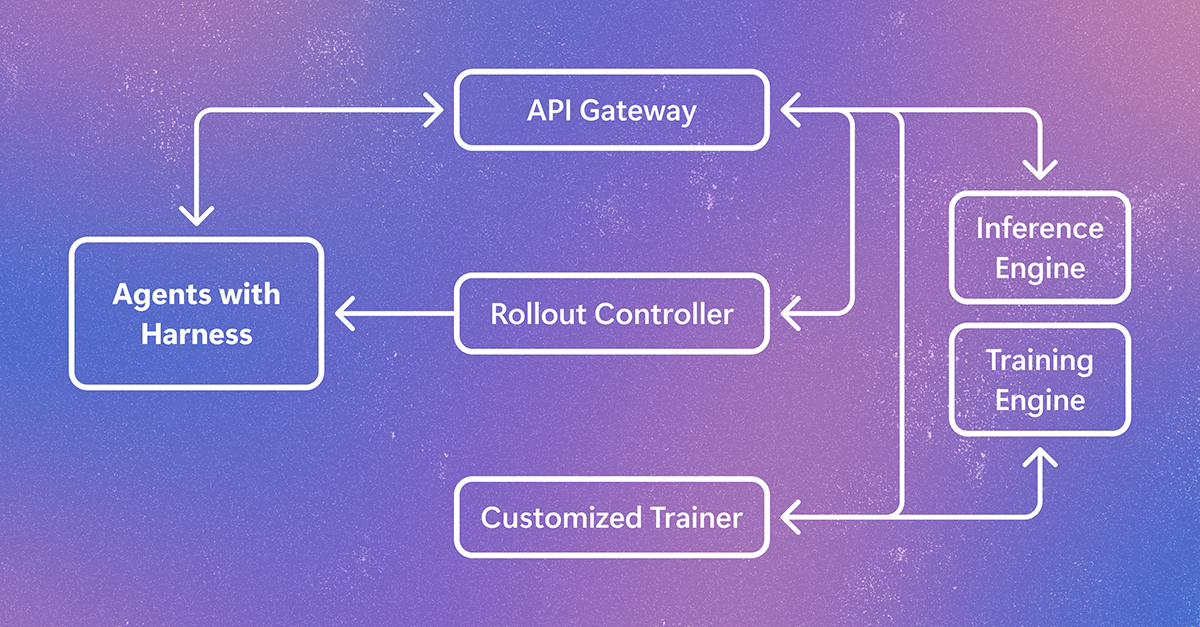
Agent Lightning v1.0: A 3,500-Line Lightweight Agentic RL Framework for Training Agents with Real Harnesses

Training AI agents with reinforcement learning can be challenging because their tools, context, and decision-making are managed by complex frameworks. Agent Lightning connects existing agents to RL training, making it easier to improve them without rebuilding them. The post Agent Lightning v1.0: A 3,500-Line Lightweight Agentic RL Framework for Training Agents with Real Harnesses appeared first on Microsoft Research.

We use cookies to run the site and, with your consent, for analytics and to show ads. See our Cookie Policy.