This paper proposes an advanced resource allocation technique based on multi-objective optimization (MOO) to jointly optimize spectrum and power, mitigating nonlinear impairments and enhancing network performance, thereby improving the optical signal-to-noise ratio.
S. A. Silva, Carmelo J. A. Bastos-Filho, Danilo R. B. Araújo et al.· Journal of Microwaves, Optoe...· 0 citations
The article concludes that this concept can provide a theoretical basis for routing in hybrid communication systems and can naturally extend to lossy transmission models, dynamic network scenarios, and integrated network-control problems.
Alexander A. Kuznetsov, A. Vlasov, K. E. Gaipov et al.· Siberian Aerospace Journal· 0 citations
The findings show that OBS-GraphSyn-2025 offers a scalable, interpretable, and reproducible complexity-aware metric for evaluating routing-state in OBS-inspired networks while abstracting from the constraints of the optical-layer.
Gayatri Tiwari, R. Chauhan, Rachit Jain et al.· Scientific Reports· 0 citations
As practical quantum networks approach large-scale deployment, the need for efficient user-to-user frequency allocation is increasing, yet current approaches only provide partial solutions to the routing and spectrum allocation problem for an arbitrary quantum network. We address this challenge for repeater-less flex-g...
Zachary Goisman, M. L. Stevens, Maxwell Goisman et al.· 0 citations
This paper presents detailed algorithm for calculating L-LSR coefficient, and shows that L-LSR algorithm not only performs better than OSPF, but also has verySignificant performance improvement over the other LSR family of algorithms.
This work proposes Double-Channel Graph Attention (DCGA), an end-to-end reinforcement learning framework that isolates network reachability and demand-service logic into separate graph channels and constructs valid routes using a simulator-coupled, constraint-informed decoder.
Hao Sun, Fang He, Congyuan Ji et al.· arXiv.org· 0 citations
Related blog posts
MIT News · Artificial Intelligence· news.mit.eduOct 13, 2026
Machine-learning networks can learn without detailed instructions from a designer. Those that do may offer insight into how the brain reorganizes itself during learning.
MIT News · Artificial Intelligence· news.mit.eduJul 15, 2026
Assistant Professor Pat Pataranutaporn describes a new interface that lets everyday users glimpse inside an AI's neural network before their chatbot ever says a word.
Microsoft Research Blog· microsoft.comJul 13, 2026
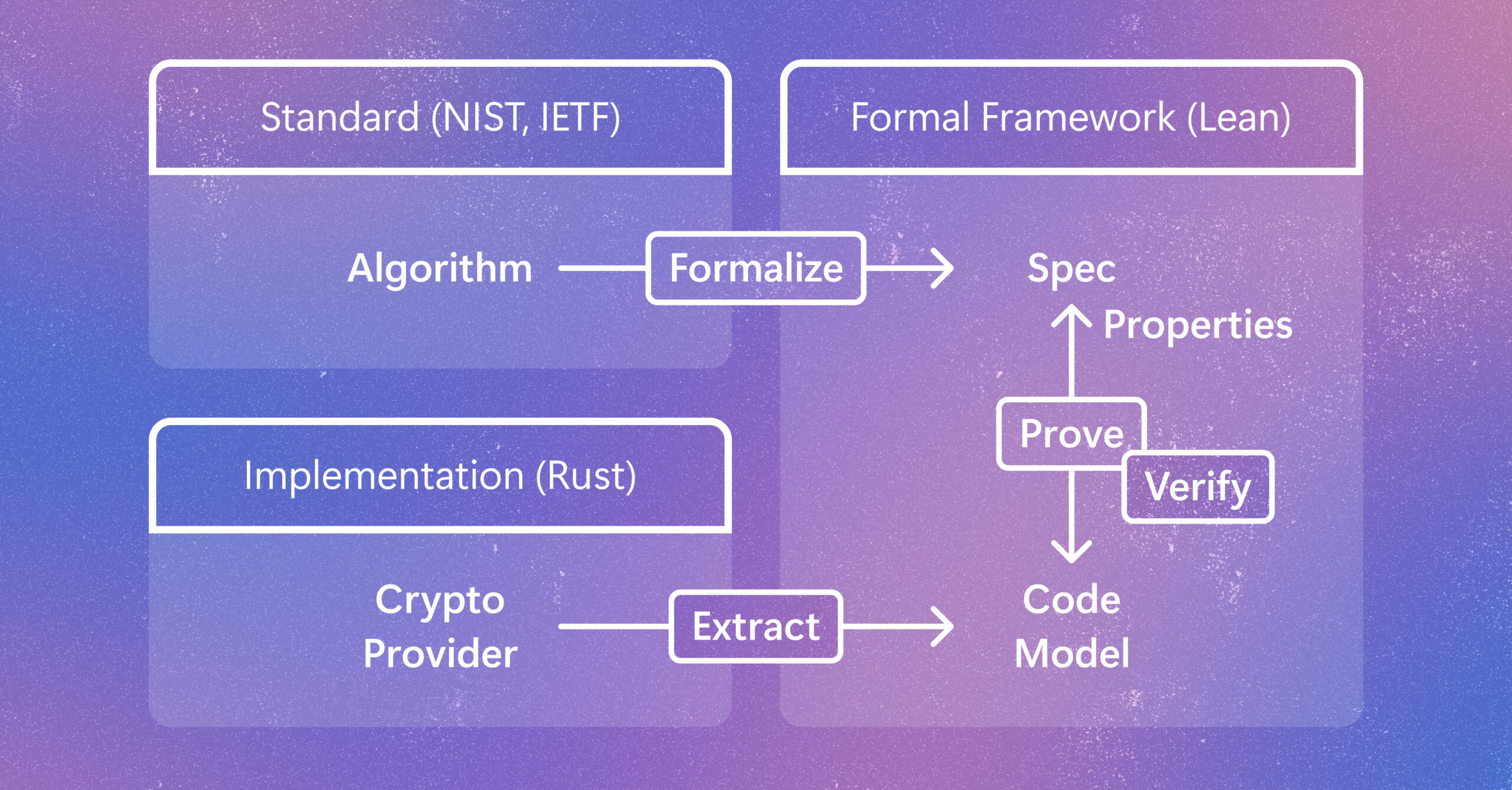
Cryptographic code supports vital protections in modern computing systems. Learn how a new method helps verify code as developers write it while preserving speed and adaptability as it gets implemented and evolves. The post Verifying Rust cryptography in SymCrypt, from standards to code appeared first on Microsoft Research.
MIT News · Artificial Intelligence· news.mit.eduJul 6, 2026
PhD student Rachel Sava, winner of the Envisioning the Future of Computing Prize, explores transformative improvements and dystopian risks of neural technology.
We use cookies to run the site and, with your consent, for analytics and to show ads.
See our Cookie Policy.