Skip to content
#human-computer interaction Preprint Open access

LearnAdapt Praxis: Controlled AI Assistance and Evidence Traces for Adult Workplace Learning

Nizam Kadir
Oct 2026
Human-computer Interaction

Abstract

AI can help adults produce plausible workplace artefacts while leaving their independent reasoning difficult to inspect. LearnAdapt Praxis addresses this design problem through a five-stage learning workspace: Frame, Learn, Build, Validate and Transfer. The application stores an initial response, versioned specifications, coaching records, validation observations, a separate transfer response and facilitator feedback. Project-level server controls restrict coaching, access to earlier work and learner export during an active transfer attempt; they do not establish that a learner avoided assistance outside the application. This technical report describes the implemented architecture and evaluates selected workflow, authority, failure-recovery and provenance properties. A reproducible synthetic rehearsal exercised 120 serial project episodes across three fictional workplace contexts and four injected provider conditions. All 3,990 recorded checks met their specified expectations. The resulting records contained 240 specification versions, 1,200 activity events and 60 stored synthetic hints; 60 injected provider failures produced no fabricated hints. Separate authentication regressions exposed and resolved a session-expiry defect, and limited staging and production checks verified account access and live model connectivity. The evidence supports the tested engineering properties of the recorded release. It does not establish learning gains, model-output quality, unaided assessment validity, population usability or production capacity. The contribution is an implemented arrangement for separating assisted work, project-level assistance withdrawal and inspectable evidence, accompanied by executable tests and an explicit account of what remains to be validated with adult learners.


View source

Similar papers

#computer vision Review Sep 2017

Agile Software Development Methods: Review and Analysis

This publication proposes a definition and a classification of agile software development approaches and analyses ten software development methods that can be characterized as being "agile" against the defined criterion.

P. Abrahamsson, O. Salo, Jussi Ronkainen et al. · 727 citations · ⚡54
#computer vision Jun 2008

The impact of agile practices on communication in software development

The study shows that agile practices improve both informal and formal communication, but indicates that, in larger development situations involving multiple external stakeholders, a mismatch of adequate communication mechanisms can sometimes even hinder the communication.

M. Pikkarainen, Jukka Haikara, O. Salo et al. · 401 citations · ⚡48
#machine learning Review Open access Oct 2014

Software development in startup companies: A systematic mapping study

The results indicate that software engineering work practices are chosen opportunistically, adapted and configured to provide value under the constrains imposed by the startup context.

Nicolò Paternoster, Carmine Giardino, M. Unterkalmsteiner et al. · 394 citations · ⚡54

Related blog posts

Microsoft Research Blog Nov 5, 2026

Formally verifying agent-written full-stack web apps with PDD Kit

AI agents can generate code at a scale that’s hard for humans to review line-by-line. PDD Kit helps ensure the code is doing what the developer intended by creating formal specifications and testing against them. It converts developer intent into a Verus specification, proves AI-generated code meets it for every input, and uses tests where proofs aren't practical. Developers review intent, not every line. The post Formally verifying agent-written full-stack web apps with PDD Kit appeared first o…

MIT News · Artificial Intelligence Oct 28, 2026

Making machines that can listen

Professor Paris Smaragdis develops computers with superhuman hearing for applications like speech recognition, music understanding, and environmental monitoring.

MIT News · Artificial Intelligence Oct 23, 2026

Reinforcing the value of human understanding at MIT

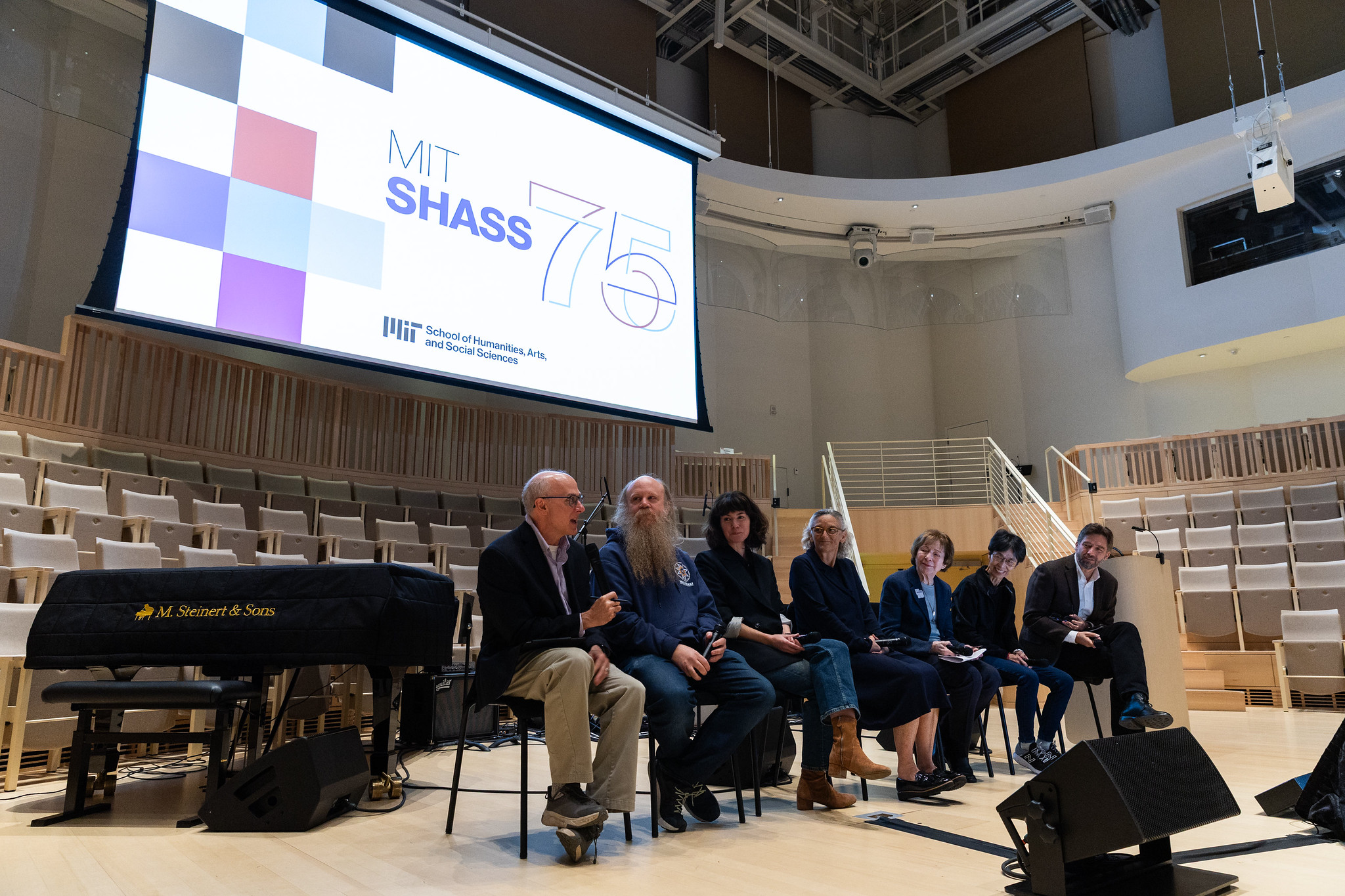
During the School of Humanities, Arts, and Social Sciences’ 75th Anniversary Symposium, President Sally Kornbluth said “MIT has never needed your particular insight and guidance more than we do now.”

We use cookies to run the site and, with your consent, for analytics and to show ads. See our Cookie Policy.