Future 6G systems share a central challenge with Physical AI: combining sensing, reasoning, and action on network-edge infrastructure in rapidly changing physical environments under strict latency, compute, and energy constraints. Addressing this challenge requires multi-timescale intelligence, combining fast perception that tracks wireless phenomena within milliseconds with slower reasoning that directs sensing and adapts network policies and resources over seconds. In this paper, we present a vision for Agentic RF Intelligence based on a dual-loop architecture that decouples fast, locally autonomous wireless sensing (e.g., detecting spectrum dynamics, interference, and signal sources) from slower agentic reasoning and orchestration. We provide an on-device prototype in which the full stack runs on a single NVIDIA Jetson Thor connected to a B200 Mini USRP. The fast loop processes IQ samples using signal-processing tools and wireless physical-layer foundation models (WPFM), while a local Large Language Model (LLM) asynchronously interprets RF events, invokes tools and steers sensing. Our experiments confirm the separation in timescales, as WPFMs operate at millisecond latency, while LLM interactions take seconds to minutes. The fast loop remains operational during agentic reasoning, providing initial evidence for the feasibility of this decoupled architecture. We conclude by outlining extensions toward memory-driven self-improvement, world models, network control, and multi-agent operation.

This publication proposes a definition and a classification of agile software development approaches and analyses ten software development methods that can be characterized as being "agile" against the defined criterion.
P. Abrahamsson, O. Salo, Jussi Ronkainen et al.· arXiv.org· 727 citations· ⚡54
The study shows that agile practices improve both informal and formal communication, but indicates that, in larger development situations involving multiple external stakeholders, a mismatch of adequate communication mechanisms can sometimes even hinder the communication.
M. Pikkarainen, Jukka Haikara, O. Salo et al.· Empirical Software Engineeri...· 401 citations· ⚡48
The results indicate that software engineering work practices are chosen opportunistically, adapted and configured to provide value under the constrains imposed by the startup context.
Nicolò Paternoster, Carmine Giardino, M. Unterkalmsteiner et al.· Information and Software Tec...· 394 citations· ⚡54
The perception of the impact of agile methods is predominantly positive, and several challenge areas were discovered, but based on this study, agile methods are here to stay.
M. Laanti, O. Salo, P. Abrahamsson· Information and Software Tec...· 260 citations· ⚡20
Related blog posts
MIT News · Artificial Intelligence· news.mit.eduOct 2, 2026
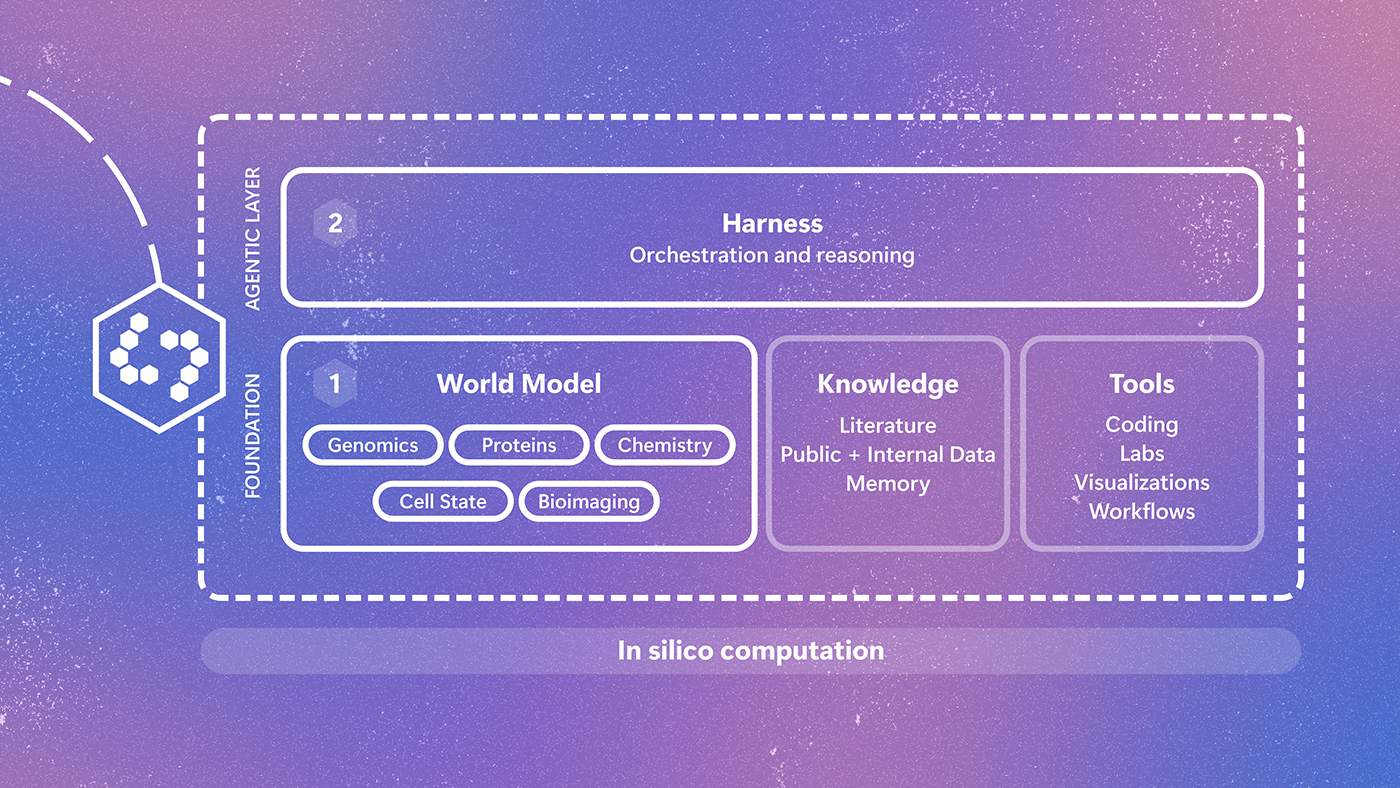
Biology doesn't operate in silos, and neither should the AI representation of it. Quine is an early-stage research effort to create a multimodal world model of biology. By connecting insights across biological scales and modalities, Quine helps scientists computationally search a space far larger than intuition allows and prioritize hypotheses before they reach the lab. Experimental results provide important feedback, helping researchers sharpen future research directions. The post Introducing Q…