Skip to content

Multimodal AI in hematology: a systematic review of fusion approaches for automated diagnosis of blood disorders

Oct 2026 · The Egyptian Journal of Internal Medicine · Vol 38 · 0 citations · 73 references
Digital Imaging for Blood Diseases

Abstract

Hematological disorders, including anemia and leukemia, pose major health risks globally, especially in developing areas. Around 1.92 billion people are affected by anemia, with about 475,000 new leukemia cases diagnosed yearly, resulting in approximately 310,000 deaths. The reliance on subjective conventional diagnostic methods highlights the necessity for automated diagnostics. The systematic review evaluates AI techniques for diagnosing hematological diseases, focusing on multimodal approaches that integrate blood smear images with hematological parameters to enhance diagnostic accuracy. It contrasts multimodal and single-modality systems on criteria like accuracy, sensitivity, and specificity, while addressing challenges such as data size and the absence of explainable AI. The review suggests strategies for improving clinical AI implementation, including data standardization, multicenter validation, and development of portable diagnostic systems. A literature search following PRISMA 2020 guidelines identified 3,000 records, with 220 removed prior to screening (100 duplicates, 120 non-English). From 2,780 screened, 2,600 were excluded, resulting in 180 reports, of which 40 were included in the final evidence set. Only peer-reviewed original studies meeting multimodal criteria were synthesized. Data extraction included study characteristics, datasets, AI models, fusion strategies, validation methods, and performance metrics. Risk of bias was assessed with PROBAST and QUADAS-2, while evidence certainty was evaluated using the GRADE framework. Multimodal and fusion systems in the reviewed studies demonstrated potential, particularly through hybrid fusion and deep learning architecture. However, variability in disease, datasets, and evaluation methods hindered quantitative comparisons with single-modality systems, resulting in inconsistent performance evidence. Limitations included small, imbalanced datasets and inadequate multicenter validation, yielding a low - GRADE quality assessment due to bias risks and validation shortcomings. Multimodal AI in hematology shows potential for enhancing automated diagnosis and classification by merging various data types. Nonetheless, existing evidence lacks consistency, hindering clear superiority over single-modality techniques. Future studies should prioritize developing explainable AI models, using standardized datasets, exploring privacy-preserving federated learning, and creating lightweight models for limited-resource settings.


Read PDF

Similar papers

#machine learning Review Open access Oct 2014

Software development in startup companies: A systematic mapping study

The results indicate that software engineering work practices are chosen opportunistically, adapted and configured to provide value under the constrains imposed by the startup context.

Nicolò Paternoster, Carmine Giardino, M. Unterkalmsteiner et al. · 394 citations · ⚡54
#machine learning Review Open access Jun 2014

Why Early-Stage Software Startups Fail: A Behavioral Framework

This state-of-practice investigation was performed using a literature review followed by a multiple-case study approach and presents how inconsistency between managerial strategies and execution can lead to failure by means of a behavioral framework.

Carmine Giardino, Xiaofeng Wang, P. Abrahamsson · 175 citations · ⚡19
#machine learning Review Open access Oct 2016

“Failures” to be celebrated: an analysis of major pivots of software startups

This study conducts a case survey study based on the secondary data of the major pivots happened in 49 software startups, and demonstrates that customer need pivot is the most common among all pivot types.

Sohaib Shahid Bajwa, Xiaofeng Wang, Anh Nguyen-Duc et al. · 127 citations · ⚡15
#artificial intelligence Conference Open access Apr 2020

ECCOLA - a Method for Implementing Ethically Aligned AI Systems

The method, ECCOLA, is presented, which aims at making the high-level AI ethics principles more practical, making it possible for developers to more easily implement them in practice.

Ville Vakkuri, Kai-Kristian Kemell, P. Abrahamsson · 64 citations · ⚡6
#machine learning Review Open access May 2016

Key Challenges in Software Startups Across Life Cycle Stages

It is found that what perceived as biggest challenges by software startups do vary across different life cycle stages, even though its significance decreases when the learning focuses of the startups move from problem to solution and their products mature.

Xiaofeng Wang, Henry Edison, Sohaib Shahid Bajwa et al. · 62 citations · ⚡6

Related blog posts

Microsoft Research Blog Oct 12, 2026

Simulating student learning for better AI tutoring

StudentSim is a research system for evaluating and improving AI tutoring tools before they are tested with learners. It models how individuals may engage with tutors, giving feedback to improve tutor performance across subjects like chess, writing, and mathematics. The post Simulating student learning for better AI tutoring appeared first on Microsoft Research.

Microsoft Research Blog Oct 7, 2026

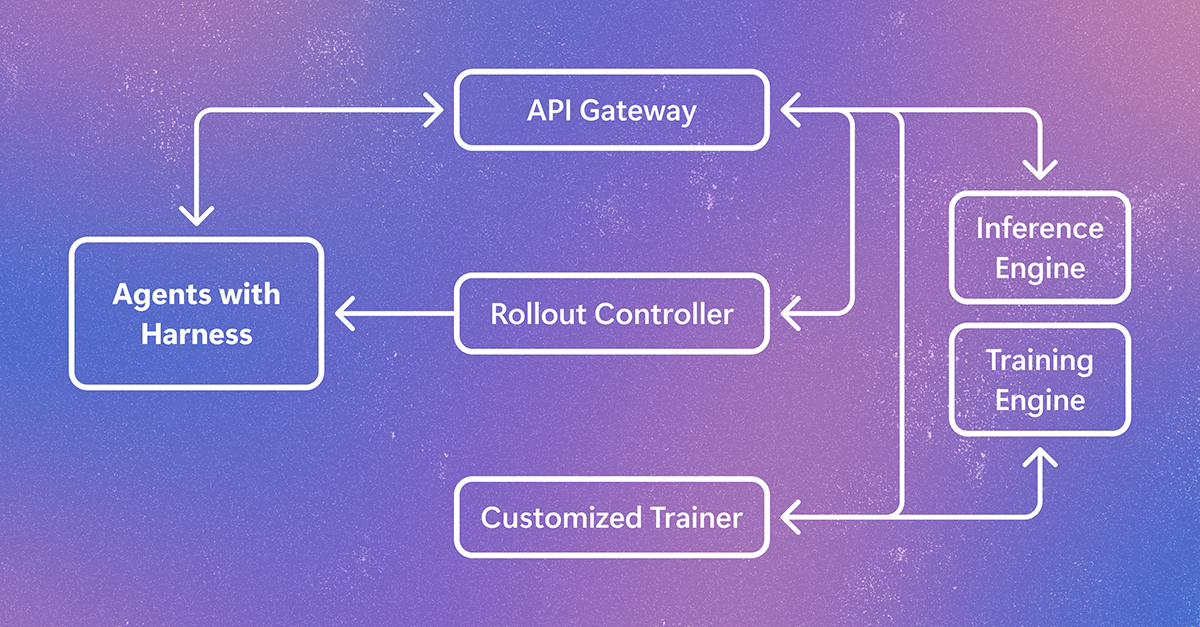
Agent Lightning v1.0: A 3,500-Line Lightweight Agentic RL Framework for Training Agents with Real Harnesses

Training AI agents with reinforcement learning can be challenging because their tools, context, and decision-making are managed by complex frameworks. Agent Lightning connects existing agents to RL training, making it easier to improve them without rebuilding them. The post Agent Lightning v1.0: A 3,500-Line Lightweight Agentic RL Framework for Training Agents with Real Harnesses appeared first on Microsoft Research.

We use cookies to run the site and, with your consent, for analytics and to show ads. See our Cookie Policy.