This work studies how statistical adaptivity is learned in a controlled location-estimation problem, and combines attention experts through either a softmax mixture of experts or a gated linear unit (GLU), and analyze stagewise gradient flow.
Abstract
Prior Fitted Networks (PFNs) such as TabPFN now rival established statistical procedures across prediction and estimation tasks. A natural explanation is that PFNs have the property of statistical adaptivity, that is, they perform nearly as well as a method tailored to the true data-generating model for a heterogeneous set of models, while not being told which model the data comes from. We study how such adaptivity is learned in a controlled location-estimation problem. Each task is an unlabeled sample whose family is hidden: Gaussian data call for averaging, with error of order $n^{-1}$, whereas uniform data are best estimated from their extremes, at the faster rate $n^{-2}$. We also provide the example of a symmetric Gaussian mixture, for which a rate of $\sigma^2_n/n$ can be attained. On scalar inputs, softmax attention computes the derivative of the empirical cumulant-generating function. A single primitive therefore both supplies features that distinguish the families and forms estimators interpolating between the sample mean and the mid-range. We combine attention experts through either a softmax mixture of experts or a gated linear unit (GLU), and analyze stagewise gradient flow. With $\widetilde{\Omega}(n^{1+\epsilon})$ pretraining tasks, the learned estimator is asymptotically efficient on Gaussian tasks, within a factor $n^{\epsilon}$ of the minimax rate on uniform tasks, and order-optimal on mixtures in a shrinking-variance regime. These guarantees extend to new locations and longer contexts. A risk decomposition separates expert error, routing error and normalization error, which clarifies the architectural contrast. Softmax gating enforces normalization and exact translation equivariance, whereas the GLU must learn it: its dynamics separate into fast bias removal followed by slow expert selection. End-to-end experiments recover the predicted specialization.
Reinforcement learning and contextual bandit algorithms have become increasingly common in sequential decision-making applications. When these methods are deployed in high-stakes domains, there is growing interest not only in learning effective policies, but also in conducting statistical inference for quantities learn...
James Leiner, Aurélien F. Bibaut, Nathan Kallus et al.· 0 citations
Estimating a decision threshold requires locating observations near an unknown boundary. We study how gradient-based pretraining learns this statistical rule in a two-parameter softmax-attention model with a fixed feature and inequality direction. Pretraining uses labeled contexts and their true thresholds; a fresh thr...
H. Lệ, Jackie Lok, Atsushi Nitanda et al.· 0 citations
For the first time, it is shown that a single model closes the gap with neural estimators trained separately for each distribution, while natively supporting different data dimensionality and sample cardinality, enabling zero-shot MI analysis across scientific domains.
G. Franzese, Simone Rossi, P. Michiardi· arXiv.org· 0 citations
Mutual information (MI) is fundamental to representation-learning analysis in deep networks, but in high dimensions MI estimators depend on hyperparameters whose bias often dominates the signal. We show that continuous piecewise-linear (CPWL) networks, including ReLU networks, admit an intrinsic information-theoretic a...
Johan Mylius-Kroken, Elisabeth Wetzer, Ali Ramezani-Kebrya et al.· 0 citations
This work replaces Lipschitz continuity of the empirical gradient with a coarsely Lipschitz bound, a tool that may be of independent interest, and shows that both empirical risk minimizers and a locally initialized stochastic gradient method recover the population-optimal frame at the near-parametric rate.
Mateo Díaz Díaz, N. G. Trillos, Daniel López-Castaño et al.· 0 citations
Tabular foundation models based on prior-data fitted networks (PFNs) predict on a new data set in a single forward pass, but they cannot report which inputs their predictions depend on. We propose SelectPFN, a PFN that performs Bayesian variable selection and prediction jointly for sparse nonlinear regression. In one f...
Bin Luo· 1 citation
Related blog posts
MIT News · Artificial Intelligence· news.mit.eduNov 6, 2026
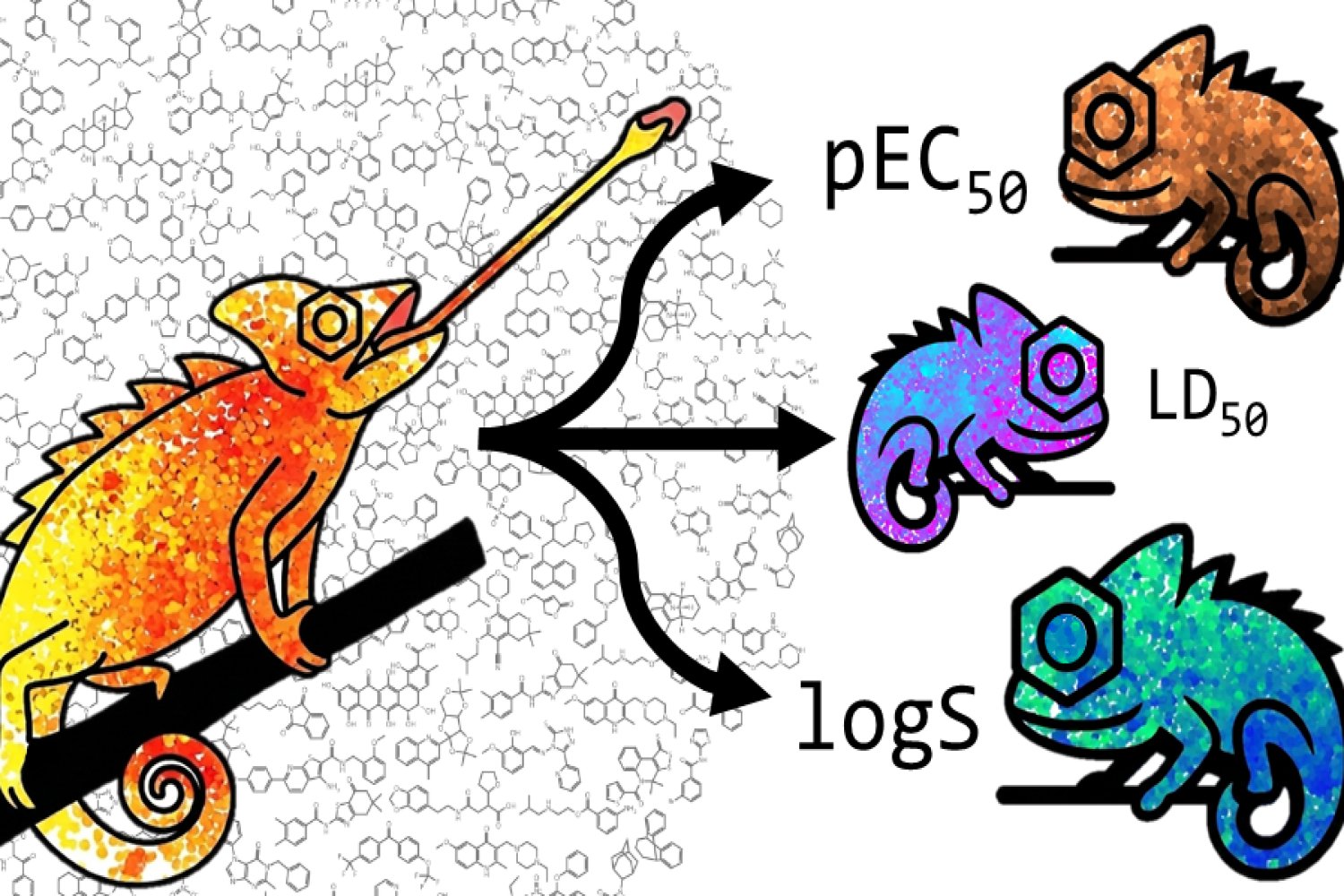
A machine-learning approach called CheMeleon provides a practical way to develop new drugs or other molecules with much less detailed, expensive experimentation.
Learn how Google DeepMind and GovTech Singapore uses lightweight on-device Gemma models to intercept conversational scams in private chats with zero cloud data egress.