Colorectal cancer remains a leading cause of global mortality, driving demand for precise screening methodologies that leverage complex genomic architectures. The functional interplay between spatial chromatin organization and regulatory networks is increasingly recognized as an important component of malignant transformation. Here, we present the sparse weighted graph convolutional network (SW-GCN), a specialized architecture designed to exploit the quantitative and sparse nature of 3D genomic interactions. Our methodology constructs biologically informed sparse weighted graphs by identifying genomic bins with significant contact frequencies using a bi-square kernel and adaptive optimal bandwidth selection. This approach filters stochastic noise while preserving essential spatial patterns in high-throughput chromosome conformation capture (Hi-C) data. We evaluated SW-GCN using a dataset of 102 individuals, focusing on chromosome 18 because of its established association with recurrent structural variations in colorectal cancer. A rigorous nested 10-fold cross-validation protocol was employed to prevent information leakage and obtain unbiased performance estimates. SW-GCN achieved a pooled bootstrap accuracy of 92.2% [95% CI: 87.3%, 97.1%], F1-score of 94.4% [90.6%, 97.9%], and sensitivity of 94.4% [88.7%, 98.6%], outperforming conventional GCN while showing comparable performance to convolutional neural network, graph sample and aggregate, and graph attention network, with a balanced sensitivity-specificity profile. The framework also reduced training latency by approximately 36% compared with conventional GCN. These findings support biologically informed edge weighting and graph sparsification as a computational framework for leveraging 3D genome architecture and motivate future investigation of 3D-genome biomarkers in precision oncology.

The findings of the study indicate that a large number of women in Bangladesh are suffering from being overweight or obese, and multiple factors are responsible for this including, older age,being from wealthy households, higher education, being from food-secured households, watching TV at least once a week, and being...
Haribondhu Sarma, N. Saquib, M. Hasan et al.· BMC Obesity· 75 citations· ⚡5
Purpose Overall health status indicators have improved significantly over the past three decades in Indonesia. However, the country’s maternal mortality ratio remains high with a stark inequality by region. Fewer studies have explored access inequity in maternal health care service over time using multiple inequality m...
Herfina Y. Nababan, M. Hasan, Tiara Marthias et al.· International Journal of Wom...· 64 citations· ⚡2
Agile methods continue to gain popularity. In particular, the Scrum method appears to be on the verge of becoming a de-facto standard in the industry, leading the so called Agile movement. While there are success stories and recommendations, there is little scientifically valid evidence of the challenges in the adoptio...
A. Marchenko, P. Abrahamsson· Agile Conference· 59 citations· ⚡11
Findings demonstrate a strong positive association between mother’s education and IYCF indicators and suggest strengthening national policies to educate women at least to the secondary level in SACs might be a cost-effective intervention for improving IY CF practices.
M. Tariqujjaman, M. Hasan, M. Mahfuz et al.· Nutrients· 45 citations· ⚡4
A comprehensive taxonomy of the challenges faced when a medium-scale organization decided to adopt software platforms is provided, namely: business challenges, organizational challenges, technical challenges, and people challenges.
Yaser Ghanam, F. Maurer, P. Abrahamsson· Information and Software Tec...· 41 citations· ⚡3
Good knowledge, positive attitude and some sociodemographic factors were significant with exclusive breastfeeding which are needed to improve for promoting exclusive breastfeeding practices and reducing infant mortality and morbidity.
M. Hasan, M. Hassan, M. Khan et al.· Population Medicine· 32 citations· ⚡6
Related blog posts
MIT News · Artificial Intelligence· news.mit.eduOct 26, 2026
Machine-learning networks can learn without detailed instructions from a designer. Those that do may offer insight into how the brain reorganizes itself during learning.
MIT News · Artificial Intelligence· news.mit.eduJul 15, 2026
Assistant Professor Pat Pataranutaporn describes a new interface that lets everyday users glimpse inside an AI's neural network before their chatbot ever says a word.
Microsoft Research Blog· microsoft.comJul 13, 2026
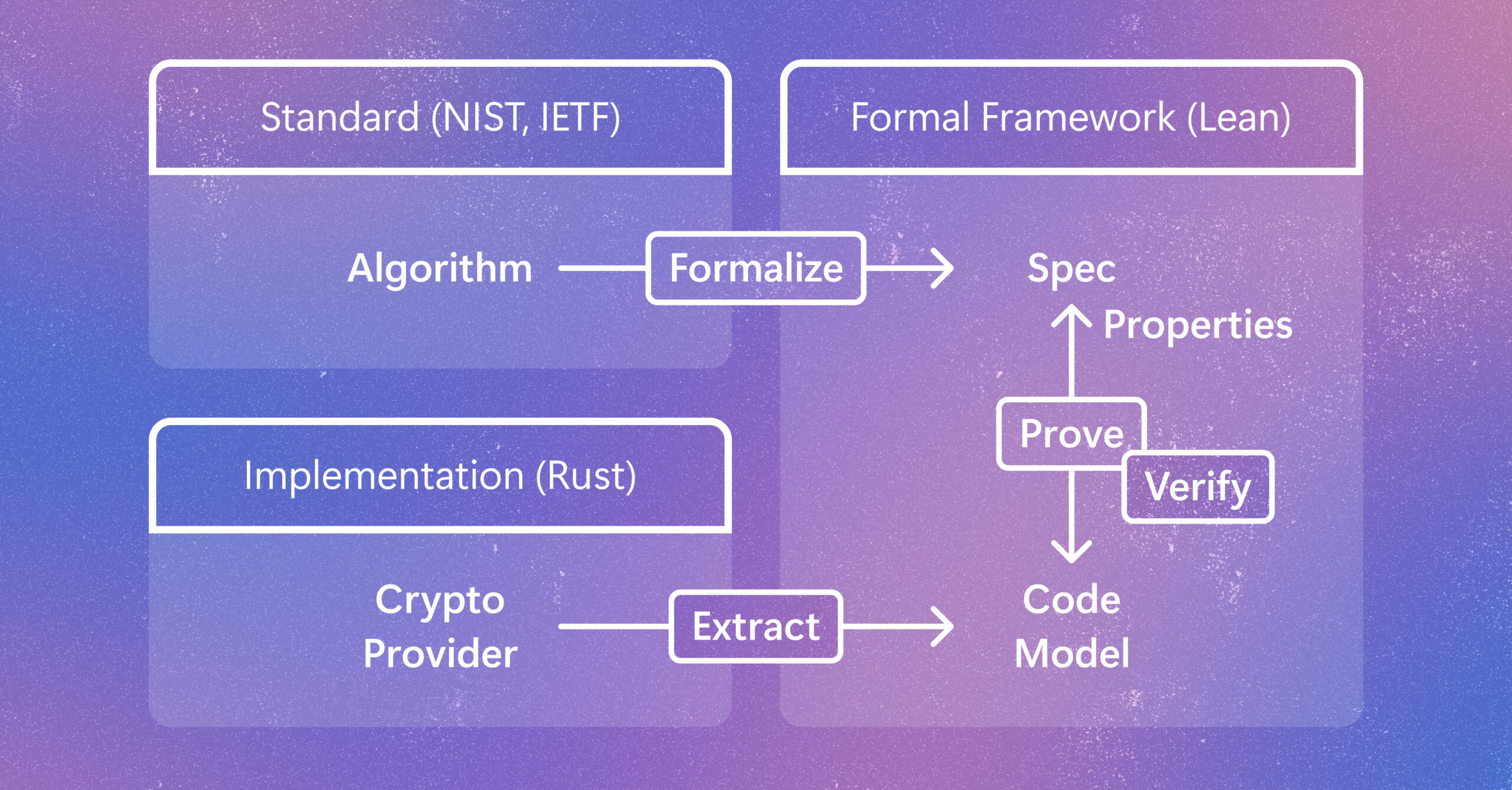
Cryptographic code supports vital protections in modern computing systems. Learn how a new method helps verify code as developers write it while preserving speed and adaptability as it gets implemented and evolves. The post Verifying Rust cryptography in SymCrypt, from standards to code appeared first on Microsoft Research.
We use cookies to run the site and, with your consent, for analytics and to show ads.
See our Cookie Policy.